
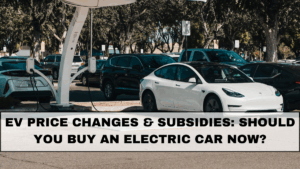
Electric vehicle price updates in India are catching the attention of buyers in 2025. With government incentives, expanding charging infra, and new EV models entering the market, the electric mobility sector is rapidly evolving. Recent price reductions on popular EV models are making them more accessible, while subsidies from central and state governments further reduce the upfront cost. For Indian consumers, this combination of affordability and infrastructure growth is reshaping car-buying decisions.
Government Subsidies Driving EV Adoption
One of the biggest factors in Electric vehicle price updates is the ongoing policy support. The Faster Adoption and Manufacturing of Hybrid and Electric Vehicles (FAME) scheme provides financial incentives for buyers, especially for small and mid-sized EVs. State-specific subsidies further reduce costs for those purchasing in cities with dedicated EV policies. These incentives are helping buyers offset the higher upfront price of electric cars and are accelerating the adoption of cleaner vehicles.
Recent Price Drops and New EV Models
Several EV manufacturers have announced price revisions in 2025 to stay competitive. Brands like Tata, MG, Hyundai, and Mahindra are introducing new EV models and updating older ones with improved features and battery efficiency. Price drops of up to several lakhs are attracting first-time EV buyers. Combined with subsidies, these updates make electric cars financially viable for a broader section of Indian consumers.
Expansion of Charging Infrastructure
Availability of charging stations is a crucial factor influencing Electric vehicle price updates and purchase decisions. Indian cities are witnessing rapid growth in public and private charging points. Many corporates are also installing charging stations in offices, while developers integrate chargers in residential complexes. Better charging infra reduces range anxiety and encourages adoption, making the EV market more appealing for urban and semi-urban buyers.
Pros and Cons of Buying an EV Now
Pros:
-
Reduced running costs compared to petrol/diesel vehicles
-
Access to government subsidies and incentives
-
Environmentally friendly, zero-emission vehicles
-
Increasingly robust charging infrastructure
Cons:
-
Higher upfront cost than ICE vehicles
-
Limited service centers for certain models
-
Battery replacement and resale value considerations
Understanding these pros and cons helps buyers make informed decisions when evaluating Electric vehicle price updates.
Future Trends in India’s EV Market
Experts predict continued price reductions, more affordable models, and enhanced battery technology in 2025. Expansion of charging infra and growing consumer awareness are expected to boost EV adoption further. For buyers planning their next purchase, staying updated on subsidies, new models, and price revisions is essential to maximize benefits.
Conclusion
2025 is shaping up to be a pivotal year for Electric vehicle price updates in India. Government subsidies, new models, and better charging infra make this an opportune moment for buyers to consider switching to electric mobility. While there are challenges like service availability and upfront costs, the long-term financial and environmental benefits are significant. For Indian consumers seeking sustainable transportation options, informed decisions based on price updates and policy incentives are key to getting the best value.
FAQs
What recent EV price updates should buyers know in India?
Several manufacturers like Tata, MG, and Hyundai have reduced prices on popular EV models in 2025, making them more affordable when combined with subsidies.
How do EV subsidies affect the total cost?
Central and state subsidies lower the upfront cost of electric cars, sometimes by several lakhs, improving affordability for Indian buyers.
Are charging stations widely available for EV owners?
Charging infrastructure is rapidly expanding in urban and semi-urban areas, with public and private chargers making EV ownership more convenient.
Should I buy an EV now or wait?
If you are looking for long-term savings, environmental benefits, and can access subsidies and charging facilities, 2025 is a good time to buy.
Do EVs require special maintenance?
EVs generally have lower running costs and fewer moving parts than ICE vehicles, but battery maintenance and periodic checks are recommended.
Click here to know more.