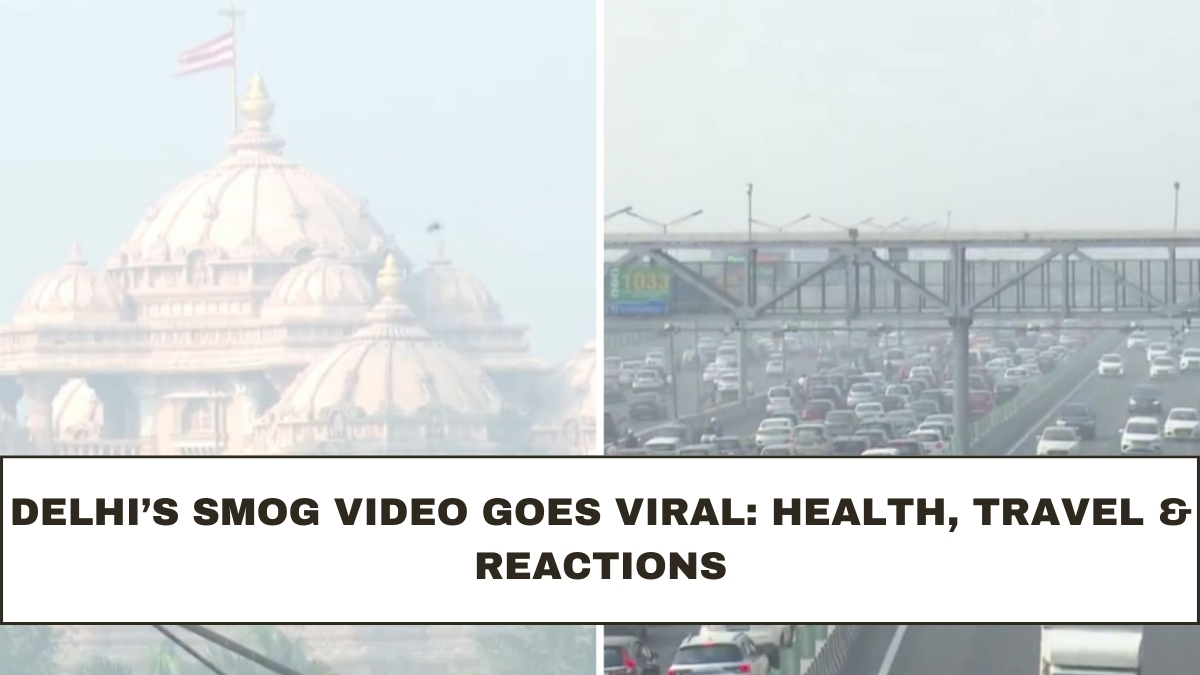
A recent Delhi smog viral video showing dense grey skies over the capital has triggered intense discussion across social media. The clip, widely shared as a travel and city-life visual, has once again brought air pollution, public health concerns, and urban living challenges into national focus. As reactions pour in, the video has become a symbol of ongoing environmental anxiety in India’s capital.
The Delhi smog viral trend reflects how short clips can spark serious debates. What began as a few seconds of footage has now evolved into a broader conversation around health risks, daily life disruptions, and how people perceive travel to polluted cities.
What the Viral Delhi Smog Video Shows
The viral clip captures a thick layer of haze covering Delhi’s skyline, reducing visibility and giving the city an almost fog-like appearance. Viewers immediately associated the visuals with pollution, even though such conditions often fluctuate seasonally.
The viral travel clip spread quickly because it visually communicates what data often cannot — how heavy air pollution feels in real life. The gloomy visuals prompted emotional reactions ranging from concern to frustration.
Many users shared the clip with captions questioning air quality management and long-term sustainability.
Why the Video Is Trending Across Platforms
The Delhi smog viral video gained traction due to a combination of visual impact and timing. Pollution-related discussions resurface regularly, and such clips often reignite public debate.
Key reasons behind its virality include:
• Strong visual contrast and low visibility
• Growing public awareness about air quality
• Travel-related curiosity about Delhi
• Ongoing city debates around pollution
• Easy resharing across platforms
As people continue discussing environmental challenges, even short clips quickly become part of wider digital conversations.
Health Concerns Raised by the Viral Clip
One major reason the Delhi smog viral video resonated is its link to health concerns. Air pollution is often associated with breathing discomfort, eye irritation, fatigue, and reduced outdoor activity.
Online discussions following the video focused on:
• Respiratory discomfort
• Impact on children and elderly
• Reduced outdoor exercise
• Long-term exposure worries
• Mask usage and precautions
These conversations show how viral visuals can immediately connect with real-life health experiences.
Travel Reactions and City Image Debate
The viral travel clip also triggered debate among travelers and residents. Some users questioned whether Delhi remains a safe or pleasant destination during heavy pollution periods, while others defended the city by pointing out that air quality fluctuates and improves at different times.
Travel-related discussions included:
• Best months to visit Delhi
• Air quality awareness before travel
• Indoor vs outdoor sightseeing
• Protective measures for visitors
• Reality versus social media exaggeration
This shows how a single viral video can influence perceptions far beyond its original context.
Public Reactions and Online Discussions
The city debates sparked by the video reflect divided opinions. While many expressed concern, others criticized sensationalism.
Common reactions included:
• Calls for stronger environmental action
• Discussions about urban planning
• Comparisons with other global cities
• Awareness posts about AQI levels
• Memes and commentary posts
The diversity of reactions highlights how environmental content often becomes both informative and emotional online.
Why Pollution Videos Go Viral So Easily
Videos related to pollution often gain traction because they tap into shared anxiety and lived experience. The Delhi smog viral trend fits this pattern perfectly.
Such content spreads quickly because it:
• Is visually striking
• Triggers concern or empathy
• Connects to daily life
• Feels urgent
• Encourages discussion
People are more likely to share content that reflects common problems they personally face.
The Role of Social Media in Shaping Perception
Social platforms play a major role in amplifying environmental narratives. A short clip can travel across apps within minutes, shaping opinions and conversations.
The viral travel clip shows how social media acts as both an awareness tool and a debate arena. While it helps highlight issues, it can also oversimplify complex realities if taken out of context.
This dual effect is why such content often sparks intense reactions.
What This Trend Says About Digital Awareness
The popularity of the Delhi smog viral video suggests that people are becoming more conscious of environmental quality and public health. Visual storytelling now plays a stronger role than statistics alone.
It also reflects how audiences increasingly use viral moments to push conversations around accountability, infrastructure, and sustainability.
Final Thoughts
The Delhi smog viral video is more than just a trending clip — it represents ongoing concerns about air quality, urban life, and health awareness. As reactions continue to pour in, the video serves as a reminder of how powerful visual content can be in shaping public discussion.
Whether viewed as a warning, a travel concern, or a moment of online debate, the trend highlights how environmental issues remain deeply connected to everyday life in India.
FAQs
Why is the Delhi smog video going viral?
Because it visually shows heavy haze, triggering concern and debate about pollution and health.
Is the viral video recent?
Yes, it is part of current online discussions and trending clips shared widely on social platforms.
Does the video reflect Delhi’s air quality all the time?
No, air quality varies by season and conditions, but the video captures a high-smog moment.
Why are people debating travel after this video?
Because visibility and pollution levels affect travel comfort and health perceptions.
What can people do to stay safe during heavy smog?
Limit outdoor exposure, monitor air quality updates, use masks if needed, and stay informed.