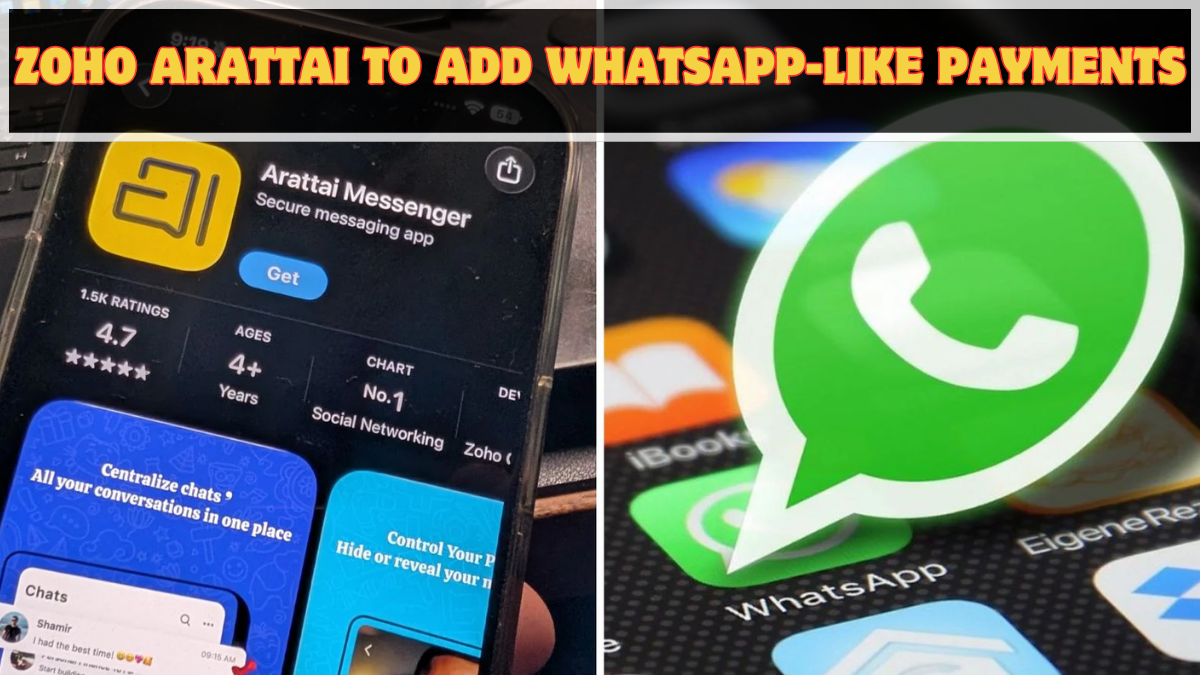
The announcement around the Arattai payments feature has instantly put Zoho’s messaging app back into public conversation. For a long time, Arattai existed quietly as a privacy-focused chat platform with limited mainstream adoption. Payments change that equation. In India, the moment a messaging app adds UPI-like payments, comparisons with WhatsApp become unavoidable.
But hype alone doesn’t win this market. WhatsApp didn’t grow because it added payments—it grew because it already owned user habits. The real question is whether Zoho Arattai can convert payments into daily usage, or whether this becomes another well-built feature that users ignore.

What the Arattai Payments Feature Actually Is
The Arattai payments feature is designed to allow users to send and receive money directly within chats, similar to UPI-based payments inside messaging apps. Instead of switching between a chat app and a payment app, users can complete transactions where conversations already happen.
Core intent of the feature:
• Enable peer-to-peer payments inside chats
• Reduce dependency on separate UPI apps
• Support small, everyday transactions
• Keep payment flow simple and fast
On paper, this positions Zoho Arattai as a functional WhatsApp alternative in India.
How Zoho Arattai Approaches Payments Differently
Zoho’s strength has always been enterprise-grade thinking. Even in consumer apps, its design philosophy leans toward stability, privacy, and control.
With the Arattai payments feature, Zoho is likely focusing on:
• Cleaner transaction logs
• Stronger user verification
• Tighter integration with Zoho ecosystem tools
• Reduced clutter compared to social-heavy apps
This approach appeals to users who prefer reliability over flashy features.
UPI-Like Payments: Why They Matter in India
Any India app attempting payments must work seamlessly with UPI habits. Users expect instant transfers, zero learning curve, and near-perfect success rates.
UPI-like payments succeed when:
• Transactions are fast
• Failure rates are low
• Refunds are transparent
• Limits are predictable
If Arattai payments feature meets these expectations, adoption becomes possible. If not, users won’t give it a second chance.
Who Should Try Arattai Payments First
Not everyone needs another payment option. Early adoption will come from specific user groups.
Likely early adopters:
• Zoho users already familiar with the brand
• Privacy-conscious users avoiding Meta platforms
• Small teams coordinating expenses
• Users wanting a WhatsApp alternative with fewer distractions
For these users, payments inside Zoho Arattai feel like a natural extension.
Can Arattai Really Compete With WhatsApp in Payments
This is where realism matters. WhatsApp’s advantage isn’t technology—it’s scale. Everyone is already there.
For Arattai to compete, it must win on:
• Trust
• Stability
• Payment success rate
• Clear value beyond “we also have payments”
Without a compelling reason to switch or dual-use, even a perfect payments feature struggles.
What Will Decide Success or Failure
The Arattai payments feature will live or die based on execution, not announcement.
Critical success factors include:
• Seamless onboarding
• Minimal transaction failures
• Clear dispute resolution
• Competitive limits and controls
• Strong security communication
One bad payment experience is enough to lose users permanently.
Privacy and Security Expectations
Zoho positions itself as a privacy-respecting company. Payments increase scrutiny instantly.
Users will expect:
• Transparent data usage
• Clear separation of chat and payment data
• No aggressive tracking
• Simple account controls
If Arattai delivers on this, it differentiates itself sharply from ad-driven platforms.
Why Messaging + Payments Is Still a Hard Game
Many apps have tried combining chat and payments. Few succeed.
Common reasons for failure:
• Users already trust existing apps
• Payment habits are sticky
• Switching costs feel unnecessary
• Network effects dominate
The Arattai payments feature must overcome habit inertia, not just offer functionality.
What This Means for Indian Users
For users, this is a positive development regardless of outcome. Competition improves quality.
Benefits include:
• More choice
• Better privacy options
• Reduced dependency on one platform
• Pressure on incumbents to improve
Even if Arattai doesn’t replace WhatsApp, it can still carve a meaningful niche.
Conclusion
The Arattai payments feature is a bold and logical step for Zoho Arattai, especially in an India-first digital ecosystem dominated by UPI. Technically, Zoho can build a solid system. Strategically, adoption will depend on whether users see real value beyond convenience.
Arattai doesn’t need to beat WhatsApp to succeed. It needs to serve a focused audience well, execute payments flawlessly, and earn trust transaction by transaction.
FAQs
What is the Arattai payments feature?
It allows users to send and receive money directly inside Zoho Arattai chats.
Is Arattai a WhatsApp alternative?
Yes, but with a stronger focus on privacy and structured usage.
Will Arattai payments use UPI?
It is expected to follow UPI-like payment flows suitable for India.
Who should use Arattai payments?
Zoho users, privacy-focused users, and small groups coordinating payments.
Can Arattai replace WhatsApp payments?
Replacement is unlikely, but coexistence with a niche audience is realistic.