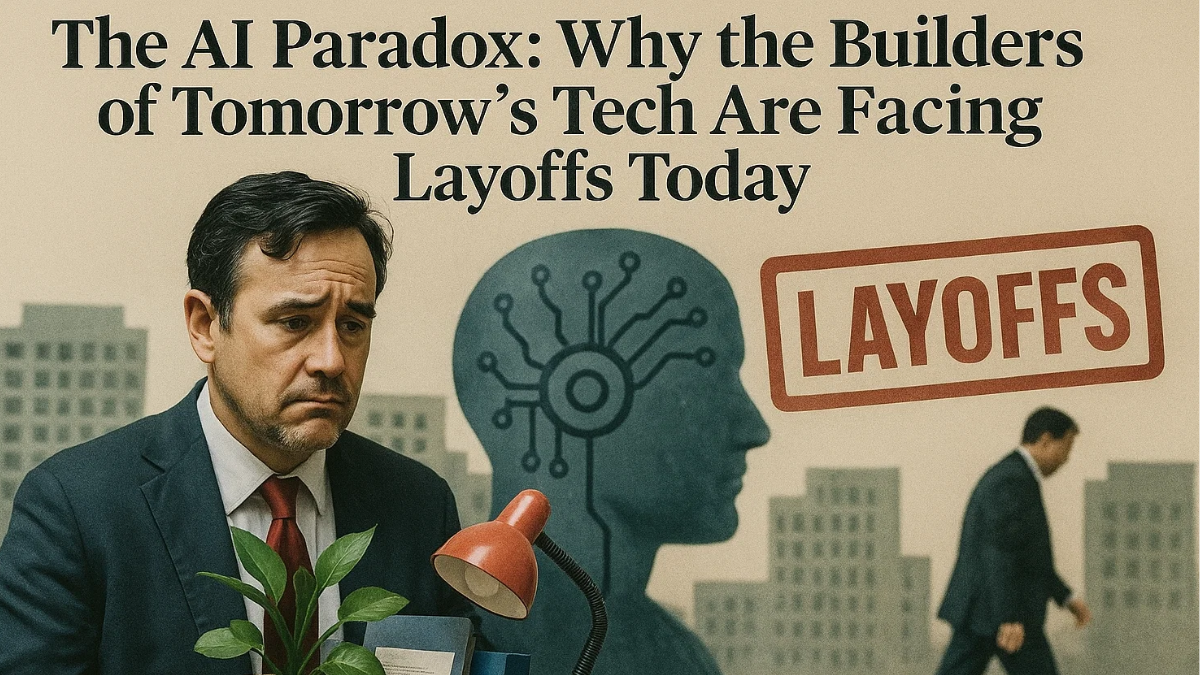
The AI layoffs paradox is one of the most unsettling workplace trends of 2026. On the same day employees are laid off, companies announce new AI hires. Teams shrink. Headcounts fall. Yet job listings for AI engineers, automation leads, and machine learning specialists keep appearing.
To workers, this feels cruel and contradictory. To companies, it feels logical. And that gap—between human impact and corporate logic—is exactly why this paradox exists.
What the AI Layoffs Paradox Really Means
The AI layoffs paradox isn’t about replacing everyone with machines overnight. It’s about restructuring cost and control.
What’s happening simultaneously:
• Roles with recurring human cost are being cut
• AI teams are hired to scale output
• Productivity expectations increase
• Fewer people are expected to do more
From a balance-sheet view, this looks efficient. From a human view, it feels destabilizing.
Why Companies Are Cutting Staff First
Layoffs are not random. They follow a predictable logic.
Companies target:
• Roles with slower ROI
• Middle layers of management
• Support functions deemed “replaceable”
• Positions vulnerable to automation
The AI layoffs paradox exists because cutting people shows immediate cost savings—while AI hiring is framed as “investment.”
Why Automation Hiring Continues Despite Layoffs
Why companies keep hiring AI teams:
• AI scales without proportional headcount
• One system replaces multiple workflows
• Automation promises long-term cost control
• Investors reward “AI-forward” narratives
In short: AI hires signal future efficiency, even while humans are cut.
How This Paradox Looks From Inside Companies
Common reactions include:
• Fear of being next
• Distrust in leadership messaging
• Guilt over surviving layoffs
• Pressure to upskill constantly
Morale drops—even among those who stay.
Why Entry-Level and Mid-Level Roles Are Hit Hardest
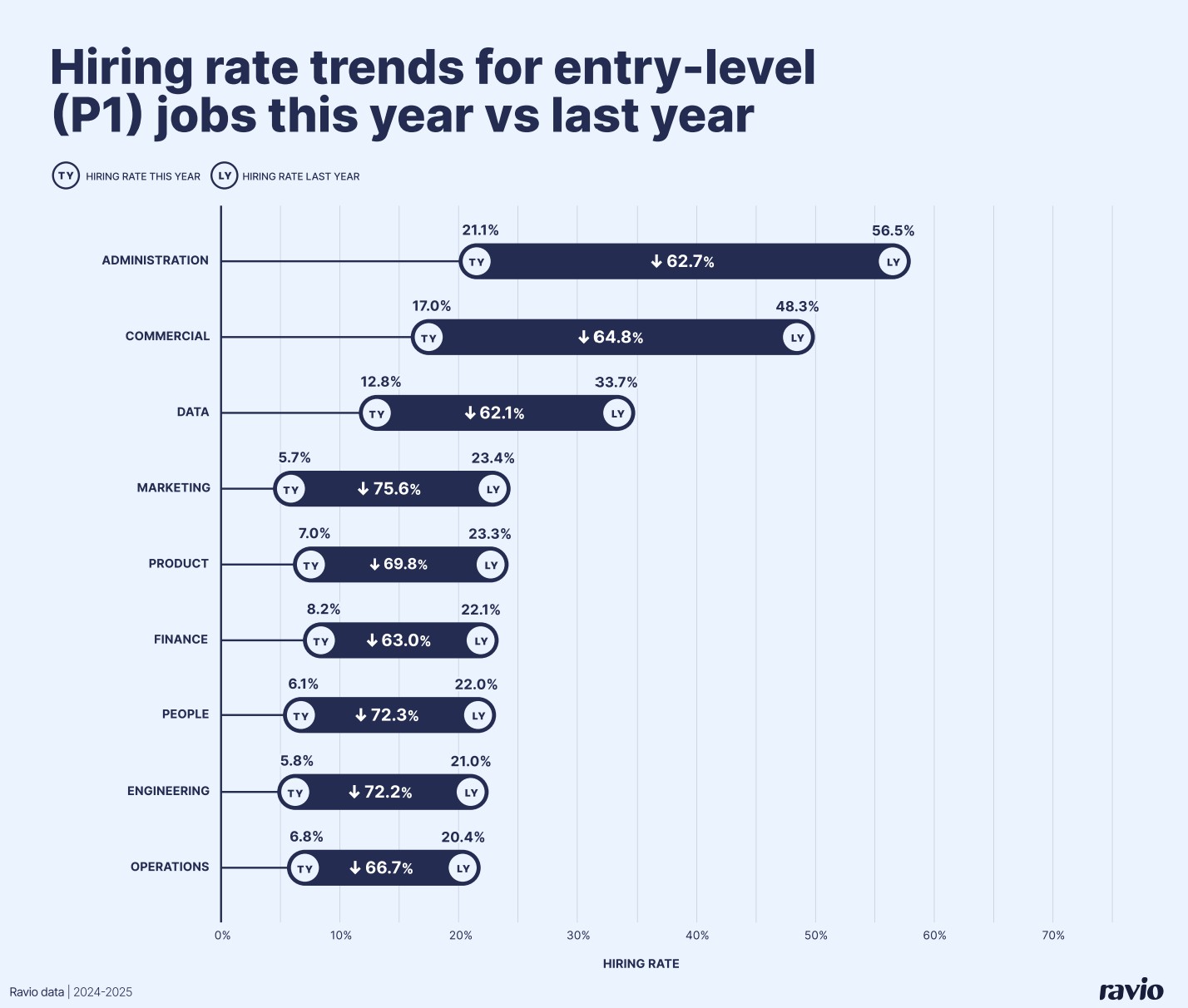
Roles most affected:
• Junior analysts
• Coordinators and assistants
• Customer support layers
• Data processing roles
The AI layoffs paradox disproportionately impacts early-career workers, shrinking traditional career ladders.
What Executives Say vs What They Actually Mean
What’s said:
• “We’re optimizing operations”
• “This positions us for the future”
What it really means:
• Fewer people, same output
• Higher productivity per employee
• Automation absorbing risk
The paradox isn’t accidental—it’s strategic.
Why This Strategy Makes Sense on Paper
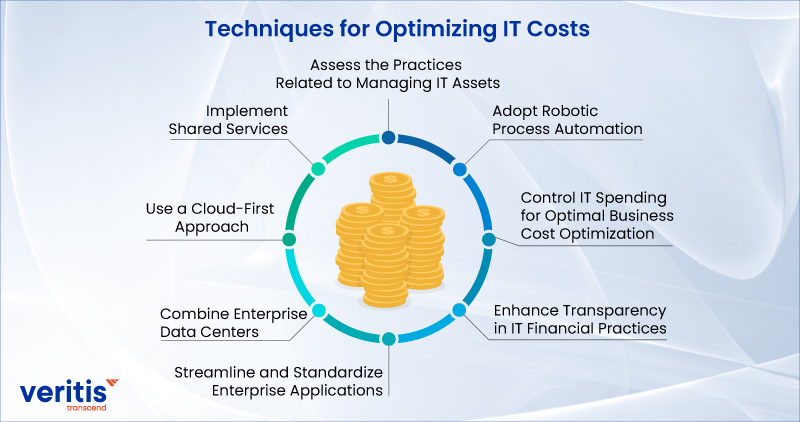
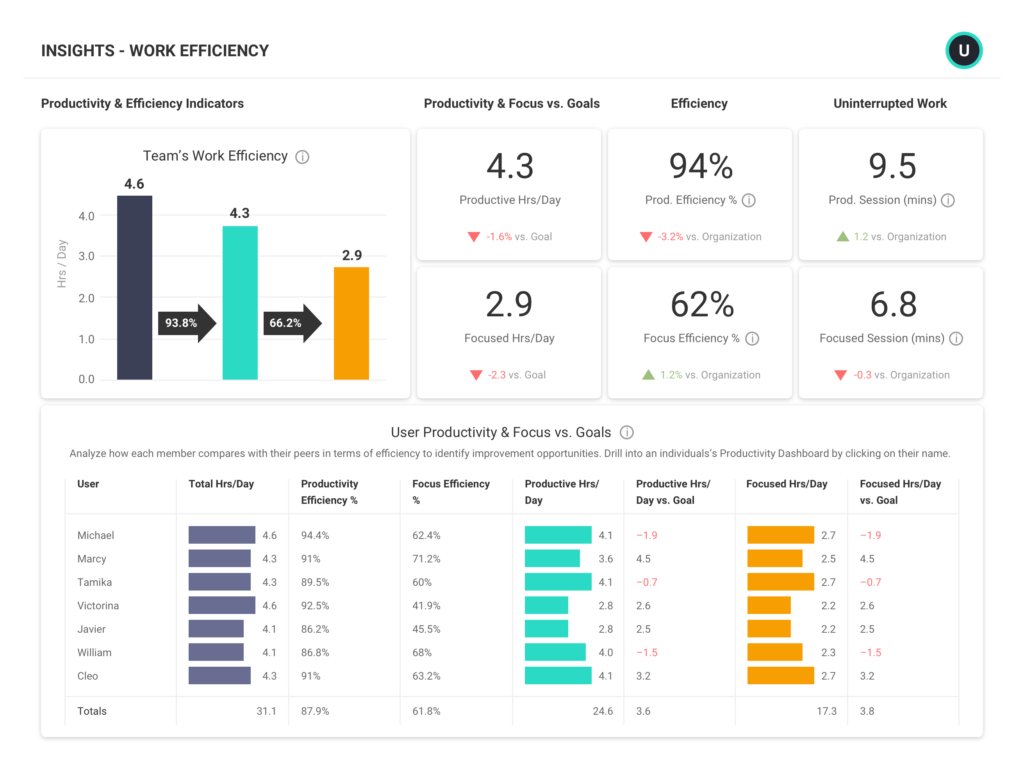
From a numbers perspective, the AI layoffs paradox checks out.
Benefits companies see:
• Lower long-term payroll costs
• Predictable output
• Reduced dependency on human turnover
• Stronger margins
Paper logic doesn’t account for trust erosion.
The Long-Term Risk Companies Are Ignoring
Risks include:
• Talent disengagement
• Reduced loyalty
• Knowledge drain
• Reputation damage
Short-term efficiency can undermine long-term resilience.
How Workers Are Responding in 2026
Common responses:
• Upskilling in AI-adjacent roles
• Job hopping to reduce exposure
• Avoiding single-employer dependence
• Building side incomes
The AI layoffs paradox is reshaping worker behavior permanently.
Conclusion
The AI layoffs paradox isn’t hypocrisy—it’s economics colliding with humanity. Companies are cutting humans to fund automation, betting that efficiency outweighs trust. In the short term, the math works. In the long term, the damage is harder to measure—but impossible to ignore.
The future of work won’t just be defined by AI adoption. It will be defined by how much human trust survives the transition.
FAQs
Why are companies laying off workers while hiring AI teams?
Because automation promises scalable efficiency while layoffs deliver immediate cost savings.
Is AI directly replacing human jobs?
Not all jobs—but it’s eliminating roles built on repetition and process.
Who is most affected by the AI layoffs paradox?
Entry-level and mid-level employees are hit hardest.
Does this strategy hurt company culture?
Yes. Trust and morale often decline sharply after such restructures.
Will this trend continue?
Yes, as long as efficiency metrics outweigh human considerations.
Click here to know more.