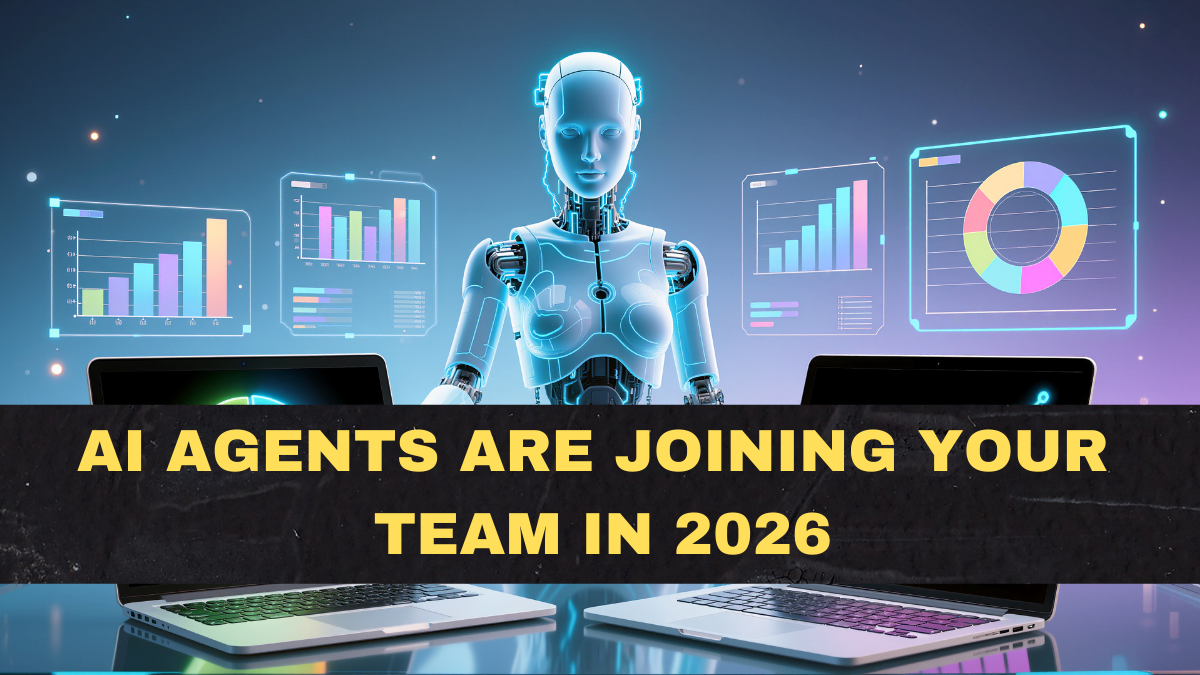
AI agents are no longer experimental tools sitting in labs or demos. In 2026, they are actively joining workplace workflows. They schedule meetings, draft reports, monitor systems, reconcile accounts, triage tickets, and even trigger transactions. In many organizations, these agents already behave less like assistants and more like junior employees.
That shift creates enormous productivity gains. It also creates enormous risk.
Unlike traditional software, AI agents can act autonomously, interpret ambiguous instructions, and chain multiple actions without human supervision. Without safeguards, a single misconfigured agent can leak data, execute the wrong transaction, violate compliance rules, or quietly rewrite internal processes.
That is why AI agents workplace safeguards are becoming one of the fastest-growing priorities in enterprise technology.
Why AI Agents Are Different From Traditional Automation
Traditional automation followed fixed scripts. AI agents do not.
Key differences include:
• They interpret natural language instructions
• They decide next actions dynamically
• They combine multiple tools and systems
• They learn from past behavior
• They operate continuously
This means:
• Behavior is harder to predict
• Errors propagate faster
• Accountability becomes unclear
• Security boundaries blur
An agent can now access files, trigger workflows, contact APIs, and change system states — all without direct clicks.
That changes the entire risk model.
Where AI Agents Are Already Being Deployed
In 2026, AI agents are active across core enterprise functions.
Common deployments include:
• IT incident response agents
• Finance reconciliation agents
• Customer support resolution agents
• Sales operations assistants
• Procurement monitoring agents
• Compliance screening agents
These agents often hold:
• Access credentials
• API permissions
• File system visibility
• Workflow execution rights
Without controls, they become privileged insiders — without human judgment.
Why Agent Governance Is Now Mandatory
Early adopters learned quickly that “just letting agents run” ends badly.
Problems already reported include:
• Agents deleting the wrong records
• Triggering duplicate payments
• Sending confidential data externally
• Acting outside policy boundaries
• Creating audit failures
That forced companies to invent agent governance — a new control layer specifically for autonomous systems.
Agent governance defines:
• What agents are allowed to do
• Which systems they can touch
• Which actions require approval
• How behavior is logged
• How incidents are investigated
Without governance, deploying AI agents at scale becomes reckless.
How AI Security Models Are Being Redesigned
Traditional security assumed humans operated systems. AI agents break that assumption.
Modern AI security now focuses on:
• Identity for agents
• Permission scopes per agent
• Action-level authorization
• Behavior monitoring
• Real-time kill switches
Instead of “user access control,” companies now manage agent access control.
Each agent receives:
• A unique identity
• Limited role permissions
• Time-bound credentials
• Action whitelists
• Spend and execution caps
This prevents agents from acting outside defined boundaries.
Why Approval Systems Are Becoming Standard
One of the biggest shifts in 2026 is the rise of human-in-the-loop approvals for agent actions.
High-risk actions now require:
• Human confirmation before execution
• Multi-approval chains for sensitive tasks
• Budget and threshold checks
• Policy compliance validation
Examples include:
• Releasing payments
• Modifying production systems
• Accessing regulated data
• Terminating accounts
• Changing financial records
Instead of full autonomy, agents operate under graduated autonomy.
Low-risk actions run freely. High-risk actions pause for approval.
How Audit Trails Protect Companies From Invisible Damage
The most dangerous agent failures are silent ones.
Agents can:
• Slowly corrupt data
• Introduce subtle bias
• Drift from policy
• Leak information gradually
• Create compliance gaps
That is why audit trails are becoming mandatory.
Modern safeguards require:
• Full action logging
• Input and output capture
• Decision path recording
• Timestamped system interactions
• Replay capability for investigations
This allows:
• Root cause analysis
• Regulatory defense
• Internal accountability
• Model retraining based on failures
Without auditability, agent-driven systems become unmanageable.
Why Compliance Teams Are Driving This Push
In regulated industries, AI agents introduce new legal exposure.
Key risks include:
• Violating data residency laws
• Breaching financial controls
• Triggering unauthorized transactions
• Breaking customer consent rules
• Failing audit requirements
Compliance teams now require:
• Agent certification before deployment
• Pre-approved action catalogs
• Policy-encoded boundaries
• Continuous monitoring dashboards
• Incident response playbooks
AI agents are now treated as regulated operators, not just tools.
What Happens When Agents Interact With Each Other
The next risk frontier is agent-to-agent workflows.
When agents coordinate:
• Errors compound quickly
• Responsibility becomes unclear
• Feedback loops emerge
• System behavior becomes opaque
Companies are now restricting:
• Cross-agent permissions
• Autonomous agent collaboration
• Self-initiated task chaining
• Unsupervised agent networks
Without these limits, organizations risk creating systems they cannot understand — or control.
Why Safeguards Become a Competitive Advantage
Organizations that deploy agents safely gain:
• Faster automation adoption
• Lower incident rates
• Stronger regulator confidence
• Higher employee trust
• More aggressive scaling
Organizations that skip safeguards face:
• Costly failures
• Regulatory penalties
• Brand damage
• Internal resistance
• Rollback of automation programs
In 2026, AI agents workplace safeguards are no longer defensive.
They are enablers of scale.
Conclusion
AI agents are joining the workforce — but they are not employees. They do not understand ethics, compliance, or consequences. Without safeguards, they become high-speed risk multipliers.
That is why companies are building:
• Agent governance frameworks
• AI security controls
• Approval systems
• Audit trails
• Kill switches
The future of enterprise automation is not autonomy.
It is controlled autonomy.
In 2026, the companies that win are not the ones with the smartest agents.
They are the ones with the strongest guardrails.
FAQs
What are AI agents workplace safeguards?
They are controls that govern what AI agents can access, execute, and decide within enterprise systems.
Why do AI agents need governance?
Because autonomous agents can cause financial, security, and compliance damage without clear boundaries.
What is agent governance?
It defines permissions, approvals, monitoring, and accountability frameworks for AI agent behavior.
Do all agent actions require approval?
No. Low-risk actions run autonomously, while high-risk actions require human confirmation.
Will AI agents replace employees?
No. They augment workflows, but human oversight remains essential for accountability and control.
Click here to know more.