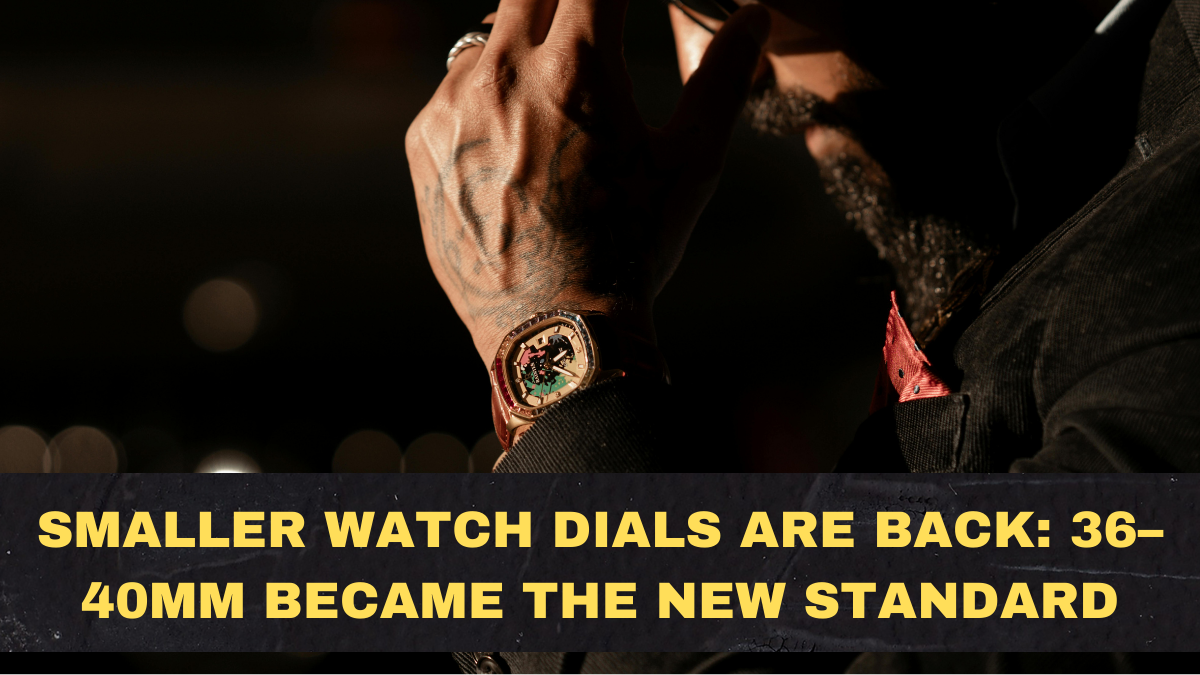
The return of smaller dial size watches in 2026 marks one of the quietest but most important shifts in modern watch culture. After more than a decade of oversized cases, thick bezels, and wrist-dominating designs, buyers are now deliberately choosing restraint. The new normal is not 44mm or 46mm anymore. It is 36mm to 40mm — and it is happening everywhere.
What makes this trend fascinating is that it is not driven by nostalgia alone. It reflects deeper changes in fashion, lifestyle, ergonomics, and how people now think about everyday wearability. In 2026, watches are no longer armor or trophies. They are tools, accessories, and expressions of taste.
Why Smaller Watch Dials Are Making a Comeback
The rise of smaller dial size watches is a reaction to excess.
For years, big watches signaled:
• Power
• Wealth
• Masculinity
• Visibility
But fashion psychology changed.
Three forces pushed the shift:
• Minimalist fashion dominance
• Growth of slim tailoring and unisex styling
• Fatigue from loud status signaling
Younger buyers no longer want watches that announce themselves from across the room. They want watches that integrate into outfits quietly.
This is why 36mm watches are suddenly selling faster than oversized models.
How Oversized Watches Lost Cultural Relevance
The oversized era was built on spectacle.
Big watches worked when:
• Suits were boxy
• Status signaling mattered more
• Wrist presence equaled success
• Luxury culture favored dominance
In 2026, that aesthetic feels dated.
Modern fashion favors:
• Slim silhouettes
• Layered outfits
• Jewelry integration
• Subtle accessories
Large watches now:
• Clash with cuffs
• Feel heavy
• Look costume-like
• Signal old luxury psychology
Smaller dials feel contemporary, intentional, and refined.
Why 36–40mm Became the Perfect Everyday Range
The 36mm to 40mm window is not accidental.
This range offers:
• Balanced proportions
• Comfort for long wear
• Compatibility with cuffs
• Versatility across outfits
• Gender-neutral appeal
Everyday wearability is now the primary buying criterion.
In 2026, people want watches that:
• Fit under sleeves
• Work with casual and formal looks
• Feel light all day
• Don’t dominate the wrist
That naturally favors mid-sized cases.
The Influence of Vintage and Heritage Revival
Vintage aesthetics are driving this trend heavily.
Historically:
• Most iconic watches were 34–38mm
• Dress watches rarely exceeded 36mm
• Military watches stayed compact
As heritage reissues exploded, buyers rediscovered how elegant proper proportions look.
Brands are now reviving:
• Classic case diameters
• Slim profiles
• Smaller lugs
• Vintage dial layouts
This is why 36mm watches are now considered timeless, not small.
Why Fashion Culture Prefers Smaller Dials
Modern fashion styling favors layering.
Smaller dial size watches:
• Pair well with bracelets
• Integrate with rings and chains
• Balance outfits
• Enhance wrist lines
• Look intentional
In editorial shoots, street style, and runways, oversized watches look out of place. Slim watches look curated.
In 2026, watches are accessories first, statements second.
Gender Fluidity Is Reshaping Watch Sizing
One of the biggest drivers is gender-neutral design.
Smaller dial size watches:
• Fit all wrist sizes
• Work across genders
• Support shared models
• Align with unisex fashion
Large watches remain heavily male-coded. Smaller watches feel inclusive.
That matters in 2026, where:
• Gender boundaries blur
• Shared fashion grows
• Jewelry and watches overlap
• Styling becomes fluid
This expands demand massively.
Why Comfort Is Now More Important Than Presence
Lifestyle has changed.
People now:
• Wear watches longer each day
• Work on laptops constantly
• Travel more
• Layer clothes more
• Value comfort highly
Oversized watches:
• Hit keyboards
• Catch on sleeves
• Feel heavy
• Cause wrist fatigue
Everyday wearability is now a practical necessity, not a style choice.
This alone is pushing buyers toward mid-sized cases.
What Brands Are Doing in Response
Brands are reacting fast.
In 2026, we see:
• 36mm versions of iconic models
• Slimmer case profiles
• Reduced lug lengths
• Thinner bezels
• Smaller crown sizes
Luxury brands that once pushed 44mm aggressively are now releasing their best designs in 38mm.
The market has spoken.
Is This Bad News for Big Watch Lovers
Not necessarily.
Large watches still work for:
• Sport and dive watches
• Tool watches
• Outdoor use
• Very large wrists
• Statement styling
But they are no longer default.
In 2026, oversized watches are:
• Niche
• Functional
• Purpose-driven
Not lifestyle staples anymore.
Why This Trend Is Structurally Stable
This is not a temporary cycle.
Structural forces support smaller sizes:
• Minimalist fashion dominance
• Gender-neutral styling
• Comfort-first lifestyle
• Vintage revival
• Corporate dress codes relaxing
Once people experience proper fit, they rarely go back to oversized.
Conclusion
The return of smaller dial size watches is not about shrinking fashion. It’s about refining it.
In 2026, luxury is subtle. Style is intentional. And status is no longer shouted from the wrist. The rise of 36mm watches reflects a deeper shift: people now value proportion, comfort, and elegance over presence and intimidation.
Big watches are not disappearing.
But small watches are reclaiming what they always owned — timeless relevance.
The future of everyday wearability is not bold.
It is beautifully balanced.
FAQs
Why are smaller watch dials trending again in 2026?
Because fashion favors minimalism, comfort, and subtle luxury over loud status signaling.
What size is considered ideal now?
36mm to 40mm is now considered the perfect everyday wearability range.
Are 36mm watches too small for men?
No. Proper proportions often look more elegant and balanced than oversized cases.
Do smaller watches hold value well?
Yes. Vintage-sized models often age better and appeal to broader audiences.
Will oversized watches disappear completely?
No. They remain popular in sport and tool categories but are no longer mainstream.
Click here to know more.