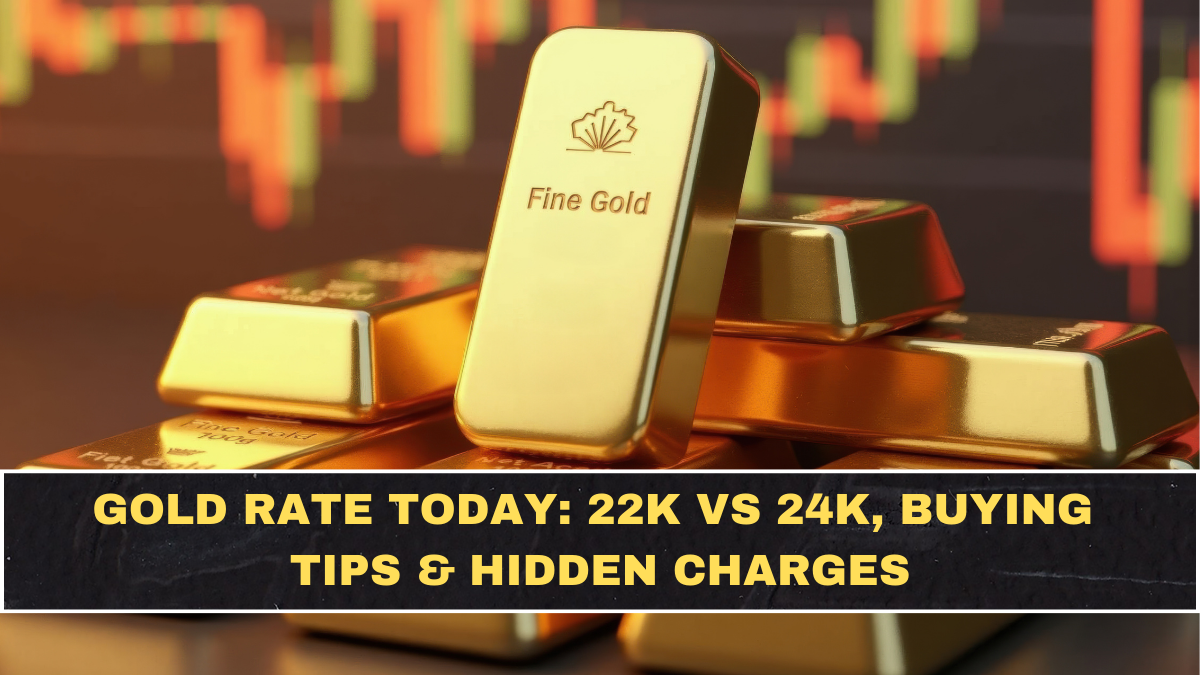
Gold rate today continues to be one of the most searched financial topics in India in 2026, not just because of price movement but because gold still plays multiple roles at once. It is jewellery, investment, emergency asset, and cultural security rolled into one. Unlike stocks or funds, gold decisions are often emotional, which makes understanding pricing and purity even more important.
Most buyers track the gold rate today but still end up overpaying due to confusion around purity, making charges, and resale value. The visible rate is only the starting point. What actually matters is how that rate translates into final cost and long-term value. In 2026, smarter gold buying is about clarity, not urgency.
What Gold Rate Today Actually Represents
The gold rate today usually refers to the base price of gold per gram before additional charges are applied. This rate is influenced by global gold prices, currency movement, and domestic demand conditions.
However, this quoted rate does not include making charges, taxes, or retailer margins. Many buyers assume the displayed rate is the final price, which leads to surprise at billing time.
In 2026, understanding that gold rate today is a reference value rather than the final payable amount helps avoid confusion and poor decisions.
22K vs 24K Gold: The Real Difference
The biggest confusion among buyers remains the difference between 22K and 24K gold. 24K gold is the purest form, typically used for investment purposes rather than jewellery.
22K gold contains a small mix of other metals to improve durability, making it suitable for ornaments. While 24K has higher purity, it is softer and not practical for daily wear.
In 2026, buyers should choose based on purpose. Investment-focused buyers prefer 24K, while jewellery buyers usually benefit more from 22K due to strength and usability.
Why Jewellery Costs More Than Gold Rate Today
Jewellery pricing includes making charges, which cover craftsmanship, design complexity, and labor. These charges can vary widely between sellers and designs.
Even if gold rate today remains stable, jewellery prices can differ significantly due to making charge structure. Heavier designs and intricate work attract higher charges.
In 2026, many buyers overlook this factor and focus only on purity. Understanding making charges is essential to evaluate whether a deal is actually good.
Making Charges: Fixed vs Percentage Model
Making charges can be applied as a fixed amount per gram or as a percentage of gold value. Percentage-based charges rise when gold prices increase, while fixed charges remain stable.
Some designs carry extremely high percentage-based charges that dramatically inflate final cost. This directly impacts resale value later.
In 2026, buyers who negotiate or choose lower making charge designs often recover more value when selling or exchanging gold.
Hidden Costs Buyers Often Ignore
Apart from making charges, buyers must account for taxes applied on the final value. These costs add to the total price without increasing gold weight or purity.
Another overlooked factor is wastage charges, which some sellers include implicitly. This increases billed weight beyond actual gold content.
Understanding these hidden components helps buyers evaluate offers realistically rather than being swayed by discounts that apply only to base gold price.
Gold Coins and Bars vs Jewellery
Gold coins and bars usually carry lower making charges compared to jewellery, making them more efficient for pure investment purposes.
However, resale ease and buyback policies differ across sellers. Some charge deductions during resale that reduce returns.
In 2026, buyers choosing coins or bars should verify purity certification and buyback terms to protect long-term value.
When Gold Buying Makes Sense Financially
Gold is best treated as a stability asset rather than a return-maximizing investment. It protects purchasing power during uncertainty but does not generate income.
Buying gold impulsively during price spikes often leads to regret. Long-term accumulation through disciplined planning works better.
In 2026, gold fits best as part of a balanced portfolio rather than a standalone strategy.
Smart Gold Buying Tips for 2026
Always verify purity certification before purchase. This protects resale value and ensures authenticity.
Compare making charges across designs and sellers, not just gold rate today. Small differences here have large impact.
Avoid buying gold solely based on urgency or emotion. Clarity saves more money than timing.
Conclusion: Gold Buying Is About Value, Not Just Price
Gold rate today is important, but it is only one piece of the buying decision. Purity, making charges, taxes, and resale value collectively decide whether gold works in your favor.
In 2026, informed buyers focus on total cost and long-term usability rather than chasing momentary price movements. Gold rewards patience and understanding more than speed.
Treat gold as a structured asset, not an impulse purchase. That mindset turns tradition into smart financial planning.
FAQs
What does gold rate today mean exactly?
It refers to the base price of gold per gram before adding making charges, taxes, and other costs.
Which is better, 22K or 24K gold?
24K is purer and suitable for investment, while 22K is stronger and better for jewellery.
Why is jewellery more expensive than gold rate today?
Jewellery includes making charges, design costs, and taxes, which increase final price.
Are making charges refundable on resale?
No, making charges are usually not recovered during resale or exchange.
Is buying gold coins better than jewellery?
For investment purposes, coins and bars are often more cost-efficient due to lower making charges.
Should gold be a major part of investments?
Gold works best as a stabilizing asset within a diversified portfolio, not as the primary investment.