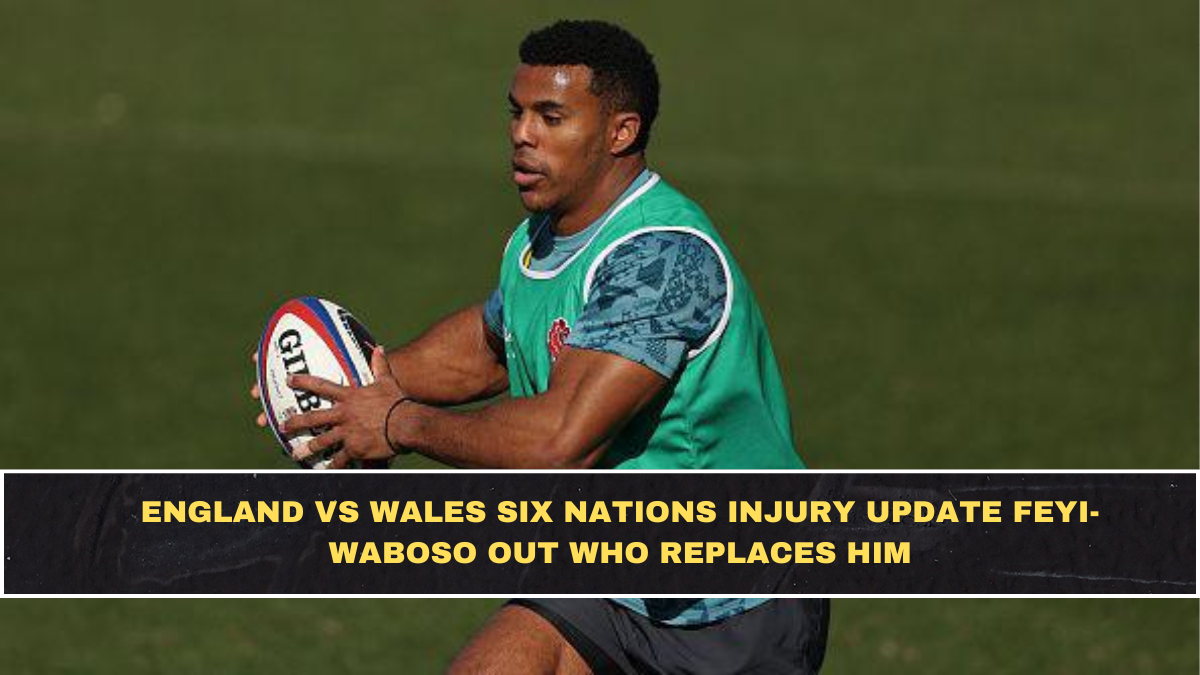
England’s Six Nations 2026 campaign has taken an unexpected turn after Immanuel Feyi-Waboso was ruled out ahead of the Wales fixture. Injuries are part of tournament rugby, but this one lands at a sensitive moment because it disrupts a backline combination that had been carefully shaped for pace, pressure, and wide-channel threat. The timing forces England to adjust not just personnel, but emphasis.
This is not simply a case of replacing one winger with another. Feyi-Waboso’s role in England’s structure affects kick-chase intensity, counterattack options, and how defenders hold width. Against a Wales side that thrives on capitalizing on hesitation, even small disruptions can cascade into larger tactical consequences.
What the Injury Means for England’s Original Game Plan
England’s initial plan leaned on Feyi-Waboso’s acceleration and defensive bite to stretch the field and compress decision-making for opponents. His ability to threaten off broken play allowed England to vary their exit strategies and punish loose kicks quickly. Losing that option narrows the margin for error in transition moments.
Without him, England’s attack becomes slightly more linear unless adjustments are made elsewhere. The team must now compensate by creating width through structure rather than spontaneous speed, which places greater responsibility on playmakers and fullback support lines.
Who Replaces Feyi-Waboso and What Changes With That Choice
The replacement choice will define how England adapt. A like-for-like speed option preserves some threat but may lack Feyi-Waboso’s defensive edge. A more experienced alternative brings composure and aerial security, but potentially reduces explosive gain-line breaks.
Selection will also signal intent. Opting for pace suggests England still want to challenge Wales on the edges. Choosing experience hints at a more territorial, pressure-based approach. Either way, the balance between risk and control shifts with this decision.
Impact on England’s Defensive Shape
Feyi-Waboso’s absence affects more than attack. His work rate in kick coverage and edge defense helped England maintain line integrity when systems were stressed. Replacing that requires clear communication and support from inside defenders to avoid mismatches.
Against Wales, who often probe the fringes before releasing width, England’s defensive alignment must be precise. Any hesitation on the edge can be punished quickly, especially in broken-field scenarios following kicks or turnovers.
How Wales Are Likely to Adjust Their Game Plan
Wales will be aware of the disruption and may test England’s new edge early. Expect targeted kicks, quick hands, and decoy runners designed to force the replacement winger into decision-making under pressure.
This does not mean Wales will abandon their core approach, but they are likely to add layers that exploit uncertainty. Even one early line break can tilt momentum and force England into reactive patterns they were hoping to avoid.
What This Means for the Midfield and Fullback Roles
With a changed winger profile, England’s midfield and fullback must compensate. That can mean earlier passes to generate width or delayed entries to hold defenders before releasing the outside runner. Timing becomes critical.
The fullback’s positioning in kick return also gains importance. Without Feyi-Waboso’s pace on one edge, England may choose to counter through central channels more often, altering how Wales set their defensive chase.
Broader Implications for England’s Six Nations Campaign
One injury does not define a tournament, but it tests adaptability. England’s depth will be scrutinized, and the coaching staff’s ability to recalibrate plans quickly will influence confidence within the squad.
If England manage the transition smoothly and maintain performance levels, the injury becomes a footnote. If not, it can linger as a turning point in a tight championship where margins are unforgiving.
Conclusion: A Test of Depth and Decision-Making
Feyi-Waboso being ruled out is a setback, but it is also an opportunity for England to demonstrate resilience. The challenge lies in adjusting details without losing identity, especially against a Wales side eager to exploit uncertainty.
How England respond will say more about their tournament credentials than the injury itself. In Six Nations rugby, adaptability often separates contenders from also-rans, and this fixture offers a clear test of that principle.
FAQs
Why is Feyi-Waboso’s injury significant for England?
His pace and defensive work rate influence both attacking width and edge defense, making him a key component of England’s balance.
Who is likely to replace Feyi-Waboso?
England have multiple options, and the final choice will reflect whether they prioritize pace, experience, or aerial security.
Does this weaken England against Wales?
It changes the matchup dynamics, but England’s depth allows them to remain competitive if adjustments are executed well.
How might Wales target this change?
Wales may test the replacement winger early with kicks and wide plays to probe defensive communication.
Will England change their attacking style because of this?
They may rely more on structured width and midfield creation rather than spontaneous edge breaks.
Does this affect England’s overall Six Nations prospects?
Only if adaptation fails. Strong teams absorb injuries without losing coherence, and this match will be a key indicator.