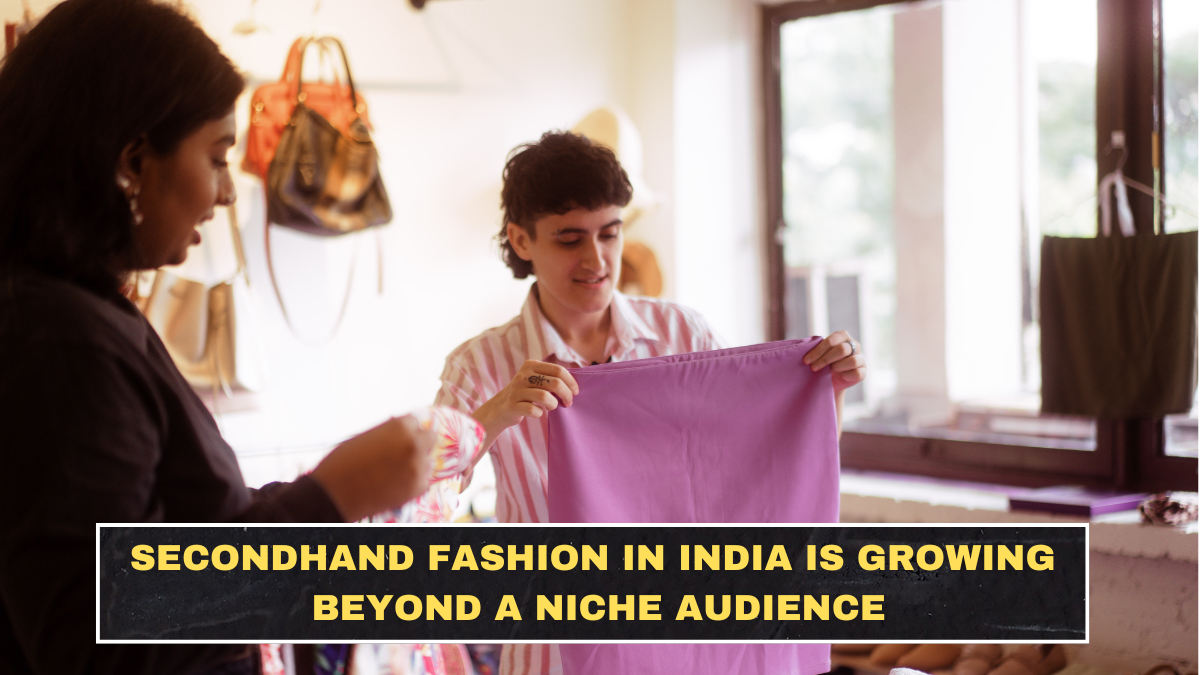
Secondhand fashion in India is no longer just a side habit for a small thrift crowd. That old view is outdated. Resale clothing is growing because it solves three real consumer problems at once: price pressure, changing style preferences, and increasing acceptance of pre-owned shopping. The market is still messy and fragmented, but the demand trend is obvious. India’s second-hand apparel market was valued at about $3.5 billion in 2024 in one recent market estimate, with projected double-digit growth through the next several years.
The market is getting bigger, not just louder
One reason this trend matters is scale. UnivDatos estimates India’s second-hand apparel market at roughly $3.5 billion in 2024, with an expected CAGR of around 13.2% from 2025 to 2033. Credence Research puts the market at about $3.0 billion in 2023 and projects it to reach more than $9.1 billion by 2032, which points in the same direction even if the starting values differ. The exact number can vary by methodology, but both estimates show the same thing: resale fashion in India is not tiny anymore, and it is not shrinking.
| India secondhand fashion indicators | Latest estimate |
|---|---|
| India second-hand apparel market, 2024 | ~$3.5 billion |
| Forecast CAGR, 2025–2033 | ~13.2% |
| Alternate market estimate, 2023 | ~$3.0 billion |
| Alternate forecast market size, 2032 | ~$9.1 billion |
Why demand is rising
The main driver is value. People want branded-looking or trend-relevant clothing without paying full retail prices. That matters even more in a market where fashion trends move quickly but disposable income is still uneven. Recent market analyses say lower prices, rising urbanization, digital access, and social-media-led thrift culture are all helping push resale clothing demand higher in India. This is not idealism. It is budget logic mixed with changing consumer behavior.
A second driver is changing social acceptance. Younger consumers do not automatically see secondhand clothing as inferior. Platforms, curated thrift pages, and creator-led styling content have made pre-owned fashion look more normal and more interesting. A recent analysis of India’s thrift economy also describes thrift as a real business ecosystem now, with sourcing, curation, and resale models becoming more structured instead of purely informal.
This is no longer only about “cheap clothes”
A lot of people still misunderstand resale and assume it is just distressed buying. That is lazy thinking. Many shoppers use secondhand fashion for access, not desperation. They want better brands, more unique pieces, or trend experimentation without taking a full-price risk. That is part of why secondhand fashion is moving beyond a niche audience. Global resale is also accelerating, with one recent forecast putting worldwide secondhand clothes sales at $289 billion in 2026, helped by AI-powered discovery and broader mainstream adoption. India is part of that wider behavioral shift, even if the local market is still more fragmented.
| What is driving resale clothing demand | What it means |
|---|---|
| Price-conscious shopping | Buyers want lower-cost fashion options |
| Social-media thrift culture | Resale is becoming more visible and acceptable |
| Unique style discovery | Consumers use resale for individuality, not just savings |
| Digital platforms and curation | Buying secondhand feels easier and more trustworthy |
Online platforms are doing a lot of the heavy lifting
Resale becomes mainstream only when trust and discovery improve. Digital channels help with both. Buyers can compare options, see styling, check condition, and shop beyond their city. Research on India’s thrift ecosystem highlights Instagram-based and online-led resale models as an important part of how the market operates. That matters because secondhand fashion depends heavily on presentation and curation. If the shopping experience looks chaotic or unreliable, mainstream buyers stay away. If it looks organized and stylish, adoption rises.
This also explains why secondhand fashion is becoming more appealing to younger urban consumers. Thrift is not just being sold as “save money.” It is increasingly being sold as “shop smarter,” “find unique pieces,” and “avoid paying full price for everything.” That shift in framing is one reason the audience is broadening.
The barriers are real, but the trend is still moving
This market is not perfect. Quality inconsistency, hygiene concerns, return limitations, and trust issues still hold resale back. Some platforms will fail because secondhand fashion is harder to scale cleanly than people assume. But those frictions do not cancel the trend. They just explain why the market is growing in stages instead of exploding overnight. The bigger picture remains clear: secondhand apparel in India is expanding because the demand case is strong enough to survive those obstacles.
What this says about Indian consumers
Indian fashion buyers are becoming more rational and more flexible. They still care about appearance, brands, and variety, but they are increasingly willing to get those things through alternative channels. That is why secondhand fashion is growing beyond a niche audience. It is not replacing all new-fashion demand, and it does not need to. It only needs to become a more normal part of how people shop, and the market data already suggests that is happening.
Conclusion
Secondhand fashion in India is growing beyond a niche audience because resale now matches how many consumers actually want to shop: lower prices, more choice, and less risk on trend-driven purchases. Current market estimates put the category in the multi-billion-dollar range already, with strong projected growth ahead. The market is still fragmented, and not every resale business will win, but the demand is real. Resale clothing in India is moving from alternative behavior to a more accepted retail habit.
FAQs
Is secondhand fashion really growing in India?
Yes. Recent market estimates place India’s second-hand apparel market at roughly $3.5 billion in 2024, with forecast growth of about 13.2% through 2033.
Why are more people buying resale clothing in India?
The biggest reasons are lower prices, broader digital access, social-media-driven thrift culture, and growing comfort with pre-owned fashion.
Is secondhand fashion only for budget shoppers?
No. Many buyers use resale to access better brands, unique pieces, and trend experimentation without paying full retail prices. That is one reason the category is moving beyond a niche audience.
What is still holding the market back?
Trust, quality consistency, hygiene concerns, and resale logistics are still real obstacles. The market is growing anyway, but it is not frictionless.
Click here to know more