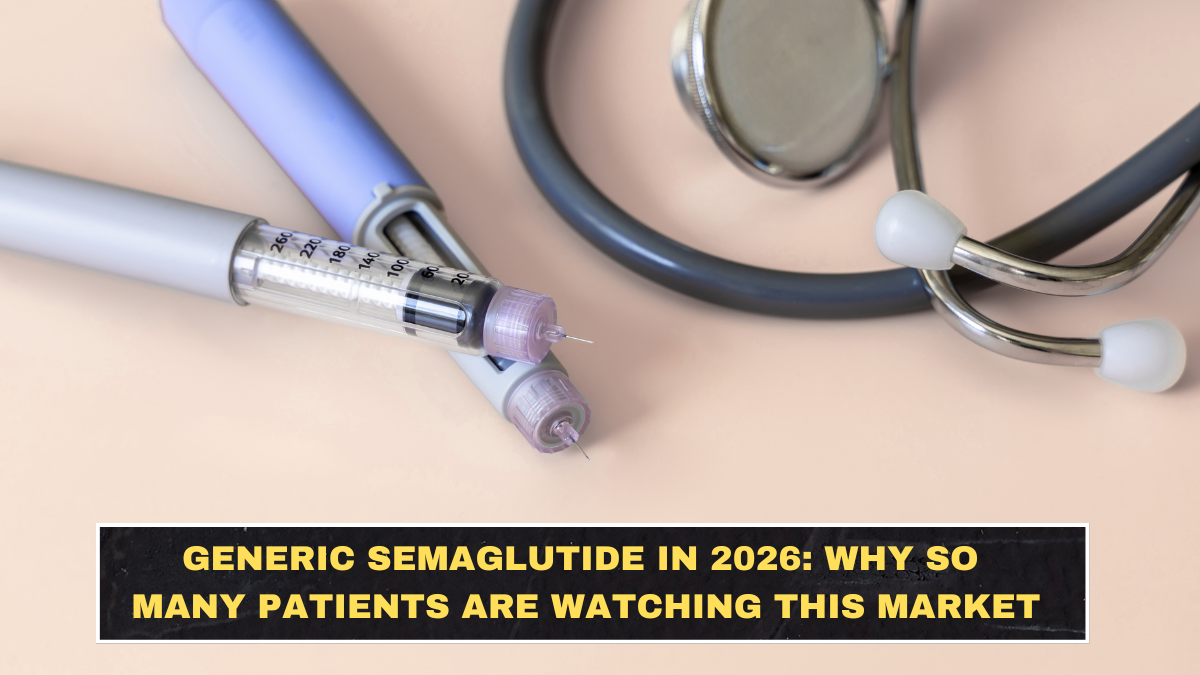
Yes and no, and that is exactly why people are confused. In India, semaglutide generics are becoming real because Novo Nordisk’s patent on semaglutide expired there on March 20, 2026, opening the door for local drugmakers to launch lower-cost versions. Reuters reported approvals or launch plans from companies including Sun Pharma, Dr Reddy’s, and Zydus. But in the United States, that is a different story. The FDA has also warned that compounded GLP-1 products cannot be marketed as generic versions of approved drugs. So if someone says “generic semaglutide is here,” the first question should be: where, exactly?
Why is this market getting so much attention?
Because price has been the biggest barrier for a long time, and patients are tired of hearing that access is expanding while the bill still feels ridiculous. Reuters reported that the India patent expiry triggered a wave of competition from local manufacturers, and Novo responded by cutting Ozempic and Wegovy prices there by up to 36% and 48% to defend market share. That tells you the real story better than any press release does: generics are not just a pharmacy story, they are a pricing war story.
What does generic competition actually change for patients?
The biggest change is simple: it puts pressure on prices. That does not mean every patient suddenly gets dirt-cheap medication overnight, but it does mean the old monopoly pricing starts getting challenged. Reuters reported that Indian companies were preparing reusable or adjustable-pen formats and large-scale launches right after patent expiry, which suggests this is not some tiny experimental market. Once multiple players enter, the conversation shifts from “Can patients get semaglutide at all?” to “Which version, from which maker, at what price, with what quality and oversight?” That is a much more interesting question, and frankly, a more useful one.
| What patients care about | Why it matters |
|---|---|
| Price | Lower-cost versions could expand access |
| Quality | Not all manufacturers inspire equal confidence |
| Device format | Pen design and dosing convenience affect real use |
| Country rules | Availability depends heavily on local patents and regulators |
| Marketing claims | “Generic” and “compounded” are not the same thing |
Is this mainly an India story right now?
Right now, yes, mostly. India is where the biggest visible change is happening in 2026 because patent expiry there has already triggered approvals, launches, and price cuts. Reuters described this as opening the door to cheaper weight-loss drugs in India, and other reporting suggests companies are rushing to capture the opportunity fast. That matters globally because India is one of the world’s biggest generic drug producers. What happens there often becomes a preview of how cost pressure could spread in other markets later.
Does this mean cheap semaglutide is coming everywhere soon?
Not automatically. This is where people get ahead of themselves. Patent timing is country-specific, regulation is country-specific, and market access is definitely country-specific. A March 2026 preprint estimated that by 2026, generic semaglutide could be available in 160 countries that together represent a large share of global diabetes and obesity burden, but that is an availability projection, not a promise that every patient in every major market will suddenly have a safe, approved cheap option right now. In other words, there is momentum, but momentum is not the same as universal access.
What should patients be careful about?
They should be careful about fake certainty. In the US especially, patients need to understand the difference between an FDA-approved generic and a compounded product being sold with aggressive marketing. The FDA said in February 2026 that non-FDA-approved compounded GLP-1 drugs cannot be advertised as generic versions or as the same as approved drugs. That is not a small technicality. It is the difference between a regulated generic pathway and marketing that tries to borrow credibility it has not earned. Patients who blur that distinction are making themselves easier to mislead.
Why are so many patients watching this market so closely?
Because semaglutide still sits at the center of one of the biggest health and pricing stories in the world. Weight loss, diabetes care, cardiovascular risk, drug shortages, insurance fights, and public demand are all colliding in one market. If generics spread responsibly, they could make treatment more accessible to a much larger group of people. If the rollout becomes messy, patients may face uneven quality, confusing claims, and more noise than clarity. That is why this market matters. It is not just about cheaper drugs. It is about who actually gets access when the hype meets the real world.
What is the real takeaway in 2026?
Generic semaglutide is not one clean global story. It is a patchy, fast-moving market story. In India, the generic shift is already happening. In the US, patients still need to be careful not to confuse compounded products with FDA-approved generics. And everywhere else, the next question is timing: which countries will see serious competition next, and how much will prices actually fall? Patients are watching because the stakes are obvious. When a drug is useful but expensive, generic competition is not a side note. It is the whole game.
FAQs
Is generic semaglutide available in 2026?
In some places, yes. India is seeing generic semaglutide launches after patent expiry in March 2026, but that does not mean the same thing is true in every country.
Is compounded semaglutide the same as a generic?
No. The FDA has specifically said compounded GLP-1 products cannot be marketed as generic versions of approved drugs.
Why did Novo cut prices in India?
Reuters reported Novo Nordisk cut Ozempic and Wegovy prices in India after semaglutide patent expiry there and rising competition from cheaper generics.
Will generics make semaglutide much cheaper?
They can put real downward pressure on prices, especially when multiple manufacturers enter. But how much patients save depends on country, competition, regulation, and product format.