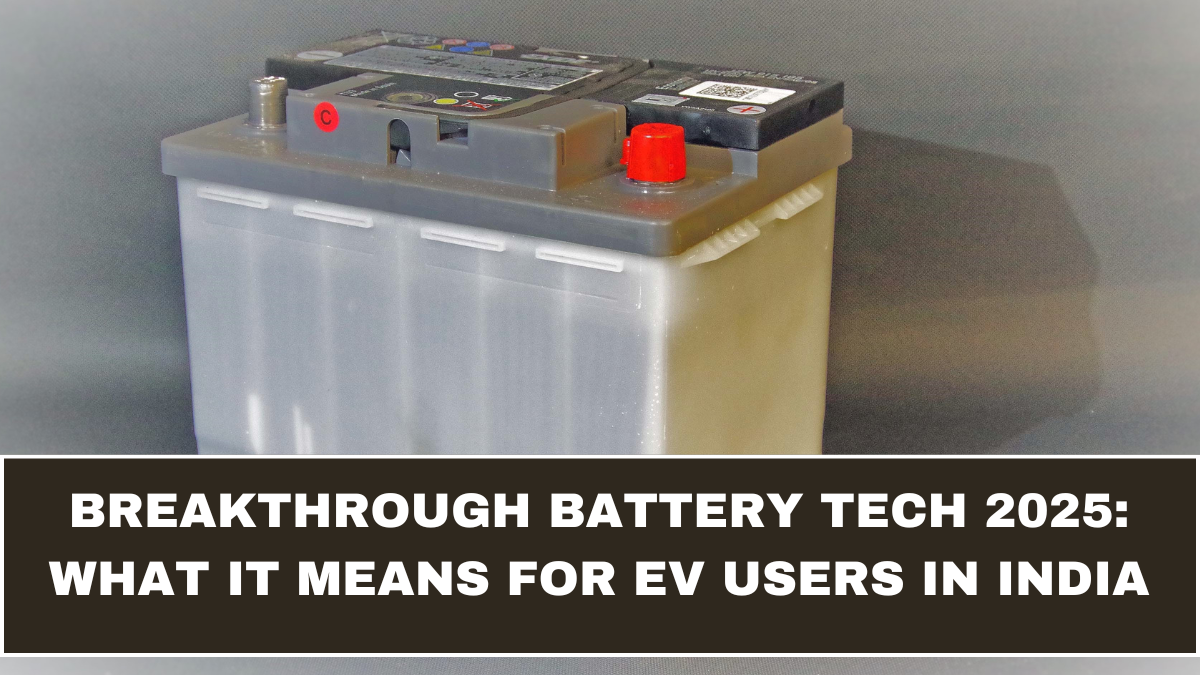
India’s electric vehicle (EV) market is on the cusp of a transformative year with the advent of next-generation battery technology. In 2025, several EV manufacturers and research institutions are introducing advanced fast-charging and longer-lasting batteries, which promise to address the most pressing challenges for Indian consumers: range anxiety, charging time, and cost. These breakthroughs could significantly accelerate EV adoption across urban and semi-urban regions while supporting India’s climate goals and reducing dependency on fossil fuels.
As EV infrastructure expands in India, battery performance remains a key factor influencing adoption. With new lithium-ion advancements, solid-state battery research, and innovative charging systems, the Indian EV ecosystem is poised for faster growth. This article explores the latest breakthroughs, their benefits, and how they will impact EV users in India.
Key Innovations in EV Battery Technology
Battery technology in 2025 has seen significant improvements aimed at increasing efficiency, safety, and charging speed. Leading breakthroughs include:
-
Fast-Charge Lithium-Ion Cells: New formulations allow batteries to charge from 0% to 80% in under 20 minutes without compromising lifespan.
-
Solid-State Batteries: These batteries replace liquid electrolytes with solid materials, offering higher energy density, better safety, and longer lifespan.
-
Improved Thermal Management: Advanced cooling and heating systems in batteries reduce the risk of overheating and improve performance in India’s diverse climates.
-
Recyclable and Eco-Friendly Materials: Manufacturers are using more sustainable components to reduce environmental impact at the end of battery life.
-
Battery Management Systems (BMS): AI-driven BMS optimizes charge cycles, monitors health, and enhances safety for long-term usage.
These innovations collectively address the major pain points of existing EV batteries and are tailored for India’s unique needs, including long-distance travel, high temperatures, and dense traffic conditions.
Benefits for EV Users in India
The latest battery technology offers multiple advantages to Indian consumers:
1. Reduced Charging Time
Fast-charging batteries cut charging duration significantly, making EVs more practical for daily commutes and long trips. Shorter charging times reduce reliance on multiple charging stations and improve convenience for users in cities like Delhi, Mumbai, Bengaluru, and Hyderabad.
2. Extended Driving Range
Solid-state and high-density lithium-ion batteries increase range per charge, helping EV users overcome range anxiety—a key barrier to adoption in India’s urban and semi-urban areas.
3. Lower Long-Term Costs
Long-lasting batteries with optimized BMS reduce the need for frequent replacements. Consumers benefit from lower maintenance and operational costs over the vehicle’s lifetime.
4. Enhanced Safety
New battery chemistries and thermal management systems reduce the risk of overheating, short circuits, and fires, providing safer driving experiences.
5. Environmental Benefits
Recyclable and more sustainable battery materials align with India’s green energy goals, helping reduce the carbon footprint of EV production and operation.
Impact on India’s EV Market
The Indian EV market has been growing steadily, supported by government policies such as FAME-II incentives, GST reductions, and state-level subsidies. The introduction of breakthrough battery technologies will further strengthen adoption by addressing the key consumer concerns of range, charging time, and safety.
EV manufacturers in India, including Tata Motors, Mahindra Electric, and Ola Electric, are investing in battery R&D to integrate these innovations into upcoming models. Startups and battery firms are also working on local production and recycling solutions, helping India reduce dependency on imported battery cells and raw materials.
Challenges in Implementing New Battery Technology
Despite the promise of advanced batteries, several challenges remain:
-
High Initial Costs: Cutting-edge battery tech is expensive to produce, which may affect retail prices initially.
-
Charging Infrastructure: Fast-charging batteries require compatible high-capacity chargers, which are still being expanded across India.
-
Supply Chain Dependencies: Raw materials such as lithium and cobalt are mostly imported, impacting local production costs.
-
Technical Adoption: Manufacturers and service centres need training to handle new battery systems safely and efficiently.
Addressing these challenges is essential for widespread EV adoption in India.
Future Outlook for Indian EV Batteries
Battery breakthroughs in 2025 signal a bright future for the Indian EV ecosystem. With faster charging, higher efficiency, and improved safety, EVs are likely to become more attractive than internal combustion engine vehicles, especially in cities struggling with air pollution. In the coming years, innovations such as AI-based battery monitoring, grid-connected EVs, and modular battery swapping could further improve usability and accessibility for Indian consumers.
As technology becomes more affordable and infrastructure expands, India’s EV market is expected to see increased adoption across private vehicles, public transport, and two-wheelers, contributing significantly to the country’s sustainability and climate action goals.
FAQs
What are the latest breakthroughs in EV batteries in India?
Fast-charging lithium-ion cells, solid-state batteries, improved thermal management, AI-driven BMS, and eco-friendly materials are the major innovations in 2025.
How do new batteries reduce charging time?
Advanced chemistries and optimized charging algorithms allow batteries to reach 80% charge in under 20 minutes without affecting lifespan.
Will these batteries increase EV range?
Yes, high-density lithium-ion and solid-state batteries significantly improve driving range per charge, addressing range anxiety.
Are new EV batteries safe for Indian conditions?
Enhanced thermal management and solid-state designs reduce overheating risks, making them safer for Indian temperatures and traffic conditions.
Do these batteries affect the cost of EVs?
Initial costs may be higher, but long-term savings come from longer lifespan, lower maintenance, and reduced energy consumption.