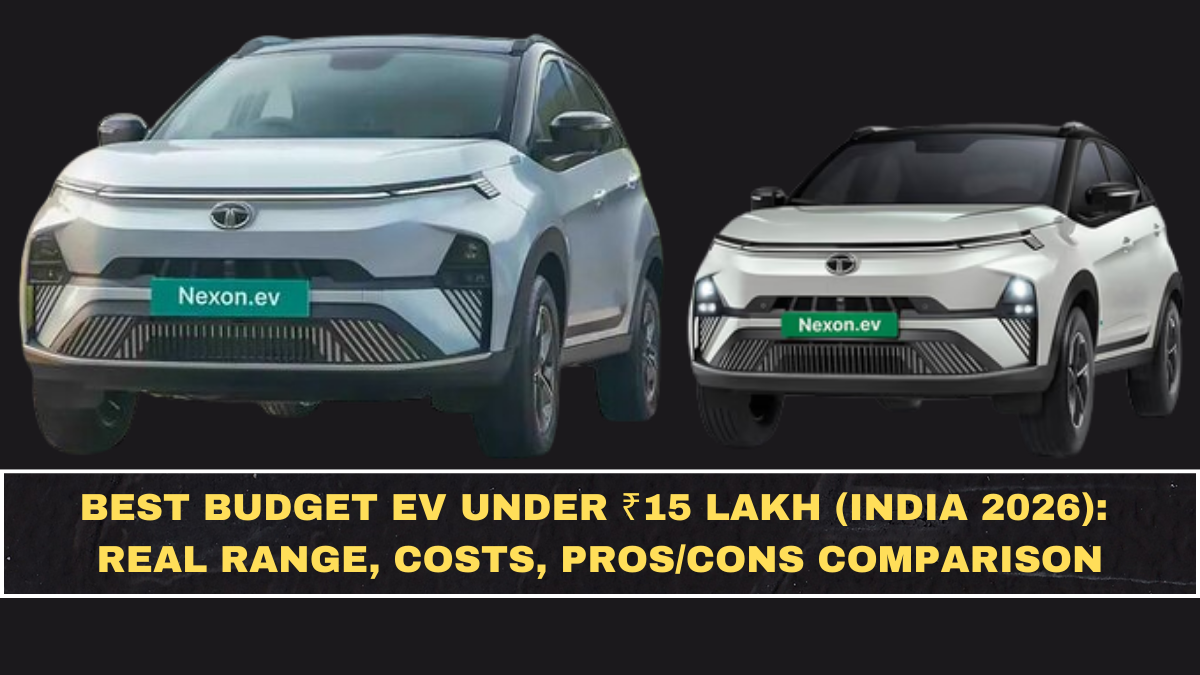
Electric vehicles under ₹15 lakh have moved from “early adopter experiments” to serious family and city-use options in India by 2026. Buyers are no longer asking whether EVs work, but whether they work for them. This shift is why interest in the best budget EV in India 2026 under 15 lakh comparison has grown sharply. People want clarity on real-world range, ownership costs, charging convenience, and where compromises still exist.
What makes the best budget EV in India 2026 under 15 lakh comparison especially important is that price alone no longer defines value. Two EVs with similar sticker prices can feel completely different in daily use. Range consistency, charging access, service coverage, and resale expectations now matter just as much as features and design, especially for first-time EV buyers in 2026.
Why the Under ₹15 Lakh EV Segment Matters in 2026
The under ₹15 lakh segment is where EV adoption either scales or stalls in India. This price bracket includes buyers upgrading from petrol hatchbacks and compact cars, not luxury early adopters. These buyers are practical, budget-aware, and sensitive to long-term costs.
In 2026, the best budget EV in India 2026 under 15 lakh comparison is less about which car looks futuristic and more about which one fits daily routines. Short city commutes, predictable running costs, and manageable charging setups define success in this segment. EVs that fail to meet these expectations struggle regardless of incentives or marketing.
Key Budget EV Options Considered in This Segment
Several EVs compete in the sub-₹15 lakh category, with Tata Punch EV, Tata Tiago EV, and MG Comet EV being the most commonly compared. Each targets a different buyer profile despite overlapping prices.
The best budget EV in India 2026 under 15 lakh comparison shows that there is no universal winner. Compact dimensions, battery size, cabin usability, and charging flexibility vary widely. Buyers must align vehicle choice with actual usage rather than spec-sheet appeal.
Real-World Range vs Claimed Numbers
Range remains the most critical factor in budget EV decisions. While manufacturers quote optimistic figures, real-world usage in traffic, heat, and mixed driving conditions tells a different story. In 2026, informed buyers expect usable range figures rather than best-case numbers.
In the best budget EV in India 2026 under 15 lakh comparison, smaller EVs deliver reliable city ranges but struggle with long highway trips. This is not a flaw, but a design choice. Buyers who understand this distinction tend to be more satisfied than those expecting petrol-like flexibility.
Charging Reality: Home vs Public Use
Charging convenience often decides whether a budget EV feels liberating or limiting. Home charging remains the most cost-effective and stress-free option, especially in this price bracket. Buyers with dedicated parking benefit significantly from predictable overnight charging.
Public charging is improving, but reliance on it can add complexity. The best budget EV in India 2026 under 15 lakh comparison highlights that EVs in this segment work best when charging routines are simple and consistent. Fast charging support varies and should be evaluated carefully before purchase.
Running Costs and Ownership Economics
One of the strongest arguments for EVs under ₹15 lakh is low running cost. Electricity expenses per kilometer are significantly lower than petrol, especially for city usage. Maintenance costs are also generally lower due to fewer moving parts.
However, ownership economics are not just about savings. Battery warranty terms, service network strength, and long-term reliability matter. The best budget EV in India 2026 under 15 lakh comparison shows that peace of mind is often worth more than marginal cost savings.
Who Should Not Buy a Budget EV Yet
Despite improvements, budget EVs are not for everyone. Buyers who frequently travel long distances, lack reliable home charging, or live in areas with limited service coverage may face inconvenience.
Understanding these limitations is essential when reviewing the best budget EV in India 2026 under 15 lakh comparison. EVs excel in defined use cases, but forcing them into unsuitable roles often leads to frustration rather than savings.
How to Choose the Right Budget EV for Your Needs
Choosing the right EV requires honest self-assessment. Daily driving distance, parking access, charging options, and service availability should guide decisions more than design or novelty.
In the best budget EV in India 2026 under 15 lakh comparison, the best choice is the one that fits seamlessly into daily life. Buyers who prioritize predictability and convenience over flexibility tend to have the most positive ownership experiences.
Conclusion: The Smart Way to Buy a Budget EV in 2026
Budget EVs under ₹15 lakh have matured significantly by 2026, but they still demand informed decision-making. They offer compelling advantages in running cost and urban usability while requiring compromises in range flexibility and charging dependence.
The best budget EV in India 2026 under 15 lakh comparison makes one thing clear: EV ownership success depends more on matching the car to lifestyle than chasing the lowest price. Buyers who approach EVs with realistic expectations are far more likely to see long-term value and satisfaction.
For the right user, a budget EV in 2026 is not just an alternative to petrol, but a smarter, calmer way to drive.
FAQs
Which is the best budget EV under ₹15 lakh in India in 2026?
There is no single best option. The right choice depends on city usage, charging access, and cabin needs.
What is the real-world range of budget EVs in this segment?
Most budget EVs deliver reliable city range but are not designed for frequent long highway trips.
Is home charging necessary for owning a budget EV?
Home charging greatly improves convenience and lowers costs, especially in this price segment.
Are budget EVs cheaper to maintain than petrol cars?
Yes, maintenance costs are generally lower due to simpler mechanical systems.
Who should avoid buying a budget EV in 2026?
Buyers without reliable charging access or with frequent long-distance travel needs may face challenges.