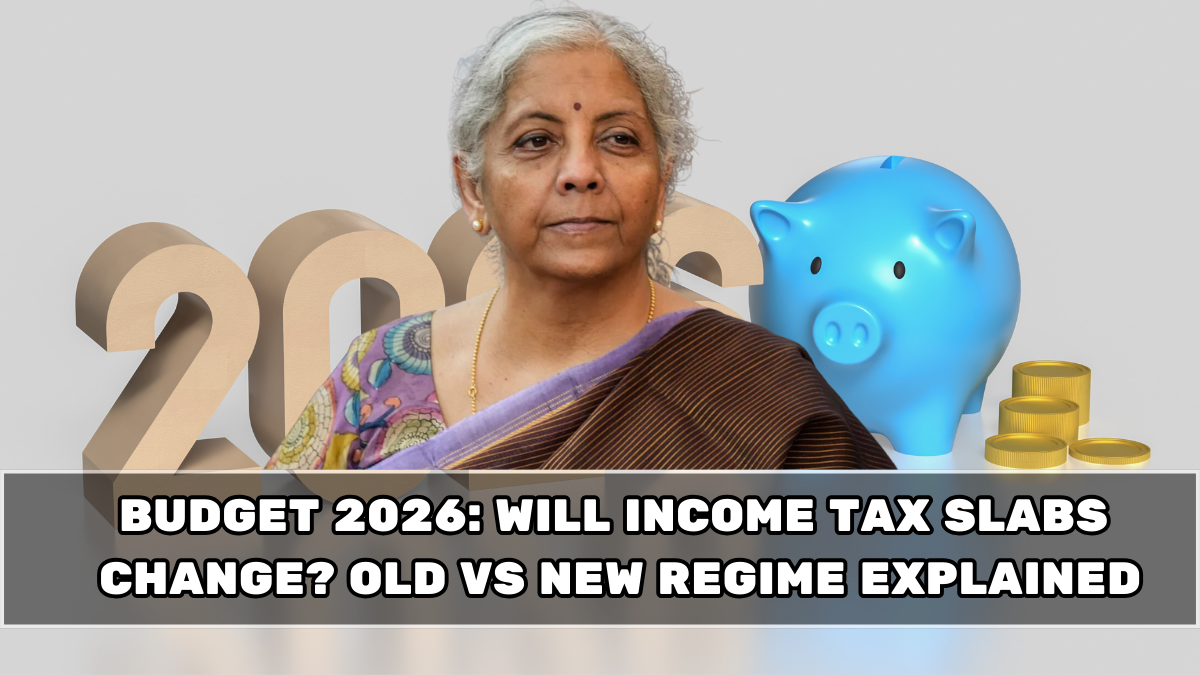
As Budget 2026 approaches, one question dominates salaried households and professionals alike: will income tax slabs finally change, and if yes, which regime will actually benefit taxpayers? After multiple years of parallel systems, confusion between the old vs new tax regime remains high, with many people unsure whether they’re optimizing take-home pay or overpaying taxes.
What makes this year different is the growing demand for simplicity and predictability. Instead of flashy announcements, taxpayers are watching closely for slab tweaks, standard deduction changes, and clarity on deductions that directly affect monthly cash flow rather than end-of-year calculations.
Current Income Tax Slab Structure at a Glance
| Regime | Core Feature |
|---|---|
| Old Tax Regime | Higher deductions, complex calculations |
| New Tax Regime | Lower rates, fewer deductions |
| Standard Deduction | Available in limited form |
| Flexibility | Choice allowed every year for salaried taxpayers |
Understanding this baseline is essential before assessing what Budget 2026 might change.
Why Income Tax Slabs Are Under Focus in 2026
Rising living costs have reduced the real value of existing exemptions and deductions. Even taxpayers with stable incomes feel squeezed due to higher expenses on housing, education, healthcare, and transport. As a result, slab thresholds that once felt reasonable now appear outdated.
This pressure has shifted attention toward slab realignment, particularly at the lower and middle-income levels, where small changes can significantly impact take-home pay.
Old vs New Tax Regime: Where Taxpayers Stand
The old tax regime remains popular among taxpayers who actively invest in tax-saving instruments and claim deductions such as HRA and insurance. However, the paperwork and planning required make it less appealing for younger professionals and gig workers.
The new tax regime, while simpler on paper, often feels unrewarding for those with existing deductions. Budget 2026 is expected to address this gap by either improving slab benefits or making deductions more intuitive within the new structure.
What Changes Taxpayers Are Expecting
Rather than a full overhaul, expectations center around incremental adjustments that improve clarity and fairness.
| Area | Expected Change |
|---|---|
| Basic Exemption Limit | Increase to protect lower incomes |
| Standard Deduction | Expansion to offset inflation |
| Slab Spacing | Wider income gaps between slabs |
| Regime Comparison | Clearer guidance on who benefits |
These changes aim to reduce confusion rather than introduce complexity.
How Slab Changes Affect Take-Home Pay
Even modest slab adjustments can have a noticeable impact on monthly income. A higher exemption limit or improved standard deduction reduces taxable income immediately, which is why salaried taxpayers focus more on these elements than on long-term incentives.
For many, the real concern is not which regime sounds better, but which one delivers consistent, predictable take-home pay throughout the year.
What Is Unlikely to Change
Large-scale removal of one regime or drastic rate cuts are generally not expected. Maintaining fiscal balance and revenue stability remains a priority, which limits the scope for aggressive tax reductions.
Understanding what is unlikely helps taxpayers avoid unrealistic expectations and plan more rationally.
How Taxpayers Should Prepare
Instead of waiting passively, taxpayers should compare both regimes using current income and deduction patterns. Keeping documentation ready and understanding regime flexibility allows quick adjustments once Budget 2026 announcements are finalized.
Prepared taxpayers respond better than reactive ones.
Conclusion
The debate around Budget 2026 income tax slabs is less about dramatic reform and more about practical relief. Taxpayers want clarity, fairness, and simplicity—especially when choosing between the old and new regimes. Small, well-communicated changes can have a larger impact than sweeping reforms, and those who understand the structure early will benefit the most.
FAQs
Will income tax slabs change in Budget 2026?
Minor adjustments are widely expected, especially at lower and middle-income levels.
Which tax regime is better in 2026?
It depends on income structure and deductions. There is no universal winner.
Is the standard deduction likely to increase?
Many expect some increase to offset rising living costs.
Can salaried taxpayers switch regimes every year?
Yes, salaried taxpayers can choose their preferred regime annually.
Should taxpayers wait before choosing a tax regime?
It’s better to prepare comparisons in advance and finalize after the budget.
Click here to know more.