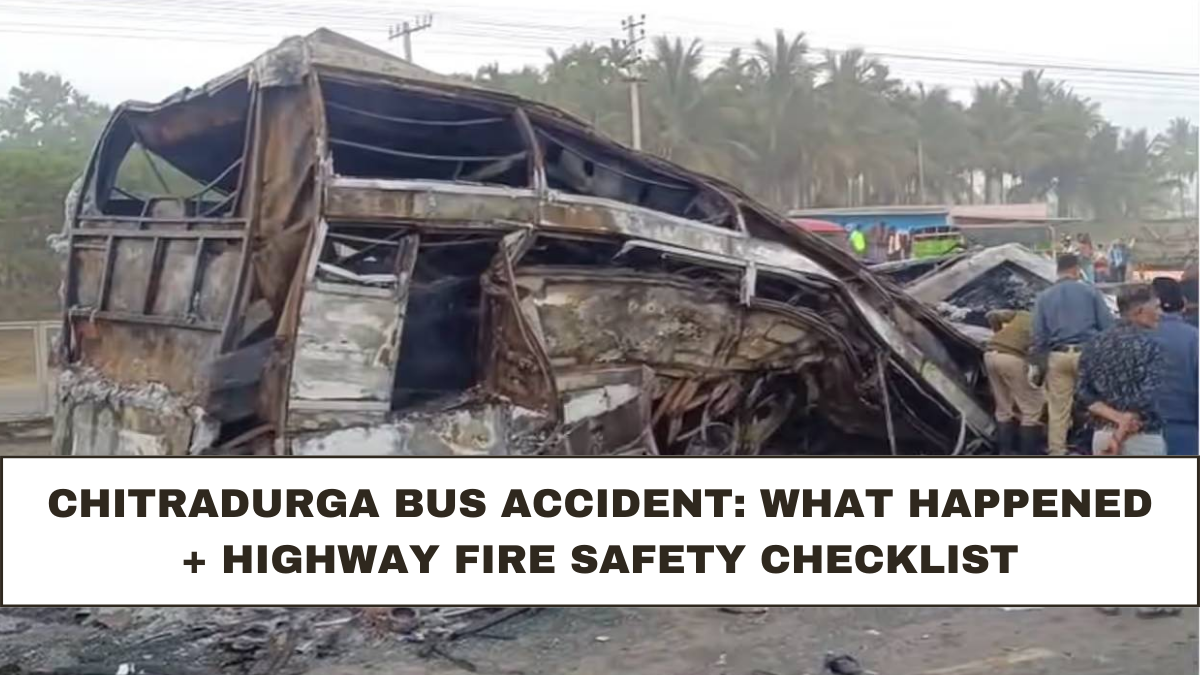
The karnataka chitradurga bus accident has drawn nationwide attention due to its seriousness and the safety concerns it raises for highway travel. Incidents involving buses and fires are rare but extremely dangerous, making public awareness crucial. As details continue to emerge, many people are searching for clarity on what happened, why such accidents occur, and what emergency steps passengers should follow during similar situations.
This article explains the incident in simple terms, highlights important highway safety lessons, and provides a practical fire-emergency checklist that every traveller should know.
What Happened in the Chitradurga Bus Accident
According to initial reports, the karnataka chitradurga bus accident involved a bus that caught fire while travelling on a highway stretch near Chitradurga. The incident led to panic among passengers and prompted emergency response teams to rush to the scene.
While investigations are ongoing, early information suggests that the fire may have started due to a mechanical or electrical issue. Authorities acted quickly to manage the situation and secure the area.
At this stage, officials are focusing on understanding:
• How the fire originated
• Whether mechanical failure played a role
• The speed of emergency response
• Safety compliance of the vehicle
• Evacuation effectiveness
The incident has renewed public discussion around bus fire safety and preparedness on Indian highways.
Why Highway Bus Fires Are So Dangerous
Highway bus fires are especially risky because they occur at high speeds and often far from immediate medical or fire support. In the case of the karnataka chitradurga bus accident, the location itself made quick response challenging.
Key dangers include:
• Rapid fire spread due to fuel
• Limited exit options
• Panic during evacuation
• Smoke inhalation
• Delayed access for rescue vehicles
Understanding these risks is essential for improving highway safety awareness.
Common Causes Behind Bus Fire Incidents
Although investigations differ case by case, experts point to several common reasons behind bus-related fire accidents.
Possible causes include:
• Electrical short circuits
• Engine overheating
• Fuel leakage
• Poor vehicle maintenance
• Faulty wiring
• Aftermarket modifications
• Lack of fire safety inspections
These factors are often highlighted when authorities analyze what happened in incidents like the Chitradurga case.
Immediate Emergency Steps During a Bus Fire
Knowing the right emergency steps can save lives during a fire-related accident. Passengers should stay alert and act quickly.
If you ever face a situation similar to the karnataka chitradurga bus accident, follow these steps:
• Stay calm and avoid panic
• Alert the driver immediately
• Move away from the source of fire
• Use the nearest exit quickly
• Avoid carrying luggage while exiting
• Help children, elderly, and injured passengers
• Do not push or rush blindly
• Move to a safe distance once outside
Quick, calm action makes a major difference in emergencies.
What To Do If You See Smoke Inside a Bus
Smoke often appears before flames. Recognizing early signs can help prevent serious injury.
If you notice smoke:
• Inform the driver immediately
• Cover your nose and mouth
• Stay low if smoke increases
• Prepare to evacuate
• Follow instructions from staff
• Avoid opening engine compartments yourself
These actions are part of basic highway safety awareness.
Fire Safety Equipment That Should Be Present in Buses
Most commercial buses are required to carry basic fire safety tools. Awareness helps passengers know what to look for.
Essential equipment includes:
• Fire extinguishers
• Emergency exit windows
• Clearly marked doors
• Emergency hammers
• Fire-resistant wiring
• Warning signage
The absence or malfunction of such equipment often becomes a key issue when reviewing incidents like the karnataka chitradurga bus accident.
Role of Drivers and Transport Operators
Driver training plays a major role in preventing and managing emergencies. Operators are responsible for:
• Regular vehicle inspections
• Fire safety training
• Proper maintenance schedules
• Emergency response drills
• Clear passenger instructions
Stronger enforcement of these measures improves overall highway safety and reduces accident severity.
What Passengers Can Do Before Boarding
Passengers can also take small precautions before starting their journey.
Helpful tips include:
• Observe general vehicle condition
• Locate emergency exits
• Check for fire extinguisher placement
• Avoid overcrowded buses
• Listen to safety instructions
• Keep essential belongings accessible
Awareness before travel makes emergency response faster and safer.
Why Public Awareness Matters After Such Incidents
Incidents like the karnataka chitradurga bus accident highlight the importance of awareness rather than fear. Sharing safety knowledge helps prevent panic and encourages preparedness.
Public awareness leads to:
• Better passenger behavior
• Pressure for safer transport standards
• Improved response training
• Accountability among operators
• Reduced risk during emergencies
This is why discussions around what happened and preventive measures are important.
Key Safety Lessons From the Chitradurga Incident
Some important takeaways include:
• Fire safety awareness saves lives
• Maintenance cannot be ignored
• Emergency exits must remain accessible
• Quick response reduces harm
• Passenger awareness matters
• Training and inspections are essential
These lessons apply to all forms of public transport, not just buses.
Final Thoughts
The karnataka chitradurga bus accident serves as a serious reminder of why road and fire safety awareness is essential. While investigations will determine the exact cause, the incident highlights the importance of preparedness, quick thinking, and proper safety systems.
By understanding highway safety, knowing emergency procedures, and staying alert while traveling, passengers can better protect themselves in unexpected situations. Awareness today can prevent tragedy tomorrow.
FAQs
What caused the Chitradurga bus accident?
Early reports suggest a possible fire-related issue, though investigations are ongoing to confirm the exact cause.
Were safety measures in place on the bus?
Authorities are reviewing whether all required safety equipment was present and functional.
What should passengers do if a bus catches fire?
They should stay calm, alert the driver, evacuate quickly, and move to a safe distance.
Are bus fires common on highways?
They are rare but can occur due to mechanical or electrical faults.
How can passengers improve their safety during highway travel?
By staying alert, identifying exits, and knowing basic emergency steps before and during travel.
Click here to know more.