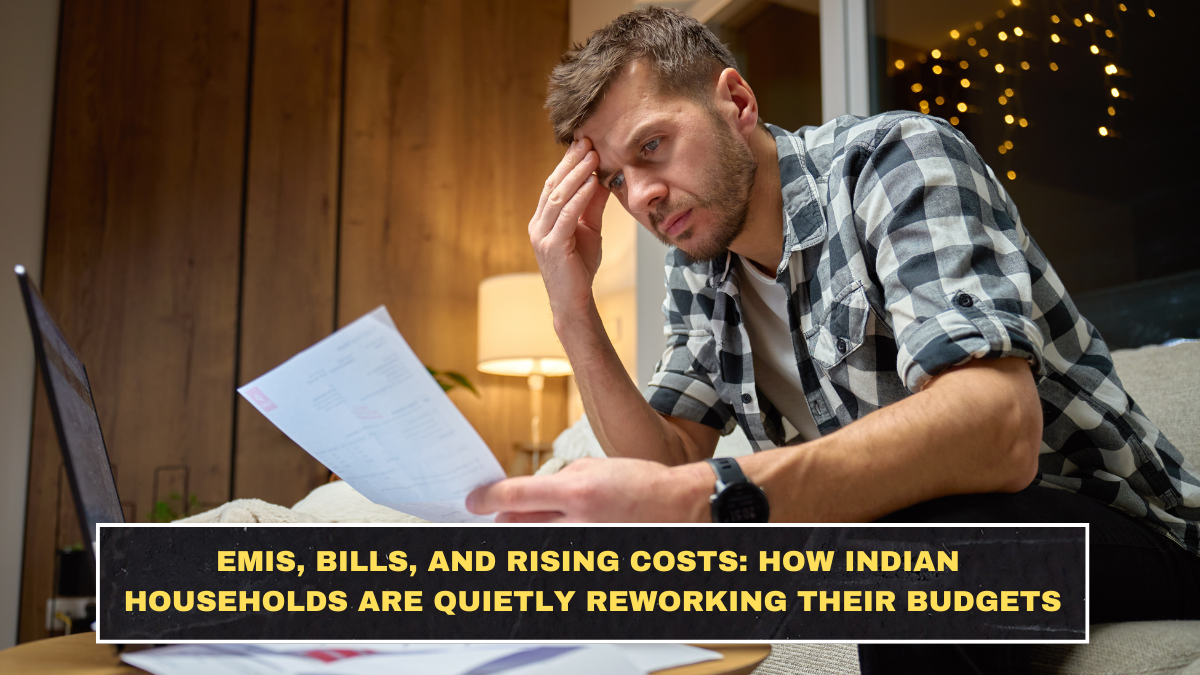
Indian households are not imagining the squeeze. The pressure is visible in the data. India’s household debt stood at 41.3% of GDP at end-March 2025, according to RBI data cited in Parliament, and a dominant share of that borrowing is for consumption. Reuters also reported household debt was 41.9% of GDP by December 2024, with non-housing retail loans making up 54.9% of total household debt as of March 2025. That matters because families are not just borrowing for homes. A lot of borrowing is tied to everyday spending and consumption.
Why EMI Pressure Feels Worse in 2026
The current squeeze is coming from several directions at once. Retail inflation was 2.75% in January 2026 and 3.21% in February 2026, which is not a crisis number on its own, but Reuters said rising oil prices and the Iran conflict are expected to push inflation above 4% in the coming financial year. Goldman Sachs separately warned inflation could rise to 4.6% in 2026, while also cutting India’s growth forecast and flagging rupee pressure. That combination is the real problem: EMIs do not fall just because inflation looks manageable for one month, and daily budgets get tighter when fuel, transport, and imported-cost pressure start building again.
The rupee is adding to that stress. Reuters reported the rupee fell past 94 per U.S. dollar and was down 11% in the fiscal year, its worst such drop in more than a decade. For households, that does not stay a market headline for long. A weaker rupee can feed into higher imported costs, especially when oil is already elevated.
The Numbers Households Should Actually Notice
| Pressure point | Latest data | Why it matters for budgets |
|---|---|---|
| Household debt | 41.3% of GDP at end-March 2025 | Shows families are carrying more debt than the recent average. |
| Consumption-heavy borrowing | 54.9% of household debt is non-housing retail loans | Means borrowing is not only for assets; it is also supporting spending. |
| Inflation | 3.21% in February 2026 | Daily costs are not exploding, but pressure is still real. |
| Inflation outlook | Above 4% expected; Goldman sees 4.6% in 2026 | Suggests relief may not last if oil stays high. |
| Rupee | Fell past 94/USD, down 11% in the fiscal year | Raises imported-cost pressure. |
How Households Are Quietly Adjusting
The adjustment is not glamorous. It is practical and defensive. Families are usually doing some combination of these:
- delaying non-essential purchases
- cutting discretionary app spending and eating out
- stretching replacement cycles for phones, appliances, and travel
- shifting more income toward EMIs and fixed monthly bills
- keeping less room for impulse spending
This behavior lines up with broader data trends. The Economic Survey 2025–26 said household financial savings have continued shifting toward market-linked instruments, while Reuters previously noted household savings rates have fallen from about 24% a decade ago to around 18% as debt has risen. That is the uncomfortable truth: many households are not “budgeting better”; they are operating with thinner financial cushioning than before.
What Actually Works Better Than Generic Advice
A lot of personal-finance advice in India is useless because it tells people to “save more” without acknowledging fixed obligations. The more realistic approach is:
- separate fixed costs from flexible costs first
- track total EMI outflow as one number, not loan by loan
- cut recurring leaks before cutting essentials
- stop treating short-term credit as normal monthly income
That last point matters more than people admit. RBI-linked data show household borrowing has become more consumption-oriented. When credit is being used to support lifestyle or short-term spending, the budget eventually becomes fragile even before inflation rises again.
What Readers Should Not Ignore
Two facts matter most right now:
- inflation looks lower than last year, but the direction of risk is upward again because of oil
- household debt is already elevated, and a large share is tied to consumption rather than asset-building
That means the pressure on budgets is not just emotional. It is structural.
Conclusion
Indian households are reworking their budgets because the numbers are forcing them to. Debt is high by recent standards, a large share of borrowing is consumption-linked, inflation risks are building again, and the rupee has weakened sharply. The useful takeaway is not to romanticise “frugal living.” It is to recognise that EMI pressure in 2026 is being driven by real macro conditions, not just bad personal habits. Families that survive this phase better will usually be the ones that measure fixed obligations honestly and cut repeat spending before the squeeze gets worse.
FAQs
Is EMI pressure in India really rising?
Yes. Household debt was 41.3% of GDP at end-March 2025, and a large share of borrowing is consumption-linked, which makes budgets more sensitive to inflation and income pressure.
Why does oil matter for household budgets?
Higher oil prices can raise transport, logistics, and imported-cost pressure. Reuters said rising oil is expected to push inflation above 4% in the coming year.
Is inflation still low in India right now?
February 2026 retail inflation was 3.21%, but the outlook has become less comfortable because of oil and currency pressure.
What is the biggest budgeting mistake households make?
Treating short-term credit as normal income is one of the worst mistakes, especially when consumption-oriented borrowing is already a large part of household debt.