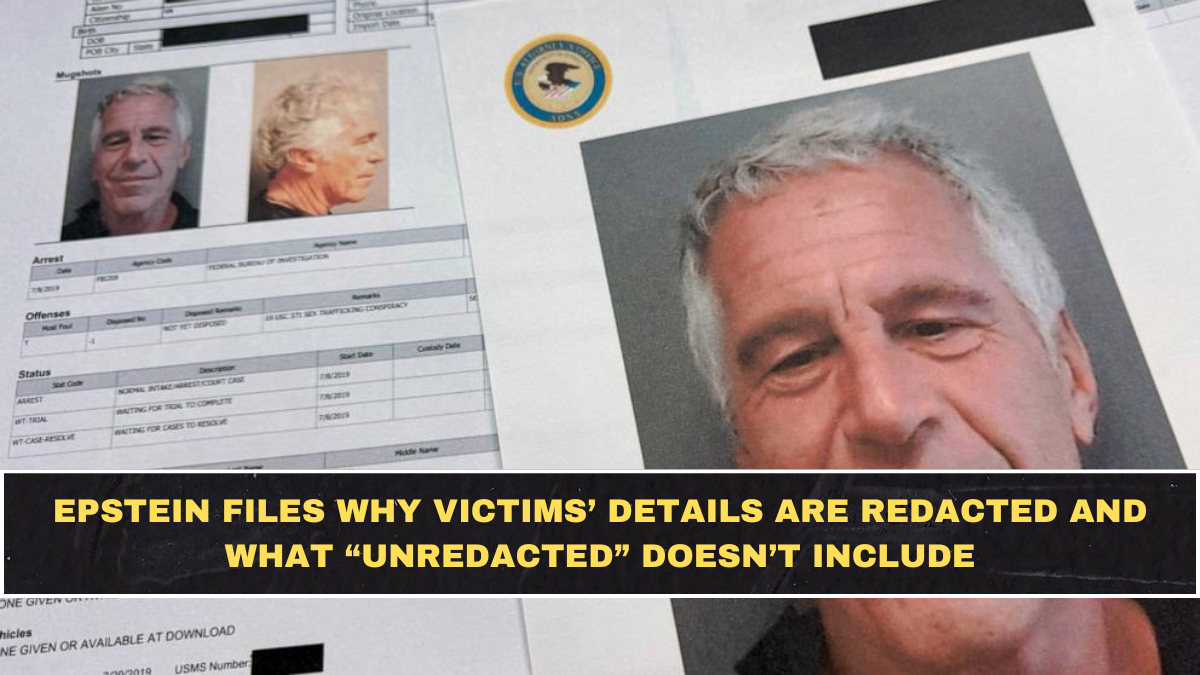
The biggest misunderstanding in the Epstein-files conversation is the idea that redactions exist to “hide the truth.” In reality, redactions are often about preventing collateral damage, especially to victims and witnesses who never chose public exposure. When people demand fully unredacted releases, they usually imagine a clean document dump that only reveals wrongdoing. Real case records don’t work like that.
Epstein-related files can contain intensely identifying details that are easy to weaponize in a viral ecosystem. Even if a victim’s name is removed, details like school, workplace, family references, travel notes, or specific dates can make someone identifiable within minutes. That’s why courts and agencies treat redaction as a basic harm-reduction tool, not a political choice.
Why Victim Details Get Redacted First
In sexual abuse and trafficking contexts, victim privacy is not a courtesy, it’s a protection. Public identification can trigger harassment, threats, stalking, and lifelong stigma, even when the victim has done nothing wrong. Many survivors also have ongoing safety concerns, including fear of retaliation or doxxing by strangers who turn cases into online sport.
There’s also the psychological reality people ignore: exposure is retraumatizing. Survivors may be trying to rebuild normal lives, and the internet doesn’t allow “partial publicity.” Once identifying information leaks, it gets copied, reposted, and archived permanently, even if platforms later remove it.
The Legal Reasons Redactions Exist in Court and Government Releases
Redactions are grounded in legal frameworks that try to balance transparency with privacy and due process. Courts routinely require parties to remove personal identifiers from public filings, and agencies apply similar standards when releasing large volumes of records. This includes things like addresses, phone numbers, birthdates, medical information, and anything that can identify protected individuals.
In sensitive cases, judges can also seal portions of records or apply protective orders. That doesn’t mean the content is “fake” or “suppressed.” It means the legal system recognizes that not all truth belongs in public view if it creates new victims or undermines fairness.
Why “Unredacted” Doesn’t Mean “Everything”
Even when lawmakers or authorized reviewers get “unredacted access,” it typically does not mean unlimited visibility into every category of information. Some material may remain restricted because it involves protected victim identities, sealed proceedings, or information that would create immediate harm if widely exposed. “Unredacted” usually means fewer black bars for a controlled audience, not the removal of every legal boundary.
This is why viral claims that “all names will be revealed” are usually nonsense. Oversight access is designed to confirm whether redactions are being applied properly, not to create a public naming event.
What Redactions Are Trying to Prevent
Redactions mainly prevent three predictable outcomes: misidentification, harassment, and false certainty. Misidentification happens when people connect dots incorrectly and publicly accuse the wrong person. Harassment follows because online mobs don’t wait for verification. False certainty spreads when a name in a document is treated like a conviction, even when the document is just a reference, a contact detail, or a procedural mention.
The ugly truth is that the internet rewards “lists,” not context. Redactions are one of the few tools that slow that machine down, especially when the cost of a mistake is a real human life being torn apart.
Why Names Can Appear Without Proving Wrongdoing
A name in a record is not a verdict. Names can appear because someone was interviewed, mentioned by another person, included in a contact list, present in scheduling notes, or referenced in an email chain. None of those automatically mean guilt, and treating them that way collapses the core idea of due process.
This is also why responsible reporting avoids the trap of “named equals guilty.” In high-profile cases, documents often contain unverified statements, incomplete leads, or third-party claims that were never tested in court. Context is everything, and most viral posts erase it.
The Difference Between Public Interest and Public Harm
People confuse accountability with exposure. Accountability is about investigating, charging, proving, and sentencing based on evidence and law. Exposure is often just mass distribution of raw material that the public interprets emotionally, not accurately. When victims’ details leak, the harm is immediate and irreversible, while the accountability benefit is often unclear.
If someone genuinely wants justice, the focus should be on verifiable actions, credible processes, and lawful outcomes. Turning documents into “gotcha content” doesn’t protect victims and doesn’t improve truth—it usually pollutes it.
How to Talk About Redactions Without Spreading Misinformation
If you’re covering or discussing these files, speak precisely. Say “redacted to protect victims” when that is the reason, and avoid implying that redactions confirm a cover-up. If a claim relies on screenshots, cropped pages, or anonymous captions, treat it as unverified until it can be matched to a real filing context.
Most importantly, avoid sharing identifiable fragments even if they seem minor. In the real world, tiny details are enough to identify someone, especially when thousands of people start hunting.
Conclusion: Redactions Are a Guardrail, Not a Secret Code
Redactions in Epstein-related records exist because the legal system understands something the internet refuses to learn: truth without protection becomes cruelty. Protecting victims’ identities and limiting collateral harm is not “protecting powerful people.” It is preventing a second wave of damage aimed at individuals who were already exploited.
“Unredacted access” for a controlled review audience doesn’t erase these limits, and it shouldn’t. The most honest way to read these documents is with restraint, context, and respect for due process. If your takeaway is “name equals guilt,” you’re not exposing injustice—you’re manufacturing it.
FAQs
What is the main reason victim details are redacted in Epstein-related files?
To protect victims from identification, harassment, retaliation, and long-term personal harm.
Does “unredacted access” mean the public will see everything?
No, controlled access for oversight does not automatically translate into full public release of sensitive material.
Do redactions mean the documents are hiding criminal evidence?
Not necessarily. Redactions are often about privacy, safety, and legal protections rather than hiding facts.
If a name appears in a document, does it prove involvement?
No. Names can appear for many non-criminal reasons and require context to interpret accurately.
Can victims still be identified even if names are removed?
Yes. Small details can identify someone, which is why broader redactions may be used beyond just names.
How should people share information about these files responsibly?
Avoid screenshots and “lists,” don’t post identifiable fragments, and don’t treat mentions as proof without context.