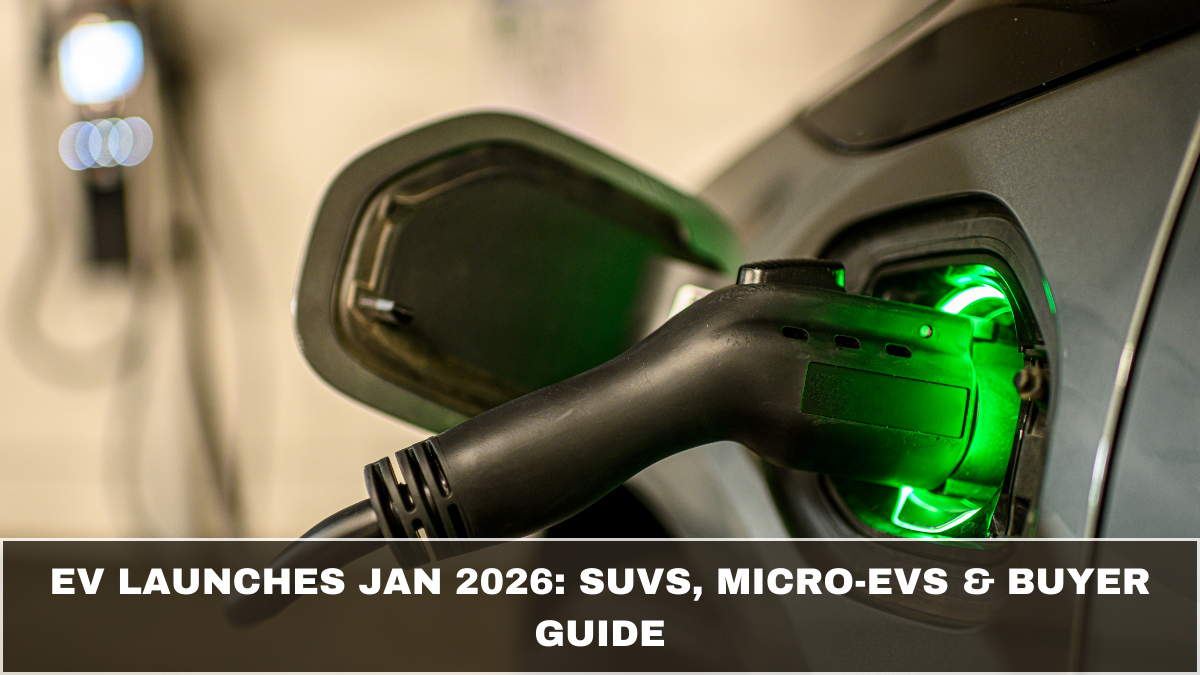
The Major January 2026 EV launches in India mark a significant push in the electric vehicle market, with established manufacturers and emerging players introducing SUVs, micro-EVs, and premium electric cars. With growing EV adoption, favourable government policies, and rising charging infrastructure, January 2026 promises a wave of launches that cater to urban commuters, family SUV buyers, and environmentally conscious consumers.
This guide covers the most anticipated EVs, including Mahindra XUV 7XO, Duster EV, Tata electric vehicles, and other key models, their features, pricing expectations, and practical advice for Indian buyers looking to transition to electric mobility.
Why January 2026 Is Important for EVs in India
The EV sector in India has been growing steadily, and Major January 2026 EV launches India show that manufacturers are targeting diverse segments:
-
Electric SUVs for families and long-distance travel
-
Micro-EVs for urban commuting and last-mile mobility
-
Mid-range premium EVs with advanced technology and features
January 2026 is strategically important as these launches align with the new financial year budgets, festival promotions, and government incentives for electric vehicles.
Major EV Launches to Watch
Mahindra XUV 7XO
The Mahindra XUV 7XO is expected to redefine electric SUVs in India. Key highlights:
-
Long-range battery with fast-charging support
-
Advanced driver-assistance systems (ADAS)
-
Premium interior with connected features
-
Competitive pricing for a mid-size EV SUV
This EV targets families and urban professionals seeking a versatile vehicle for city and highway use.
Duster EV
The Duster EV enters the Indian market with strong anticipation:
-
Compact electric SUV with rugged design
-
Efficient battery for daily city commutes and occasional long drives
-
Affordable EV for entry-level SUV buyers
-
Safety and comfort features suitable for Indian roads
Its popularity is expected among young professionals and small families.
Tata Electric Vehicles
Tata continues to expand its EV portfolio:
-
Models ranging from compact hatchbacks to midsize SUVs
-
Focus on reliable performance, charging convenience, and connectivity
-
Tata EVs are known for Indian conditions adaptation and service network
-
Some models may feature ultra-fast charging and extended range
These EVs are crucial in India’s EV adoption strategy, targeting affordability and practicality.
Micro-EVs and Urban Mobility
The Major January 2026 EV launches India also highlight micro-EVs, designed for crowded urban environments:
-
Compact dimensions suitable for city traffic and narrow lanes
-
Lower price points appealing to first-time EV buyers
-
Battery efficiency optimized for short commutes
-
Environment-friendly alternative to traditional petrol two-wheelers and hatchbacks
These micro-EVs are expected to gain traction among daily commuters and delivery services in metropolitan areas.
Key Features Buyers Should Look For
When considering January 2026 EV launches, buyers should evaluate:
-
Battery range and charging time
-
Safety features, airbags, and stability control
-
Connectivity, infotainment, and smart features
-
Service network and after-sales support
-
Total cost of ownership including subsidies and incentives
Understanding these factors ensures that buyers choose EVs aligned with their lifestyle and budget.
Government Incentives and Benefits
Indian EV buyers in January 2026 can take advantage of various policies:
-
Subsidies under FAME II and state-specific EV incentives
-
Lower registration fees and road taxes for electric vehicles
-
Reduced insurance premiums in some states
-
Access to preferential parking and low-emission zones in urban areas
These incentives can significantly reduce the cost of ownership and encourage quicker adoption.
Charging Infrastructure and Practical Considerations
With the Major January 2026 EV launches India, charging convenience is crucial:
-
Fast-charging stations along highways and metro cities are expanding
-
Home charging options, including wall-mounted chargers, are available
-
Public charging networks supported by manufacturers ensure reliability
-
Urban commuters should consider range, charging availability, and frequency of use
Proper planning helps buyers enjoy hassle-free EV ownership.
Price Expectations and Market Competition
January 2026 EV launches aim to be competitive across segments:
-
Mid-size SUVs like Mahindra XUV 7XO expected in the ₹25–35 lakh range
-
Compact EVs and micro-EVs under ₹15 lakh for urban mobility
-
Tata EVs spread across ₹10–30 lakh segments
-
Duster EV positioned as an affordable SUV alternative
This diversity caters to different buyer segments and enhances adoption rates.
Conclusion
The Major January 2026 EV launches India indicate a vibrant start to the year for India’s electric mobility sector. From premium SUVs like Mahindra XUV 7XO to entry-level Duster EVs and Tata electric models, the market is expanding across multiple segments. Micro-EVs are set to change urban commuting, while government incentives and growing charging infrastructure make EV ownership more feasible than ever. Buyers can look forward to a combination of technology, performance, and sustainability with the January 2026 EV launches, making this an exciting period for India’s transition to electric vehicles.
FAQs
Which EVs are launching in January 2026 in India?
Key launches include Mahindra XUV 7XO, Duster EV, and new Tata electric models, along with urban micro-EVs.
What is the expected price range for these EVs?
Prices range from ₹10–15 lakh for micro-EVs to ₹25–35 lakh for mid-size electric SUVs.
Are there government incentives for EV buyers in India?
Yes, buyers can avail subsidies under FAME II, reduced registration fees, and state-specific benefits.
How long is the battery range of these EVs?
Battery ranges vary by model, typically from 200–450 km on a single charge, with fast-charging support for premium SUVs.
What factors should I consider before buying an EV?
Consider battery range, charging infrastructure, safety features, connectivity, after-sales support, and total cost of ownership.