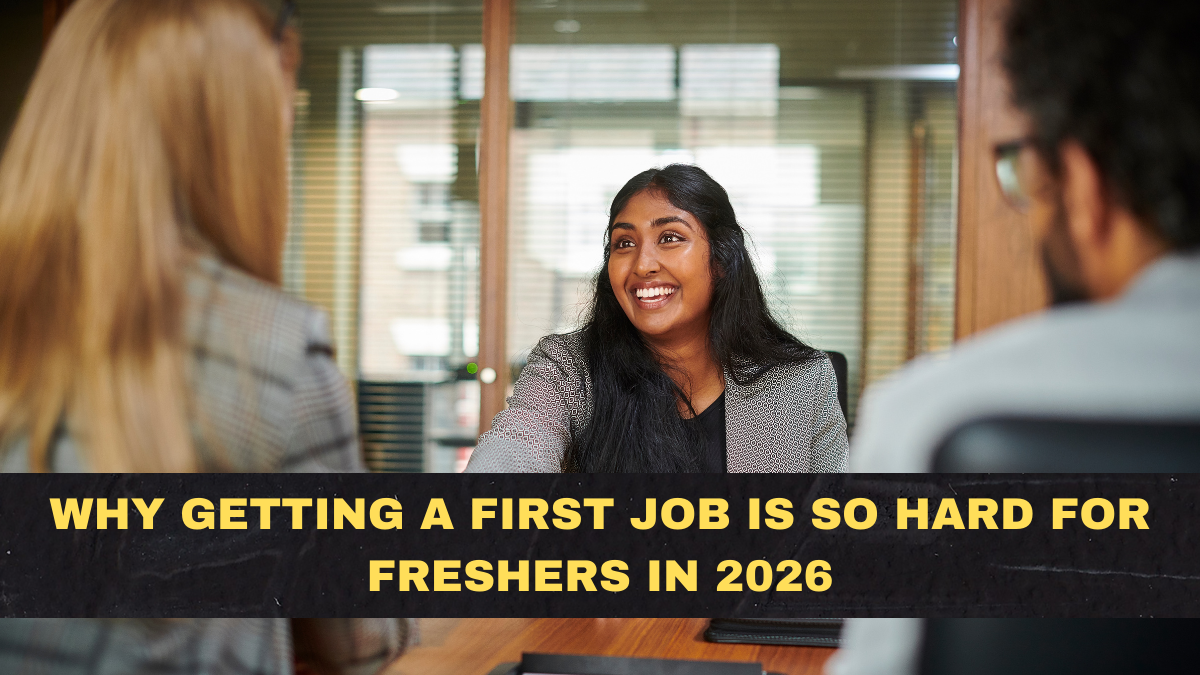
Entering the job market for the first time in India has never been easy, but in 2026 it has become especially unforgiving. Fresh graduates step out with degrees, hope, and ambition, only to face rejection after rejection for reasons that feel deeply unfair. The fresher job struggle is no longer about lack of effort. It is about a system that demands experience from people who are just starting out.
What makes this phase emotionally exhausting is the silence. Applications go unanswered, interviews end without feedback, and confidence erodes slowly. Many freshers begin to doubt their abilities, even when the problem lies not with them, but with how entry-level hiring now works.
Why Experience Is Demanded Even for Entry-Level Roles
One of the biggest reasons behind the fresher job struggle is the inflation of job requirements. Roles labeled as “entry-level” often expect one to three years of experience.
Companies prefer candidates who can contribute immediately without training. Rising business pressure has reduced patience for onboarding and mentoring.
In 2026, cost efficiency often overrides talent development, leaving freshers filtered out before they get a chance to prove themselves.
The No-Experience, No-Job Loop
Freshers find themselves trapped in a logical dead end. Employers ask for experience, but experience requires employment.
Internships and unpaid roles become the default workaround, but they do not always lead to full-time offers. Many freshers cycle through temporary roles without stability.
This loop creates frustration and delay, making the first job feel permanently out of reach.
Oversupply of Graduates Has Changed Hiring Dynamics
India produces more graduates each year than the job market can absorb comfortably. This oversupply shifts bargaining power entirely to employers.
With so many applicants, companies raise requirements simply because they can. Even average roles receive hundreds of applications.
In such an environment, freshers are compared not just to peers, but to experienced professionals willing to accept lower pay.
Degrees Are No Longer Enough to Stand Out
Earlier, a degree itself signaled readiness. In 2026, degrees have become baseline filters rather than advantages.
Recruiters look for proof of practical ability, communication skills, and adaptability. Without visible evidence, resumes blend into the crowd.
This shift leaves many freshers unprepared, as their education focused more on exams than execution.
The Role of Low Starting Salaries
Even when freshers receive offers, salaries often feel discouraging. Pay levels in many sectors have not kept up with living costs.
Some roles offer compensation that barely justifies years of study. This creates a dilemma between accepting survival jobs or waiting for better opportunities.
Low pay contributes to dissatisfaction and makes the fresher job struggle emotionally heavier.
Psychological Impact of Prolonged Job Search
Extended unemployment affects mental health deeply. Freshers experience anxiety, loss of routine, and declining self-confidence.
Social comparison worsens the situation. Watching peers secure jobs while remaining unemployed creates shame and self-doubt.
In 2026, this psychological toll is one of the most overlooked aspects of youth unemployment.
Why Campus Placements Don’t Solve Everything
Campus placements benefit a limited segment of students. Many colleges offer few opportunities or mass-recruitment roles with limited growth.
Students outside top campuses must navigate the open market alone. This uneven access widens inequality among freshers.
As a result, a large number of graduates enter the job market without institutional support.
How Some Freshers Are Breaking the Cycle
Despite challenges, some freshers are finding alternative paths. Building skills through projects, freelancing, and internships helps create proof of ability.
Networking, referrals, and showcasing work publicly improve visibility. These efforts require initiative but deliver results over time.
In 2026, self-driven employability is becoming more effective than waiting passively for openings.
What Needs to Change in the Hiring Ecosystem
The fresher job struggle highlights a structural problem. Companies benefit long-term by investing in early talent, but short-term thinking prevents it.
Education systems must integrate real-world exposure earlier. Hiring models need to recognize potential, not just experience.
Until these shifts occur, freshers will continue to face unnecessary barriers at the very start of their careers.
Conclusion: The First Job Barrier Is Systemic, Not Personal
Struggling to get a first job in 2026 does not mean a fresher is incompetent or unmotivated. It reflects a hiring ecosystem that prioritizes immediate returns over talent nurturing.
Freshers must adapt, but the burden should not fall entirely on them. The system must evolve to support smoother entry into the workforce.
Understanding this reality helps freshers protect their confidence while navigating a difficult but temporary phase of their professional journey.
FAQs
Why is it so hard for freshers to get jobs in 2026?
Because employers demand experience, competition is high, and degrees alone no longer differentiate candidates.
Do internships really help freshers get hired?
They can, but only when they provide real skills and exposure rather than repetitive, unpaid work.
Is low salary normal for first jobs?
In many sectors, yes. However, growth potential matters more than initial pay.
How long does the fresher job struggle usually last?
It varies, but persistence combined with skill-building typically shortens the transition.
Should freshers wait for the perfect job?
Waiting without improving employability often backfires. Strategic entry roles can be stepping stones.
What is the best way for freshers to stand out?
Demonstrating skills through projects, networking, and visible work output makes a significant difference.