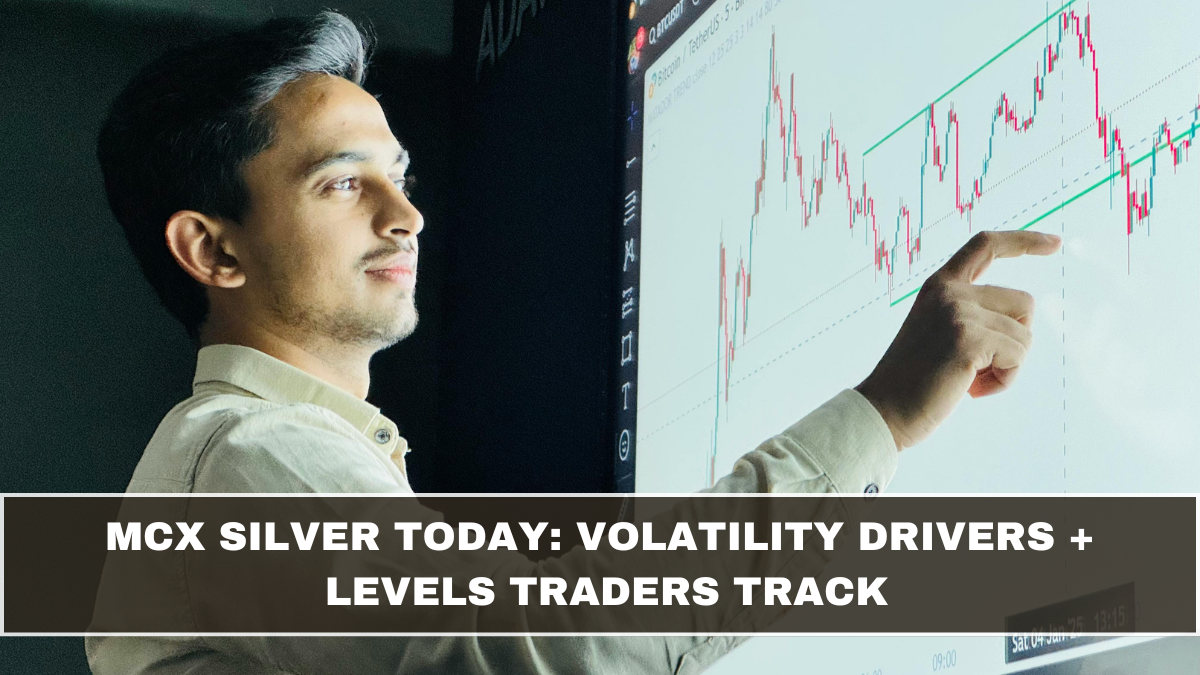
MCX silver futures are among the most actively traded commodity contracts in India due to their high price movement and strong connection to global markets. Silver prices on the Multi Commodity Exchange (MCX) reflect both investment demand and industrial consumption trends, which makes the metal more volatile compared to gold.
Understanding what drives MCX silver prices, the key levels traders monitor, and risk management basics helps market participants make informed trading decisions.
What Is MCX Silver?
MCX silver refers to silver futures contracts traded on the Multi Commodity Exchange of India. These contracts allow traders to buy or sell silver at a fixed price for future delivery.
Unlike physical silver purchases, futures trading focuses on price movement rather than ownership of the metal. Prices are influenced by global silver rates, currency movement, and industrial demand patterns.
Since futures contracts involve leverage, price changes can result in larger gains or losses compared to spot market transactions.
Why MCX Silver Is More Volatile Than Gold
Silver prices generally show higher volatility because the metal has dual demand — as a precious metal and as an industrial raw material. Changes in global manufacturing activity, technology production, and renewable energy demand can influence silver consumption.
Market sentiment also plays a major role. During economic uncertainty, investor demand for precious metals can increase price movement. At the same time, fluctuations in industrial demand may cause sudden price swings.
This combination of factors makes silver futures more sensitive to global economic changes.
Key Factors Driving MCX Silver Prices
Global commodity markets play a central role in determining MCX silver prices. International spot prices, particularly movements in major global exchanges, directly influence domestic futures rates.
Currency fluctuations also affect pricing because silver is traded globally in US dollars. Changes in the rupee-dollar exchange rate can increase or decrease domestic contract prices.
Economic data releases, inflation expectations, and interest rate decisions further influence market momentum.
Support and Resistance Levels Traders Track
Support and resistance levels represent important price zones where buying or selling pressure has historically been strong.
Support levels indicate price points where demand may prevent further decline, while resistance levels indicate areas where upward movement may slow due to selling pressure. Traders monitor these levels to identify potential entry and exit opportunities.
Technical indicators such as moving averages, trading volume, and trend lines are commonly used to determine these zones.
Position Sizing and Risk Management Basics
Risk management is essential in silver futures trading due to high volatility. Traders often manage risk by limiting position size relative to available capital.
Using stop-loss orders helps control potential losses if the market moves unexpectedly. Avoiding excessive leverage and maintaining disciplined trading strategies reduces exposure to sudden price changes.
Understanding contract specifications and margin requirements is also important before entering trades.
Global Triggers That Influence MCX Silver
Several global factors can affect silver price movement. Industrial production data, economic growth trends, and changes in technology demand influence consumption patterns.
Movements in the US dollar index, inflation expectations, and central bank policy decisions can also shift investor demand for precious metals.
Monitoring international market developments provides context for domestic price trends.
Conclusion
MCX silver futures reflect price movement influenced by global commodity trends, currency fluctuations, and industrial demand. The metal’s dual role as both an investment asset and industrial resource makes it more volatile than gold. Understanding key price levels, monitoring global triggers, and applying proper risk management strategies helps traders navigate market fluctuations more effectively.
FAQs
What is MCX silver?
MCX silver refers to silver futures contracts traded on the Multi Commodity Exchange of India.
Why is silver more volatile than gold?
Silver prices are influenced by both investment demand and industrial usage, leading to higher price fluctuations.
What factors affect MCX silver prices?
Global silver rates, currency exchange movement, industrial demand, and economic data releases.
How can traders manage risk in MCX silver trading?
Using stop-loss orders, controlling position size, and avoiding excessive leverage help manage risk.
Does MCX silver reflect physical silver prices?
MCX prices represent futures contracts based on market expectations, not direct retail prices of physical silver.