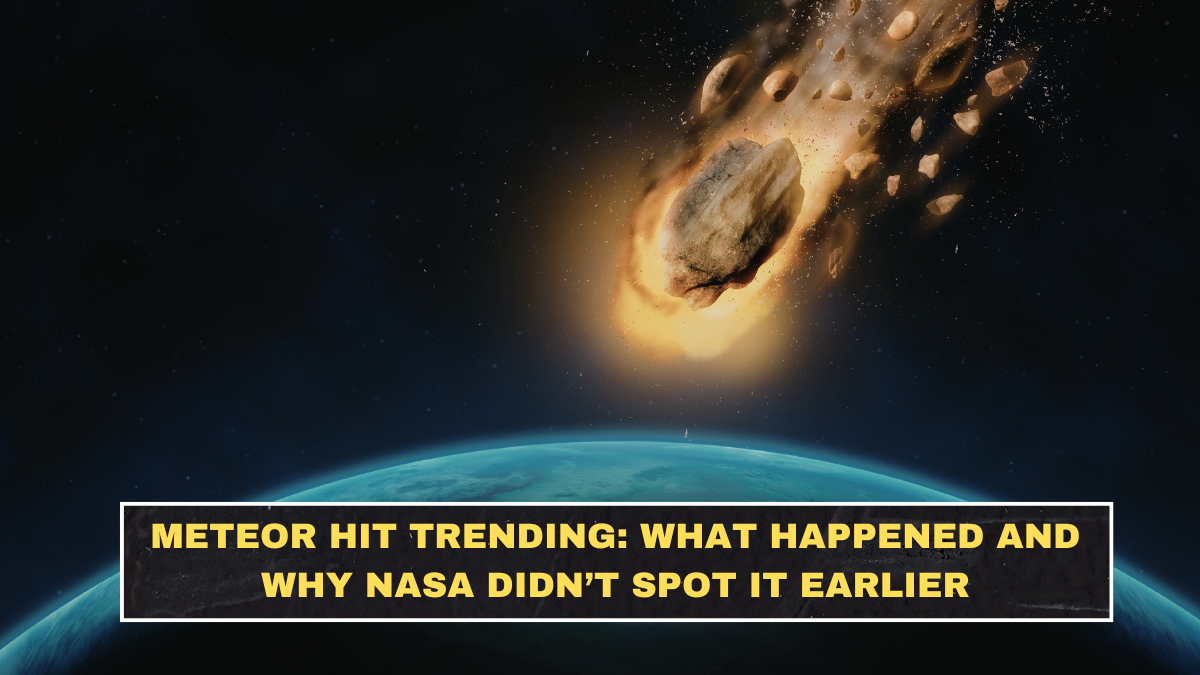
Searches for a “meteor hit” in Cleveland, Ohio have spiked after reports of a bright fireball and loud boom were shared on social media and local tracking platforms. Such events often trend globally, including in India, because they are visually dramatic and widely recorded.
The interest is largely driven by eyewitness videos and reports, not by any confirmed large-scale impact event causing damage.
What Actually Happened
Available data from meteor tracking networks indicates that what people observed was most likely a fireball meteor, which is a bright streak of light caused when a space rock enters Earth’s atmosphere at high speed.
Most meteors:
-
Burn up completely in the atmosphere
-
Do not reach the ground
-
Do not cause damage
In some cases, a loud sound (often described as a boom) can occur due to a sonic boom created as the object travels faster than the speed of sound.
Meteor vs Asteroid vs Meteorite (Clear Difference)
To avoid confusion, these terms mean different things:
| Term | Meaning |
|---|---|
| Asteroid | A rocky object orbiting the Sun in space |
| Meteor | The light phenomenon when it enters Earth’s atmosphere |
| Meteorite | A fragment that actually reaches the ground |
In most trending cases like this, the event is a meteor (light event), not a meteorite impact.
Why NASA Doesn’t Always Detect These Events in Advance
The idea that NASA “missed” the meteor is often misunderstood. Small meteors are extremely difficult to detect before they enter Earth’s atmosphere.
Key reasons:
-
Many objects are very small (often less than a few meters wide)
-
They travel at very high speeds
-
Detection systems focus mainly on larger objects that pose a real threat
-
Some objects approach from angles that are harder to monitor
Because of this, small fireball events are usually detected after they occur, using ground-based sensors and reports.
What Data Says About Meteor Events
Meteor events are not rare. According to space monitoring organizations:
-
Thousands of small meteors enter Earth’s atmosphere daily
-
Most go unnoticed because they occur over oceans or unpopulated areas
-
Only a small fraction are bright enough to be widely seen
This means that viral meteor sightings are not unusual—they just become visible due to location and timing.
Is There Any Danger From Such Events
In this case, there is no verified data indicating a dangerous impact or large-scale damage. Most fireball events are harmless and occur high in the atmosphere.
Only significantly larger objects (which are rare) are tracked as potential threats, and these are closely monitored by global space agencies.
Conclusion
The Cleveland meteor story trending online is based on a likely fireball event, which is a common natural phenomenon. There is no evidence of a major impact or failure in global detection systems.
The key point is simple: not every meteor event is dangerous, and not every detection delay means something was missed. Most of these events are routine and scientifically well understood.
FAQs
Did a meteor actually hit Cleveland
There is no confirmed large-impact event. Reports suggest a fireball meteor observed in the sky.
Why didn’t NASA detect it earlier
Small meteors are difficult to track in advance due to their size and speed.
Are meteor events dangerous
Most are harmless and burn up in the atmosphere before reaching the ground.
What causes the loud boom during a meteor event
The sound is usually a sonic boom created when the object travels faster than sound.
How common are meteor sightings
They occur frequently, but only a few are visible enough to trend on social media.
Click here to know more.