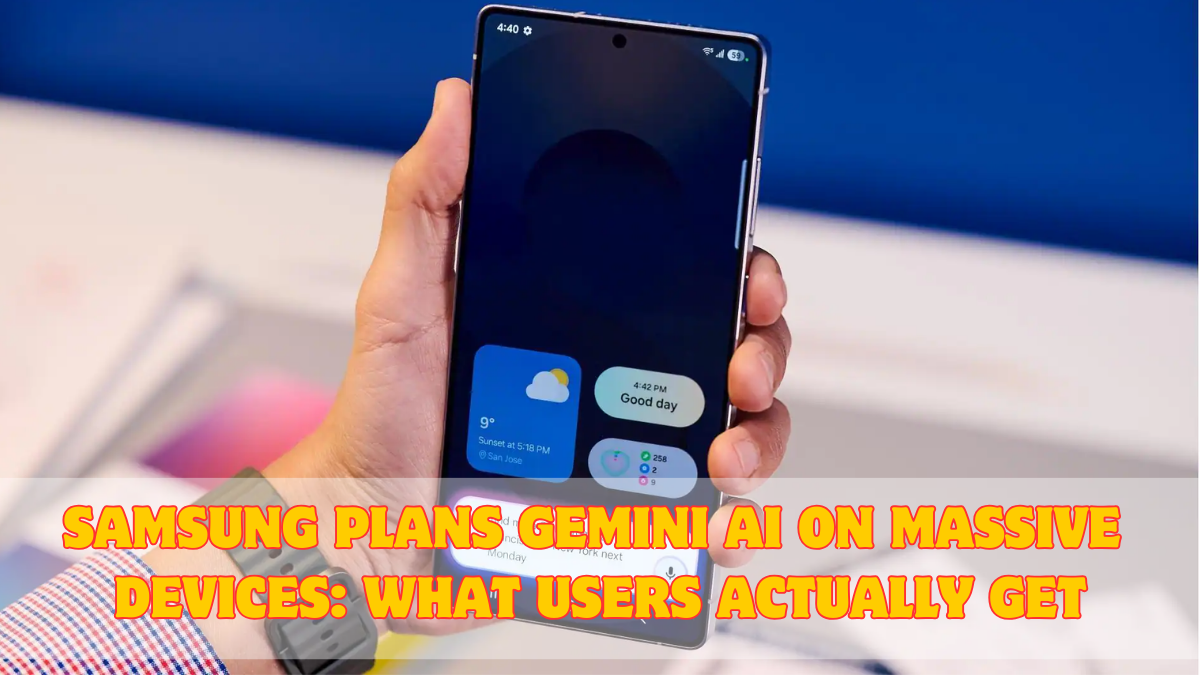
Samsung Gemini AI devices are suddenly everywhere in tech conversations—and not because of flashy demos. The real reason is scale. When Samsung talks about expanding Gemini AI across hundreds of millions of devices, it’s not a niche upgrade anymore. It’s a behavioral shift for everyday phone users.
People aren’t asking what Gemini is. They’re asking something more practical: What changes on my phone? Does it slow things down? Is this useful—or just another AI layer I’ll ignore?
The important detail most users miss is that Gemini’s value depends entirely on how deeply Samsung integrates it—not on AI hype.
Why Samsung’s Gemini AI Push Matters Right Now
This move isn’t experimental. It’s strategic.
Samsung’s push is driven by:
• AI becoming a default smartphone expectation
• Competition with on-device assistants
• Pressure to differentiate Android experiences
• Google’s need for real-world Gemini adoption
When Samsung commits, the ecosystem follows.
What “800 Million Devices” Really Means
The 800 million devices figure isn’t about flagships alone.
It likely includes:
• Smartphones across price tiers
• Tablets and foldables
• Wearables and connected devices
This scale means Gemini AI won’t be limited to premium users—it will affect mass-market behavior, especially in regions like India.
How Gemini Integration Works Inside Samsung Devices
Gemini integration isn’t a standalone app experience.
Instead, it’s expected to be:
• Embedded into system-level features
• Triggered contextually
• Integrated with existing Samsung AI layers
This reduces friction and increases actual usage—something earlier assistants struggled with.
What Samsung AI Features Will Actually Change for Users
Here’s where expectations need calibration.
Practical Samsung AI features likely include:
• Smarter voice commands
• Context-aware suggestions
• Improved photo and text handling
• Better search inside the device
This isn’t about replacing apps—it’s about reducing steps.
Will Gemini AI Run on Device or Cloud?
This matters more than marketing admits.
In practice:
• Lightweight tasks may run on-device
• Complex reasoning may use cloud support
• Hybrid models balance speed and accuracy
This impacts privacy, speed, and battery—tradeoffs users should understand.
What Changes for Indian Users Specifically
The India impact is significant due to usage patterns.
Why India matters:
• Massive Android user base
• Mixed network reliability
• Price-sensitive devices
• High regional language usage
Samsung’s success here depends on offline tolerance, language support, and low-latency performance.
Will Older Samsung Phones Get Gemini AI?
This is a common concern.
Reality check:
• Not all features will reach older models
• Hardware capability will matter
• Entry-level phones may get limited versions
Samsung typically staggers feature depth—not access.
How This Affects Daily Phone Use
Most users won’t “open Gemini.”
Instead, they’ll notice:
• Fewer taps for common tasks
• Faster responses to queries
• Subtle automation improvements
AI succeeds when it disappears into workflows.
Privacy and Data: What Users Should Be Aware Of
With deeper AI comes deeper data access.
Key points:
• Some processing may happen in the cloud
• Permissions will matter more
• Opt-out controls are essential
Users should review settings—not assume defaults are optimal.
Will This Drain Battery or Slow Phones?
This fear is valid—but manageable.
Samsung is likely optimizing for:
• Background efficiency
• Event-triggered AI use
• Selective activation
If implemented poorly, users will disable it. Samsung knows this.
How This Compares to Other AI Phone Efforts
Samsung’s advantage isn’t novelty—it’s reach.
Compared to others:
• Wider device coverage
• Deeper OS integration
• Stronger regional customization
Execution quality will determine success—not announcements.
Who Will Benefit Most From Gemini AI on Samsung
Gemini will feel most useful to:
• Heavy phone users
• Multitaskers
• People managing information daily
• Users comfortable with voice/text interaction
Minimal users may barely notice.
Who Might Find It Unnecessary
It may feel redundant if:
• You use phones for basics only
• You disable assistants regularly
• You prefer manual control
AI should be optional—not forced.
What Not to Expect From Samsung Gemini AI
Important reality check:
• It won’t replace human decision-making
• It won’t fix poor apps
• It won’t magically boost productivity
It’s an enhancer—not a miracle.
Why This Move Signals a Bigger Shift
This isn’t just about Samsung.
It signals:
• AI becoming OS-level infrastructure
• Assistants moving from novelty to utility
• Phones evolving into proactive tools
That’s a meaningful change in how devices behave.
Conclusion
The expansion of Samsung Gemini AI devices marks a shift from AI as a feature to AI as a foundation. For users, this means smoother interactions, fewer steps, and smarter assistance—if integration is thoughtful and restrained. For India and other large markets, success will depend on accessibility, language support, and real-world reliability.
AI on phones doesn’t need to impress. It needs to help. That’s the bar Samsung must meet.
FAQs
What is Samsung Gemini AI?
It’s Samsung’s integration of Google’s Gemini AI into system-level device features.
Will Gemini AI come to all Samsung phones?
Access may be wide, but feature depth will vary by hardware.
Does Gemini AI work offline?
Some tasks may work offline, while complex ones may need cloud access.
Is Gemini AI safe for privacy?
It depends on settings and data permissions; users should review controls.
Will this slow down my phone?
If optimized well, impact should be minimal; poorly implemented features can be disabled.