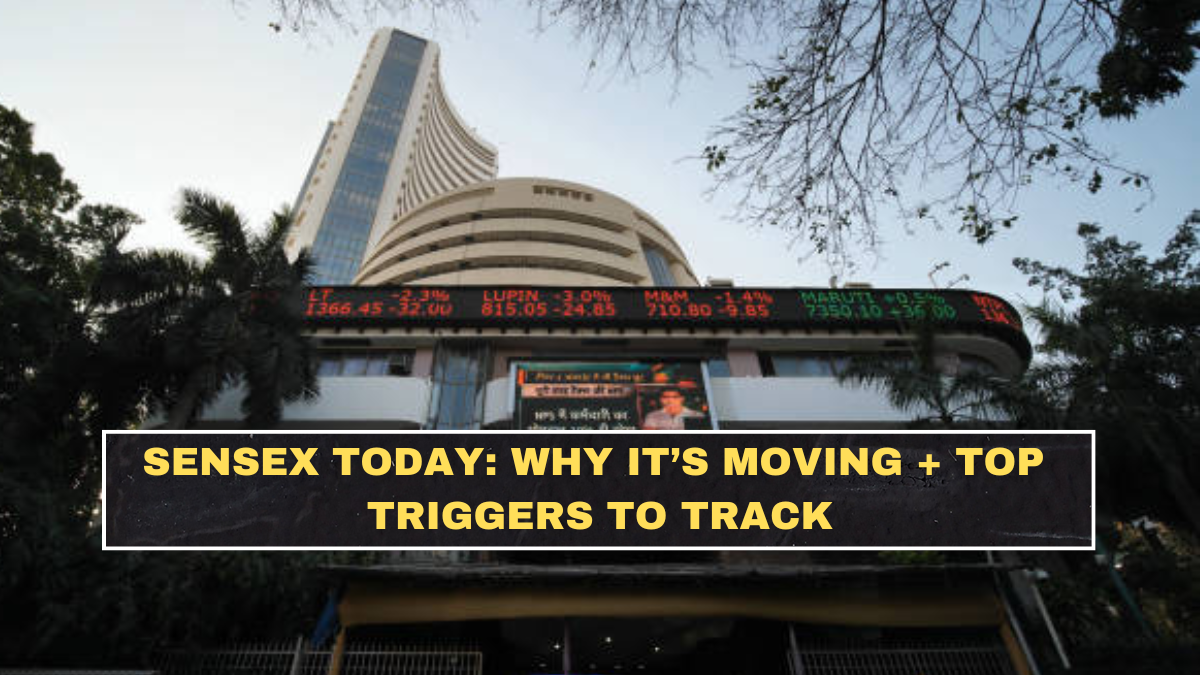
The Sensex, which tracks 30 large-cap companies listed on the Bombay Stock Exchange, is moving today due to a combination of global cues, sector-specific buying, and institutional participation.
Unlike broader indices, Sensex is more concentrated. This means even a few heavyweight stocks—especially from banking, IT, and energy—can significantly influence its direction. Today’s movement reflects such concentrated activity rather than broad-based participation.
Key Triggers Behind Today’s Sensex Movement
The current move is supported by identifiable factors:
-
Global market direction: Positive US and Asian cues influencing sentiment
-
Heavyweight stock movement: Large-cap stocks driving index changes
-
Banking sector strength: Major contributor due to high weightage
-
Institutional flows: FII and DII buying supporting upward movement
These are data-backed drivers seen consistently in market behavior.
Top Gainers and Losers: Why They Matter
| Category | Impact on Sensex | Example Behavior |
|---|---|---|
| Top Gainers | Push index upward significantly | Banking/IT stocks rising |
| Top Losers | Drag index even if others rise | Profit booking in large caps |
Because Sensex has only 30 stocks, each stock has a higher individual impact compared to broader indices like Nifty.
Sector Influence on Sensex
| Sector | Influence Level | Reason |
|---|---|---|
| Banking | High | Large weight in index |
| IT | High | Linked to global tech performance |
| Energy | Moderate | Oil & gas price sensitivity |
| FMCG | Stabilizing | Defensive during volatility |
Sector performance often determines whether the move is sustainable or temporary.
What Makes Sensex Different from Nifty
| Feature | Sensex | Nifty 50 |
|---|---|---|
| Number of Stocks | 30 | 50 |
| Concentration | High | Relatively diversified |
| Impact per Stock | Higher | Lower |
This is why Sensex can show sharper moves when a few large stocks rally or fall.
What Traders Should Watch for Tomorrow
Instead of reacting to today’s move, focus on what carries forward:
-
Continuation of global cues overnight
-
Follow-through buying in key sectors
-
Movement in heavyweight stocks
-
Opening signals from pre-market indicators
Without continuation, today’s gains may not sustain.
Risk Factors That Can Reverse the Trend
Even strong moves can reverse due to:
-
Profit booking near recent highs
-
Weak global signals later in the day
-
Currency volatility affecting flows
-
Sudden news impacting large-cap stocks
In a concentrated index like Sensex, reversal can be sharp.
What Retail Investors Often Get Wrong
Most retail investors:
-
Focus only on index points, not underlying stocks
-
Ignore sector contribution
-
Enter after major moves instead of planning ahead
-
Confuse short-term movement with long-term trend
If you don’t understand what’s moving the index, you’re reacting blindly.
Conclusion
Sensex movement today is driven by a mix of global sentiment and concentrated activity in heavyweight stocks. Its structure makes it more sensitive to individual stock movement compared to broader indices.
If you’re only tracking whether Sensex is up or down without understanding why, you’re missing the real signal—and that’s where most bad decisions start.
FAQs
What is Sensex based on?
Sensex tracks 30 large-cap companies listed on the Bombay Stock Exchange.
Why does Sensex move quickly?
Due to its concentrated structure—fewer stocks with higher individual weight.
Which sector impacts Sensex the most?
Banking and IT sectors have the highest influence.
Can Sensex rise even if most stocks fall?
Yes, if a few heavyweight stocks are rising strongly.
What should traders track for next session?
Global cues, sector movement, and heavyweight stock performance.
Click here to know more.