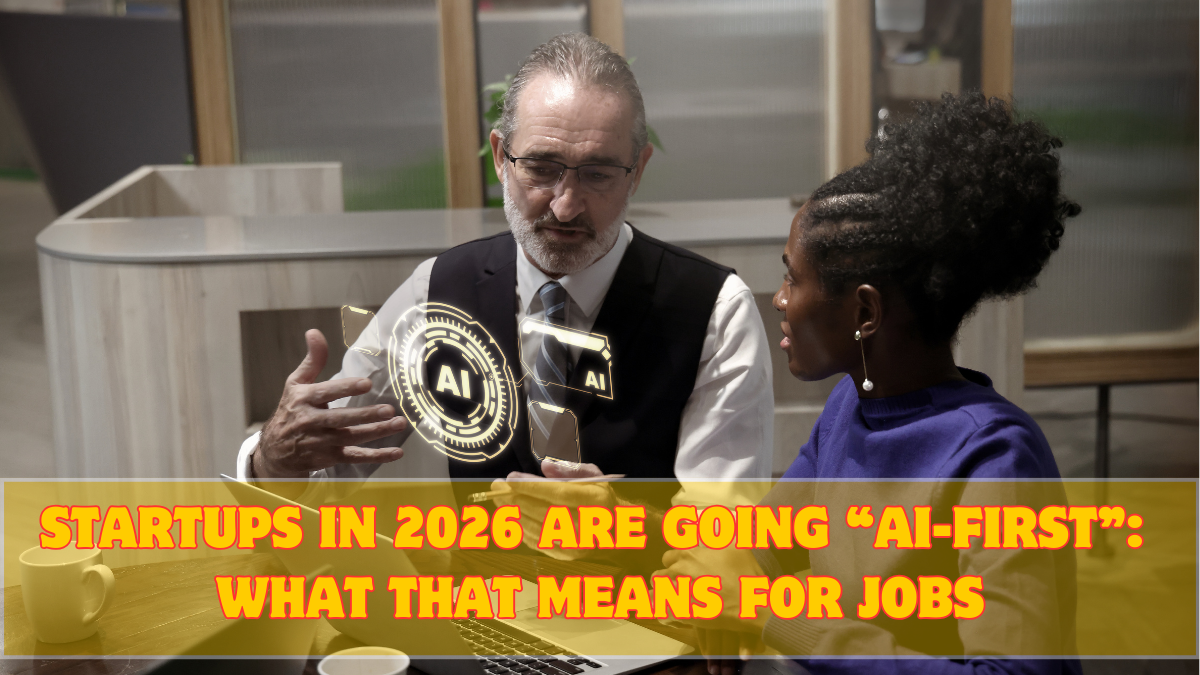
Indian startups AI pivot 2026 is not a trend—it’s a survival response. Founders are no longer asking whether to use AI. They’re asking how much of the company can be rebuilt around it. This shift is quietly rewriting hiring plans, shrinking some roles, creating new ones, and changing what “employable” even means in startup ecosystems.
Here’s the uncomfortable reality: startups aren’t becoming anti-people—they’re becoming anti-inefficiency.
Why Indian Startups Are Pivoting to AI So Aggressively
This pivot isn’t driven by hype decks. It’s driven by pressure.
Key forces behind the shift:
• Tighter funding environments
• Pressure to extend runway
• Faster competition cycles
• Mature AI tooling availability
AI now offers leverage that startups can’t afford to ignore.
What “AI-First” Actually Means (Not What Twitter Says)
AI-first doesn’t mean replacing everyone with bots.
In practice, it means:
• Designing workflows around automation first
• Using AI before hiring humans
• Expecting employees to work with AI daily
AI becomes infrastructure, not an experiment.
Hiring Changes: Fewer Roles, Higher Expectations
One major hiring change is role compression.
Instead of:
• Separate researchers
• Separate analysts
• Separate operators
Startups now prefer:
• One AI-literate generalist
• One execution-heavy specialist
Fewer people—but sharper capability.
Which Roles Are Shrinking Fast
Some roles are clearly under pressure.
Roles seeing reduced demand:
• Basic content writing
• Manual data operations
• Entry-level research tasks
• Repetitive support roles
These aren’t gone—but the bar is much higher.
Which Roles Are Growing Despite the Pivot
At the same time, demand is rising elsewhere.
Growing roles include:
• AI operations managers
• Prompt and workflow designers
• AI QA and evaluation roles
• Tech–business translators
People who can orchestrate AI are in demand.
AI Avatars and Automation Inside Startups
AI avatars aren’t just marketing gimmicks anymore.
Startups are using them for:
• Customer support
• Onboarding explanations
• Sales demos
• Internal training
Combined with automation, this reduces dependency on round-the-clock teams.
Founder Strategies Are Shifting Quietly
Smart founder strategies in 2026 look different.
Founders are:
• Hiring slower
• Expecting faster output
• Measuring impact more strictly
They care less about hours worked—and more about leverage created.
How Salaries Are Being Reshaped
Contrary to fear, salaries aren’t collapsing—they’re polarising.
What’s happening:
• Low-skill roles face stagnation
• AI-capable roles command premiums
• Hybrid skillsets win negotiations
Pay is shifting from title-based to value-based.
What This Means for Freshers
Freshers face a harder—but clearer—path.
They must:
• Show tool familiarity
• Demonstrate applied thinking
• Reduce training burden
Degrees without execution signals struggle more.
What This Means for Mid-Level Professionals
Mid-level employees feel the squeeze most.
Why?
• Expectations jump sharply
• AI replaces routine parts of their role
• They must reskill quickly
Those who adapt gain leverage. Those who don’t feel replaced.
How Automation Is Changing Team Sizes
Teams are getting smaller—but not weaker.
Automation enables:
• Faster iteration
• Leaner execution
• Lower coordination overhead
This changes startup culture significantly.
The Myth That AI Kills Startup Jobs
This fear misses the nuance.
AI:
• Reduces some roles
• Creates different roles
• Raises performance expectations
It changes jobs faster than it destroys them.
What Skills Now Matter Most in AI-First Startups
High-value skills now include:
• AI tool fluency
• Problem framing
• Clear communication
• System thinking
Knowing what to ask AI matters as much as knowing tools.
What Not to Do If You Work in a Startup
Avoid:
• Ignoring AI adoption
• Waiting for instructions
• Competing with AI on speed alone
Your edge must be judgment, not repetition.
How Employees Can Stay Relevant
Practical moves:
• Integrate AI into daily tasks
• Document efficiency gains
• Learn workflow automation
• Explain outcomes clearly
Relevance now equals leverage.
Why This Pivot Will Accelerate Through 2026
As tools improve and costs drop:
• More startups will rebuild processes
• Hiring will remain selective
• AI literacy becomes baseline
This isn’t a phase—it’s a structural shift.
Conclusion
The Indian startups AI pivot 2026 is reshaping jobs, not erasing them. Startups are optimising for leverage, speed, and survival. Roles that adapt to automation, AI avatars, and smarter founder strategies will grow. Roles that resist change will shrink.
The question isn’t whether AI will affect your startup job.
It’s whether you will evolve faster than the workflow.
FAQs
What does “AI-first” mean for startups?
Designing workflows around AI and automation before adding human roles.
Are startups hiring less because of AI?
They’re hiring fewer people—but expecting higher output per role.
Are AI avatars replacing humans?
They’re replacing repetitive interactions, not complex judgment.
Do freshers still have opportunities?
Yes—if they show practical AI tool usage and execution ability.
Which skill matters most now?
The ability to work with AI effectively, not compete against it.