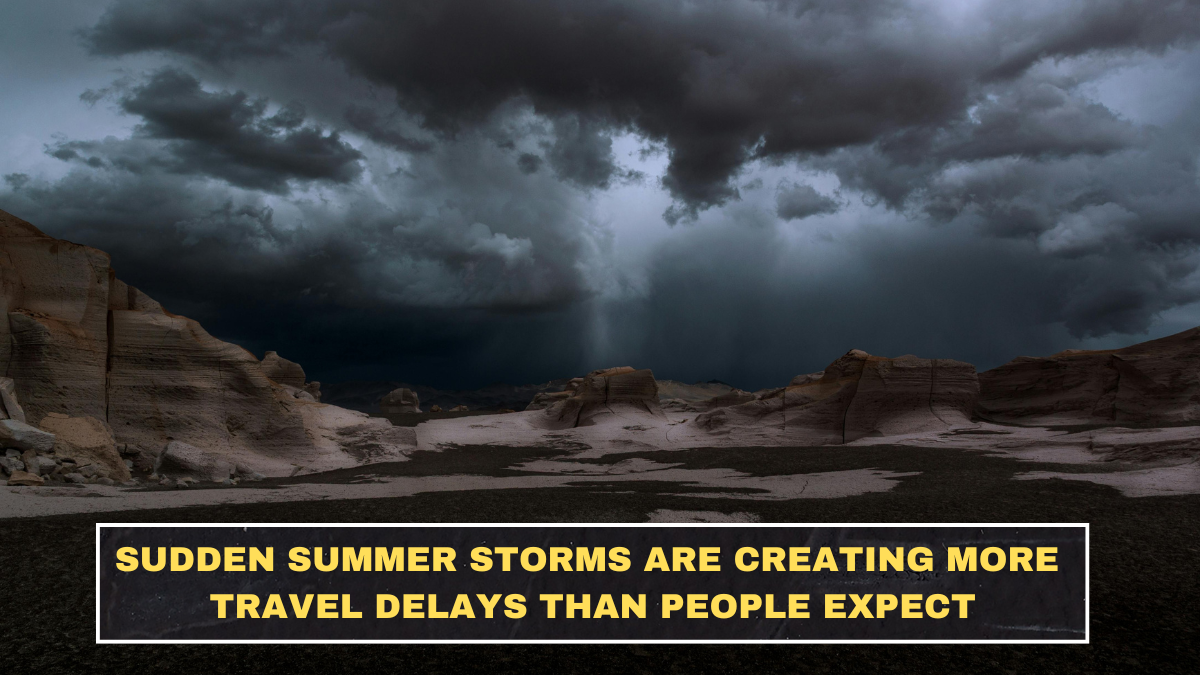
A lot of travelers still act like delays mainly come from traffic, airline inefficiency, or holiday rush. That misses a major cause: weather. The FAA says weather is the largest cause of air traffic delays in the U.S. system, accounting for 74.26% of system-impacting delays over 15 minutes in data covering June 2017 to May 2023. Summer storms matter because thunderstorms force aircraft to avoid unsafe routes, which creates delays, holding patterns, and diversions.
This is not just theory. In Kolkata on April 7, 2026, twin squalls disrupted airport operations, delayed multiple flights, and caused diversions after strong winds hit the city and airport zone. That is exactly how a routine travel day gets derailed: one sharp weather event, then a chain reaction.
Why sudden storms create bigger travel problems than regular rain
Thunderstorms are not simple “rain events.” NOAA says thunderstorms can produce dangerous lightning, heavy rain, flash flooding, hail, and strong winds. The National Severe Storms Laboratory adds that the mature stage of a thunderstorm is the period most likely to bring heavy rain, frequent lightning, strong winds, and hail. That combination is why storms disrupt both flights and road travel so quickly.
For flights, the issue is safety and routing. FAA guidance says pilots prefer to avoid flying in or over thunderstorms, so controllers and airlines must reroute traffic around storm cells. That takes time, reduces route efficiency, and can delay aircraft long before the storm is directly over your airport. For roads, visibility drops, water collects quickly, and gusty winds raise crash risk. The weather does not need to last all day to wreck a travel plan. A short severe window is enough.
What usually gets disrupted first
- departing and arriving flights
- airport sequencing and turnaround times
- highway driving visibility
- intercity bus schedules
- first-mile and last-mile local travel
- road trips through low-lying or exposed routes
In India right now, that risk is very real. IMD-linked travel reporting this week warned that thunderstorms, hail, and strong winds across multiple states could affect travel and outdoor movement.
How storm travel delays usually happen
| Travel type | What the storm does | Result |
|---|---|---|
| Flights | Aircraft avoid thunderstorm zones | Delays, diversions, missed connections |
| Airport operations | Ground handling slows during lightning/wind risk | Departure backlog |
| Road trips | Heavy rain cuts visibility and road grip | Slower travel, accident risk |
| City travel | Waterlogging and local storms hit short routes | Late arrivals and rerouting |
| Bus/train connections | One delayed leg affects the next | Full-day disruption |
Why travelers underestimate this problem
Because they look at the weather too broadly. A forecast showing “chance of storms” sounds harmless, so people assume the day is mostly manageable. That is the trap. Thunderstorms are often local, fast-moving, and intense. One storm cell near an airport or one flooded road segment is enough to break the schedule. FAA guidance makes this clear for aviation: summer storms often require traffic-management strategies even when flights still operate.
Road travelers make a similar mistake. They assume the destination forecast matters most, when the real risk may sit on the highway route or in a transit connection point. That is why “it looked fine when I left” is such a common failure line.
Smarter ways to plan around summer storm risk
- check route-level and airport-level weather, not just destination weather
- avoid tight flight connections during storm-prone periods
- leave buffer time for airport and road journeys
- avoid driving through low-lying flood-prone stretches in storm alerts
- keep phone charging and live weather alerts active
- delay non-essential road travel during lightning, hail, or severe wind alerts
NOAA’s rule is simple: when thunder roars, go indoors, and stay there until 30 minutes after the last thunder. That alone should tell people thunderstorms are not casual travel weather.
Conclusion
Sudden summer storms are creating more travel delays than people expect because thunderstorms disrupt both safety and timing. Flights get rerouted or delayed, roads become harder to drive, and even short local trips can unravel. The dumb mistake is treating storms like regular rain. They are not. They are short, disruptive, and perfectly capable of wrecking an otherwise normal travel day.
FAQs
Why do thunderstorms delay flights so often?
Because aircraft must avoid storm cells, and weather is the biggest cause of major air traffic delays.
Can a short storm really disrupt an entire travel day?
Yes. A brief storm can trigger diversions, airport delays, traffic slowdowns, or road flooding that then creates chain delays.
Are summer storms dangerous for road trips too?
Yes. NOAA says thunderstorms can bring heavy rain, flash flooding, hail, and dangerous lightning, all of which increase driving risk.
What is the most practical way to reduce storm-related travel risk?
Build buffer time, monitor live alerts, and avoid tight schedules during thunderstorm periods.