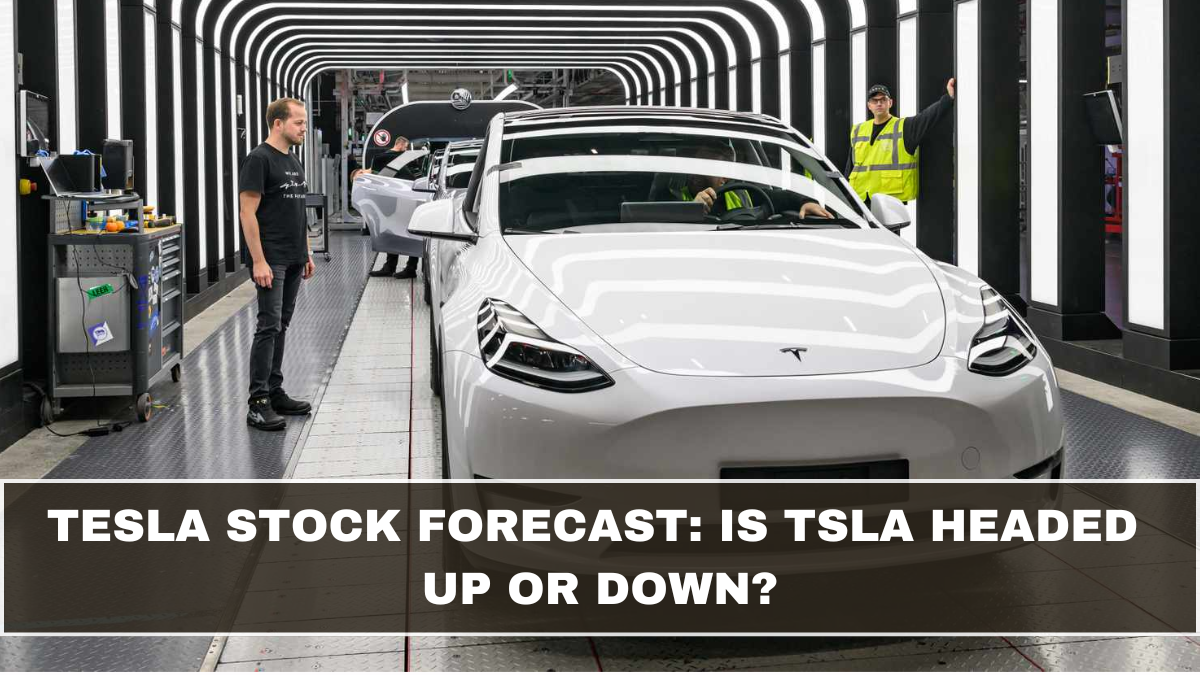
The latest Tesla stock forecast has become one of the most debated topics in global markets. As one of the most volatile and closely watched stocks, Tesla Inc. continues to attract attention from retail traders, institutional investors, and analysts alike. With rapid changes in the EV market, shifting macroeconomic conditions, and ongoing updates from CEO Elon Musk, TSLA’s trajectory remains both exciting and uncertain.
From production growth and global expansion to competition pressures and valuation concerns, multiple forces are shaping the current Tesla stock forecast. In this detailed analysis, we examine price prediction factors, EV market dynamics, risk considerations, and what investors should monitor in the months ahead.
TSLA Price Performance and Market Volatility
Tesla’s stock history is defined by sharp rallies and equally dramatic pullbacks. Unlike traditional automakers, Tesla trades more like a high-growth technology company, meaning sentiment and innovation headlines can move the stock significantly.
Key drivers of TSLA volatility include:
-
Quarterly earnings surprises
-
Delivery and production numbers
-
Margin performance
-
Broader tech sector momentum
-
Interest rate changes
When analyzing any Tesla stock forecast, investors must account for macroeconomic factors. Higher interest rates often pressure growth stocks due to discounted future cash flows, while easing monetary conditions can reignite bullish momentum.
The stock’s valuation multiple remains higher than most legacy automakers, reflecting expectations for long-term expansion in EV adoption and energy solutions.
EV Market Growth and Competitive Pressure
The electric vehicle (EV) market continues to expand globally, but competition is intensifying. Companies such as BYD Company and Ford Motor Company are aggressively scaling EV production.
Factors influencing the broader EV market:
-
Government incentives and subsidies
-
Battery cost reductions
-
Charging infrastructure expansion
-
Consumer demand trends
Tesla remains a leader in EV innovation, but pricing strategies have shifted in recent years. Price cuts aimed at maintaining market share have impacted profit margins—an important variable in any forward-looking Tesla stock forecast.
If Tesla maintains delivery growth while stabilizing margins, bullish forecasts may strengthen. However, competitive pricing pressure remains a key risk.
Revenue Growth vs Profit Margins
Tesla’s long-term valuation depends heavily on sustained revenue growth and operational efficiency. Analysts evaluating the Tesla stock forecast often focus on:
-
Automotive gross margin
-
Free cash flow trends
-
Energy storage revenue growth
-
Software monetization (Full Self-Driving features)
Energy generation and storage segments are increasingly important. As Tesla expands beyond vehicles into battery storage solutions, diversification could support earnings stability.
However, margin compression remains a concern if aggressive pricing continues or supply chain costs rise.
Elon Musk’s Influence on TSLA
Leadership perception plays a unique role in Tesla’s stock performance. Elon Musk’s announcements, strategic shifts, or broader ventures can influence investor sentiment.
Investors monitor:
-
Product launch timelines
-
Autonomous driving updates
-
AI and robotics developments
-
Capital allocation decisions
The Tesla stock forecast often reacts quickly to Musk-related news. Positive innovation announcements can drive rallies, while controversies or delays may trigger volatility.
Valuation Models and Growth Expectations
Growth stocks like Tesla are often valued using discounted cash flow (DCF) models. The fundamental idea behind valuation can be represented using the present value formula:
PV=CF/(1+r)nPV = CF / (1 + r)^nPV=CF/(1+r)n
This equation highlights how future cash flows (CF) are discounted by a rate (r) over time (n). When interest rates rise, the discount rate increases, lowering the present value of future earnings—often pressuring growth stocks like TSLA.
In bullish Tesla stock forecast scenarios:
-
EV adoption accelerates globally
-
Margins stabilize or improve
-
Autonomous driving becomes widely monetized
-
Energy storage revenue grows rapidly
In bearish scenarios:
-
Delivery growth slows
-
Competition erodes pricing power
-
Regulatory challenges impact autonomy rollout
Valuation sensitivity to growth assumptions makes TSLA particularly reactive to news.
Market Risks Investors Should Watch
Every Tesla stock forecast must consider downside risks. These include:
-
Global economic slowdown
-
Supply chain disruptions
-
Regulatory scrutiny
-
Increased competition
-
Shifts in consumer EV demand
Additionally, geopolitical tensions or changes in trade policies could impact manufacturing operations or sales in key international markets.
Investors also track production capacity expansion. Delays in factory ramp-ups or logistical inefficiencies could weigh on earnings expectations.
Bullish vs Bearish Outlook Summary
To simplify the current Tesla stock forecast, here’s a balanced perspective:
Bullish Signals:
-
Strong global brand recognition
-
Leadership in EV technology
-
Expanding energy storage division
-
AI-driven autonomous ambitions
Bearish Signals:
-
Margin pressure from pricing strategy
-
Rising competition
-
Valuation sensitivity to interest rates
-
Market volatility
The stock’s direction depends largely on execution and macroeconomic stability.
Long-Term Investment Perspective
For long-term investors, Tesla’s appeal lies in its position at the intersection of technology, automotive innovation, and renewable energy. The Tesla stock forecast over extended horizons depends less on short-term fluctuations and more on structural growth in EV adoption and energy transition.
If Tesla continues scaling production, expanding globally, and monetizing software features, long-term upside could remain intact. However, patience and risk tolerance are essential due to inherent volatility.
Conclusion: Is TSLA Headed Up or Down?
The current Tesla stock forecast reflects a company balancing extraordinary growth potential with significant market risks. While innovation and brand strength support bullish arguments, competition and valuation pressures temper expectations.
Short-term price movement will likely depend on earnings results, delivery numbers, and broader market sentiment. Long-term performance hinges on Tesla’s ability to protect margins while expanding into new revenue streams.
Investors should monitor quarterly updates, macroeconomic trends, and industry developments closely. As always, diversification and careful risk assessment remain crucial when evaluating high-growth stocks like TSLA.
FAQs
What is the current Tesla stock forecast?
The Tesla stock forecast depends on delivery growth, profit margins, EV demand, and macroeconomic factors such as interest rates and market sentiment.
Is Tesla a good long-term investment?
Long-term potential exists if EV adoption continues rising and Tesla maintains technological leadership, though volatility remains high.
How does Elon Musk affect Tesla stock?
Elon Musk’s announcements, strategic decisions, and innovation updates can significantly influence investor sentiment and stock price movement.
What are the biggest risks for TSLA?
Major risks include competition, margin compression, regulatory challenges, and global economic slowdown.
Why is Tesla stock so volatile?
Tesla trades like a high-growth tech stock, meaning earnings surprises, macroeconomic shifts, and innovation updates can cause sharp price swings.