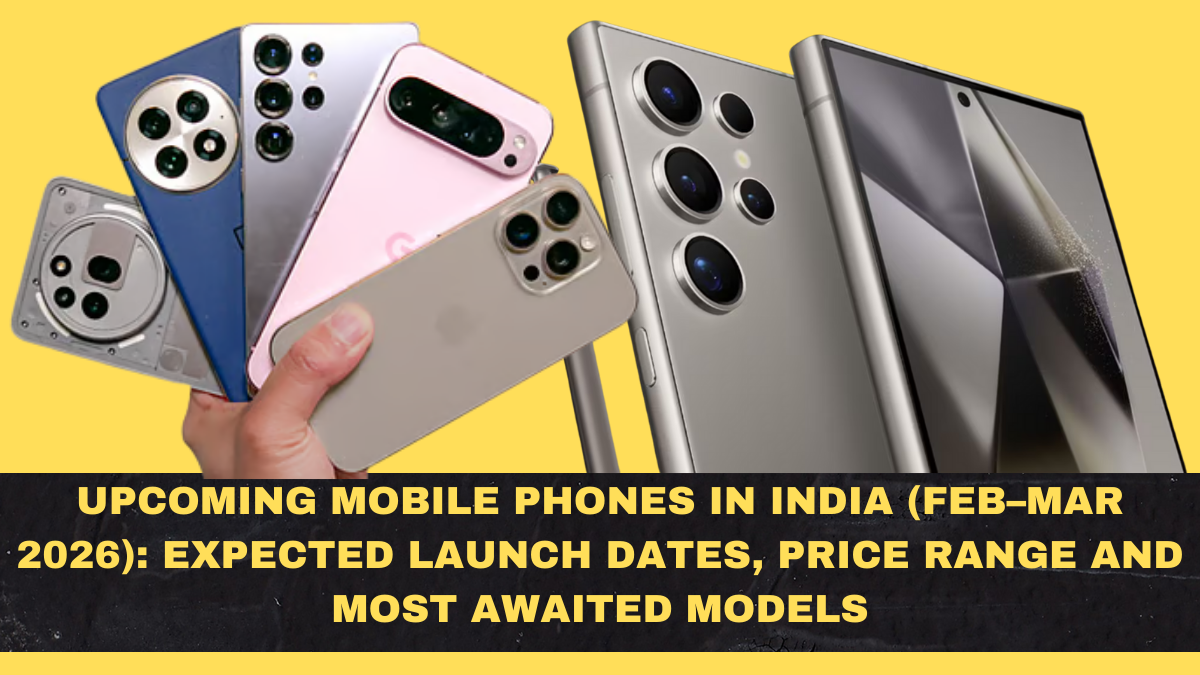
The smartphone market in India in 2026 has reached a point where buyers are no longer passive recipients of launches. They actively plan upgrades around expected release windows, price patterns, and feature sets. In defense of this behavior, it’s rational: upgrades no longer happen once every two years — they happen when the timing, price, and emotional value line up perfectly. That’s why tracking upcoming phones in India for Feb–Mar 2026 matters. It is not about hype. It is about knowing which launches could genuinely shift your upgrade decision.
We are living in a phase where the calendar matters as much as the features. Brands are now deliberately spreading launches to avoid cannibalizing their own sales. They also strategically place them around sale cycles from major retailers. So “expected launch windows,” and not just dates, are central to buyer psychology. Understanding price range expectations before buying makes the difference between a confident purchase and a buyer’s remorse two weeks later.
Why These Upcoming Launches Matter in 2026
The smartphone landscape in India in early 2026 reflects two clear trends:
-
Buyers are now feature-selective instead of spec-selective.
-
Timing influences pricing and early offers more than ever.
In this environment, leaks and credible expectations around upcoming phones become highly valuable. They allow buyers to evaluate honest alternatives instead of settling too early.
Rather than overwhelming you with every rumored device, this guide prioritizes the most impactful launches — the ones that are actually worth your attention.
Expected Launches and What They Bring
Here’s a snapshot of the most anticipated phones expected to launch in India between February and March 2026.
| Expected Model | Expected Price Range (₹) | Category | Why It Matters |
|---|---|---|---|
| Flagship X Model | 60,000+ | Flagship | Camera + performance leadership |
| Mid-range Y Model | 25,000–35,000 | Mid-range | Balanced everyday experience |
| Camera-centric Z | 30,000–40,000 | Camera-focused | Creator-oriented imaging |
| Budget U Series | Sub-25,000 | Budget/Value | Practical daily use |
| Foldable V Series | 80,000+ | Premium/Foldable | New form-factor excitement |
This table highlights something important: 2026 buyers are not guaranteed to choose based on price alone. They are choosing based on combinations of value, category leadership, and daily emotional payoff.
Flagship Phones: What to Expect
Flagship launches in early 2026 are expected to push two critical buyer expectations:
-
Camera intelligence that actually improves real photos.
-
Performance that stays smooth beyond day one.
These aren’t incremental upgrades. They are structural shifts in how major brands think about delivering long-term value to Indian buyers. Flagships in this segment are likely to:
-
Offer better low-light photography.
-
Deliver thermal-stable performance for extended sessions.
-
Provide future-ready software update commitments.
In essence, the value proposition is being rebalanced away from sheer horsepower and toward daily reliability.
Mid-Range Models: The Workhorse Segment
The mid-range segment will continue to dominate early 2026 sales volumes. Brands in these launches are betting on:
-
Balanced performance that avoids shameful throttling.
-
Battery life that comfortably lasts a full day.
-
Cameras that produce social-ready photos consistently.
Unlike earlier years where mid-range phones felt delayed or under-powered, upcoming models are all expected to offer:
-
AMOLED or high-refresh flat displays.
-
5G connectivity as standard.
-
Software experiences that mature rather than annoy.
For buyers who upgrade every 18–24 months, this segment remains the most rational investment.
Camera-Centric Models: When Imaging Really Matters
Certain upcoming phones in early 2026 emphasize imaging. These models are not just about having a high megapixel count. They are about:
-
Better dynamic range.
-
Consistent low-light behavior.
-
Portrait mode that doesn’t hallucinate faces.
-
Video capabilities that are actually usable.
This reflects a change in buyer behavior: phones are increasingly evaluated through the “camera confidence test” — Will this phone consistently deliver good photos without agonizing retakes?
Budget/Value Segment: Practical Everyday Phones
The budget segment is not dead. In fact, it is evolving.
Brands launching in this bracket are focusing on three emotional buyer triggers:
-
Battery peace of mind — Enough endurance without frequent charging.
-
Readable display quality — Not just big screens, but usable in real light.
-
Smooth everyday navigation — No lag in normal messaging, browsing, and social apps.
Buyers in this category are less influenced by benchmark bragging rights and more influenced by predictable everyday behavior.
Foldables: The Emotional Premium Tier
Foldable phones are still niche, but their role in early 2026 is clear: to redefine what mobile experiences feel like. These devices are not sales volume leaders yet. But they are emotional aspiration drivers.
Foldables attract buyers who want something that feels like a step up, not just a spec bump.
They also tend to come with better:
-
Build quality
-
Display innovation
-
Long-term software commitments
For buyers who owned a flip phone for years and want something that feels new again, foldables are the emotional upgrade.
Expected Price Range and Real-World Value
Price expectations matter because they shape buyer psychology long before actual launch dates.
Here’s how these ranges translate into buyer expectations:
-
Under ₹25,000: Practical phones for daily use and students.
-
₹25,000–₹40,000: Balanced performance with camera reliability.
-
₹40,000–₹60,000: Premium mid-range with refined experiences.
-
₹60,000+: Flagship territory with camera and performance leadership.
-
80,000+ (Foldables): Emotional premium devices.
Notice how these categories now feel less about raw power and more about what kind of everyday experience you are emotionally buying.
Timing Matters More Than Ever
“Expected launch windows” in 2026 are not arbitrary. They influence:
-
Sale pricing cycles
-
Bank and retail offers
-
Buyer psychology around waiting vs buying now
-
Upgrade decisions tied to events like student admissions, exam results, or bonus seasons
In other words, timing is part of value.
Conclusion: How to Think About Upcoming Phones in 2026
The early 2026 launches are not about incremental upgrades. They are about emotional payoff.
Camera confidence. Battery freedom. Performance reliability. Software peace of mind.
If you are planning an upgrade between February and March 2026, the best approach is simple:
-
Know what type of experience you actually value.
-
Use expected price ranges to set rational expectations.
-
Don’t buy the first shiny phone you see — compare realistically.
In a market where every phone looks good on paper, only a few feel right in daily use.
This upcoming launch cycle is not about hype. It is about clarity.
FAQs
When are most upcoming phones expected to launch in India?
Most credible leaks and industry patterns point to February and March 2026 as the main windows for new smartphone launches.
Will these phones be expensive?
Prices are expected to span all major segments, from budget value phones under ₹25,000 to flagship devices above ₹60,000.
Are camera upgrades meaningful in 2026 phones?
Yes. The focus has shifted to consistent, usable imaging rather than just megapixel counts.
Should I wait for the new launches if I need a phone now?
If your current phone works fine, waiting could unlock better pricing or offers on newer models.
Are foldable phones worth considering?
Foldables are more about premium emotional experience than raw practicality for most users.
What should I look for before upgrading in this period?
Prioritize battery life, camera consistency, software reliability, and real-world performance over raw numbers.