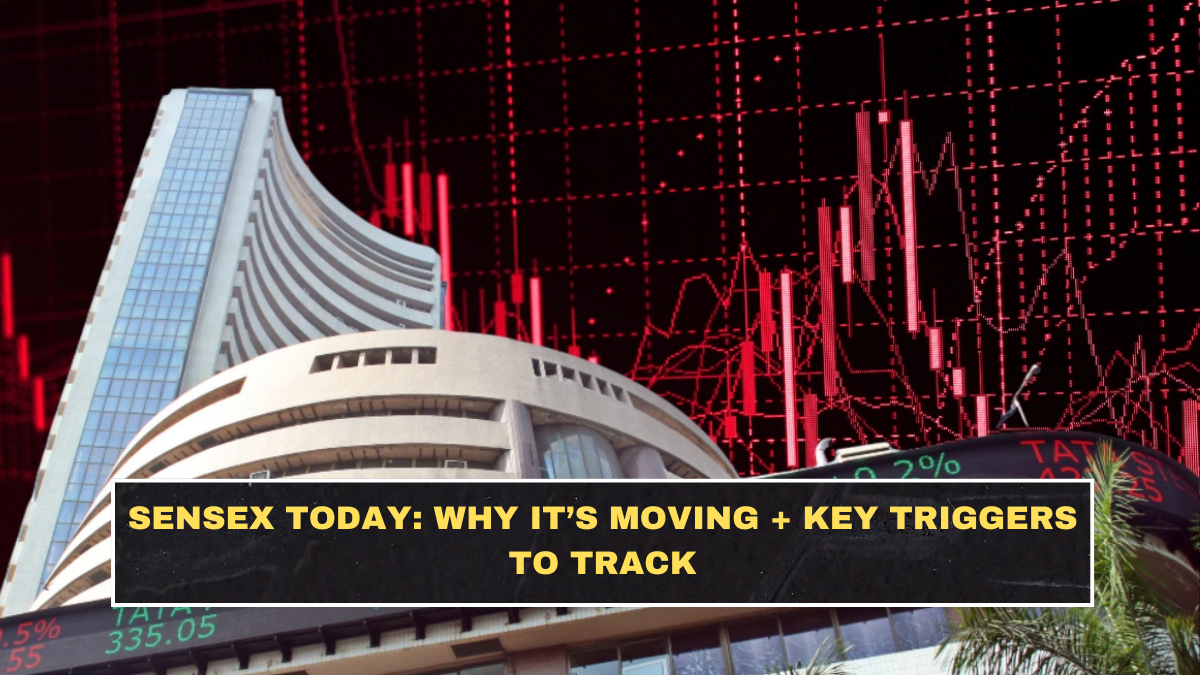
The Sensex, India’s benchmark equity index, reflects the performance of 30 major companies listed on the Bombay Stock Exchange. Movements in the index provide a quick snapshot of investor sentiment in the Indian stock market.
Daily fluctuations in the Sensex are influenced by a combination of domestic economic developments, global market trends, and sector-level performance.
Because the index tracks leading companies across industries such as banking, IT, energy, and consumer goods, its movement often indicates broader trends in the economy.
Key Factors Influencing Sensex Movement
Stock markets rarely move for a single reason. Instead, multiple catalysts combine to push the index up or down during a trading session.
Global market cues
Asian, European, and US market trends often influence investor sentiment in India.
Foreign institutional investment
Large inflows or outflows from global investors can significantly impact market momentum.
Corporate earnings announcements
Strong or weak earnings reports from major companies can shift market direction.
Commodity price changes
Oil, metal, and currency movements can affect sector performance.
Major Sectors That Influence the Sensex
| Sector | Why It Matters |
|---|---|
| Banking | Large weight in the index; drives overall market direction |
| Information Technology | Sensitive to global economic trends |
| Energy | Linked to oil and commodity markets |
| Consumer Goods | Reflects domestic consumption demand |
Because the Sensex includes companies from these sectors, gains or losses in a few large stocks can significantly move the entire index.
How the Sensex Is Calculated
The Sensex uses a free-float market capitalization method, meaning only the shares available for public trading are considered in the index calculation.
| Component | Role in Index |
|---|---|
| Market capitalization | Value of a company’s listed shares |
| Free-float shares | Shares available to investors |
| Sector representation | Ensures diversification across industries |
This method ensures that companies with larger market value have greater influence on the index movement.
What Traders Watch During the Trading Day
Market participants track several indicators to understand whether the Sensex trend is strengthening or weakening.
Common indicators include:
-
Advance–decline ratio of stocks
-
Volume traded on exchanges
-
Sector-specific rallies
-
Movement in global indices
These signals help traders evaluate short-term market direction.
Top Gainers and Losers Influence
The performance of a few large companies can move the entire index because of their high market capitalization.
Stocks from banking and IT sectors frequently dominate the list of top gainers or losers, which is why these sectors are closely monitored during trading sessions.
Large-cap stocks often drive the majority of Sensex movement because their market value carries significant weight in the index.
Why Global Markets Affect the Sensex
Indian markets are integrated with global financial systems. Developments in international markets can influence investor sentiment and capital flows.
Events that typically affect the Sensex include:
-
Interest rate decisions by global central banks
-
Inflation data in major economies
-
Commodity price volatility
-
Geopolitical developments affecting trade
Because foreign investors hold a large share of Indian equities, global financial conditions often influence local market trends.
Conclusion
The Sensex remains one of the most important indicators of India’s financial market performance. Its daily movement reflects investor sentiment, corporate performance, and global economic signals.
By tracking sector performance, foreign investment flows, and global market cues, investors can better understand why the Sensex moves during a trading session. Updates from exchanges such as the Bombay Stock Exchange continue to provide valuable insight into market trends and investor behavior.
FAQs
What is the Sensex?
The Sensex is the benchmark stock market index of the Bombay Stock Exchange that tracks the performance of 30 major publicly traded companies in India.
Why does the Sensex move every day?
The index changes due to stock price movements influenced by corporate earnings, economic news, global markets, and investor sentiment.
Which sectors affect the Sensex the most?
Banking, IT, energy, and consumer sectors have a significant impact because they include large companies with high market capitalization.
What is free-float market capitalization?
It is the method used to calculate the index based on shares available for public trading rather than total company shares.
Where can investors track Sensex updates?
Investors can track Sensex movements through financial news platforms and official updates from the Bombay Stock Exchange.