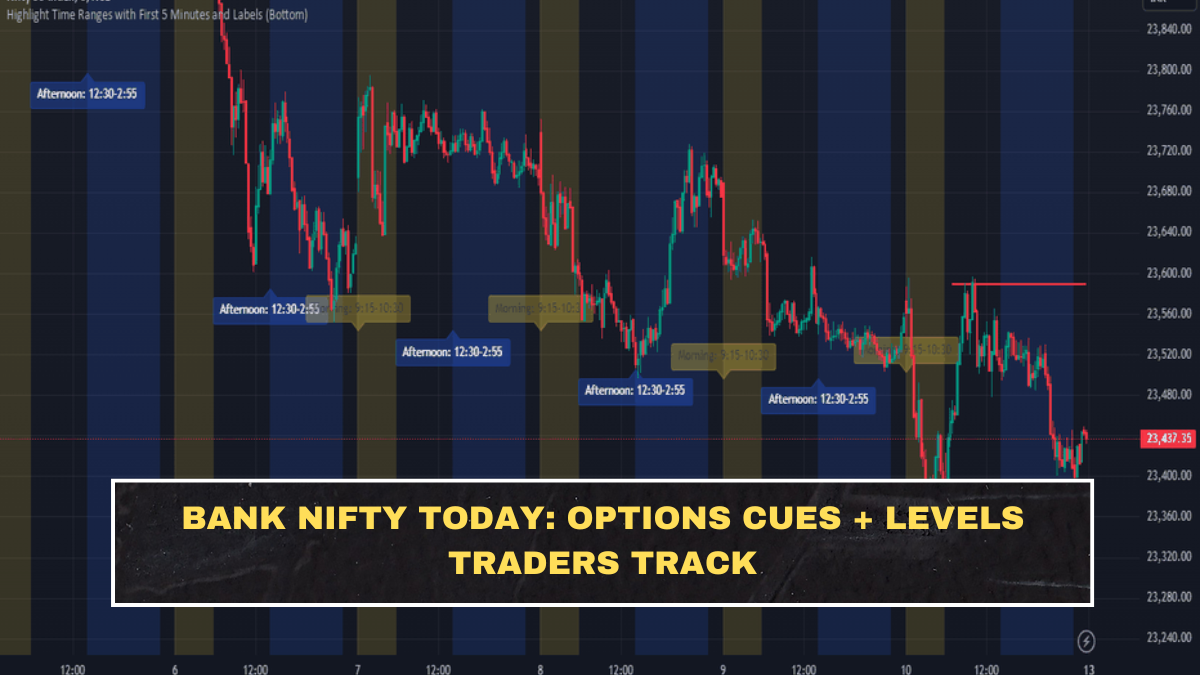
The Bank Nifty index tracks the performance of major banking stocks listed on the National Stock Exchange of India. It is one of the most actively traded indices in the Indian derivatives market because banking companies play a central role in the country’s financial system.
Movements in Bank Nifty often influence the broader equity market since banking and financial stocks carry significant weight in benchmark indices like the Nifty 50.
Traders closely monitor the index for short-term opportunities, especially in the futures and options (F&O) segment.
Major Banks Included in the Bank Nifty Index
| Bank | Segment |
|---|---|
| HDFC Bank | Private sector bank |
| ICICI Bank | Private sector bank |
| State Bank of India | Public sector bank |
| Axis Bank | Private sector bank |
| Kotak Mahindra Bank | Private sector bank |
These large banks have substantial market capitalization, meaning price changes in a few stocks can move the entire index significantly.
Why Bank Nifty Moves Quickly
Bank Nifty is known for its high volatility, especially during intraday trading sessions.
Several factors influence the index movement:
Interest rate expectations
Changes in monetary policy signals from the Reserve Bank of India can influence banking sector profitability.
Foreign investor activity
Large institutional flows into banking stocks can push the index sharply higher or lower.
Corporate earnings
Quarterly earnings results from major banks can impact investor sentiment.
Credit growth outlook
Bank lending trends and economic growth expectations also influence stock performance.
Understanding Options Cues in Bank Nifty
Options traders often analyze open interest (OI) and strike prices to understand potential support or resistance zones.
| Options Indicator | What It Suggests |
|---|---|
| Call open interest buildup | Possible resistance level |
| Put open interest buildup | Possible support level |
| Put-call ratio (PCR) | Market sentiment indicator |
| Option volume spikes | Increased trading activity |
These indicators help traders estimate where the index may face buying or selling pressure.
Support and Resistance Levels
Technical analysts identify important levels where the index may pause or reverse direction.
| Level Type | Meaning |
|---|---|
| Support | Price zone where buying demand may appear |
| Resistance | Level where selling pressure may increase |
| Breakout | Price moves above resistance |
| Breakdown | Price falls below support |
Traders often combine these levels with options data and market momentum indicators to make decisions.
Why Banking Stocks Are Crucial for the Market
Banks act as the backbone of the financial system. Their performance reflects broader economic conditions such as credit demand, corporate growth, and consumer spending.
Because of this, strong movement in banking stocks can influence the overall direction of the stock market.
Large banks like HDFC Bank, ICICI Bank, and State Bank of India often lead major rallies or corrections in the index.
What Traders Watch During the Trading Day
Active traders follow several indicators to interpret Bank Nifty momentum.
| Indicator | Why It Matters |
|---|---|
| Futures price trend | Indicates institutional positioning |
| Options open interest | Suggests potential support/resistance |
| Volume spikes | Signals strong buying or selling |
| Global banking news | Influences investor sentiment |
These indicators provide insights into short-term trading opportunities.
Risks Traders Should Watch
Bank Nifty’s volatility can create opportunities but also increases risk. Rapid price swings may occur due to macroeconomic news or large institutional trades.
Important risk factors include:
-
Sudden interest rate announcements
-
Global banking sector developments
-
Unexpected corporate earnings results
-
Sharp foreign investor inflows or outflows
Managing risk is crucial when trading highly volatile indices.
Conclusion
Bank Nifty remains one of the most influential indices in the Indian stock market because of the significant role banks play in the economy. Movements in major banking stocks can drive broader market trends and create trading opportunities.
By analyzing options data, support and resistance levels, and updates from the National Stock Exchange of India, traders can better understand potential market direction and identify key signals during the trading session.
FAQs
What is Bank Nifty?
Bank Nifty is a stock market index that tracks the performance of leading banking sector companies listed on the National Stock Exchange of India.
Why is Bank Nifty so volatile?
The index is heavily traded in derivatives markets and consists of high-market-cap banking stocks, which can lead to rapid price movements.
What is the importance of options data in Bank Nifty?
Options open interest and put-call ratios help traders identify potential support and resistance levels.
Which banks influence Bank Nifty the most?
Large banks such as HDFC Bank, ICICI Bank, State Bank of India, and Axis Bank often have the biggest impact.
Where can traders track Bank Nifty updates?
Live updates are available on financial news platforms and official data from the National Stock Exchange of India.