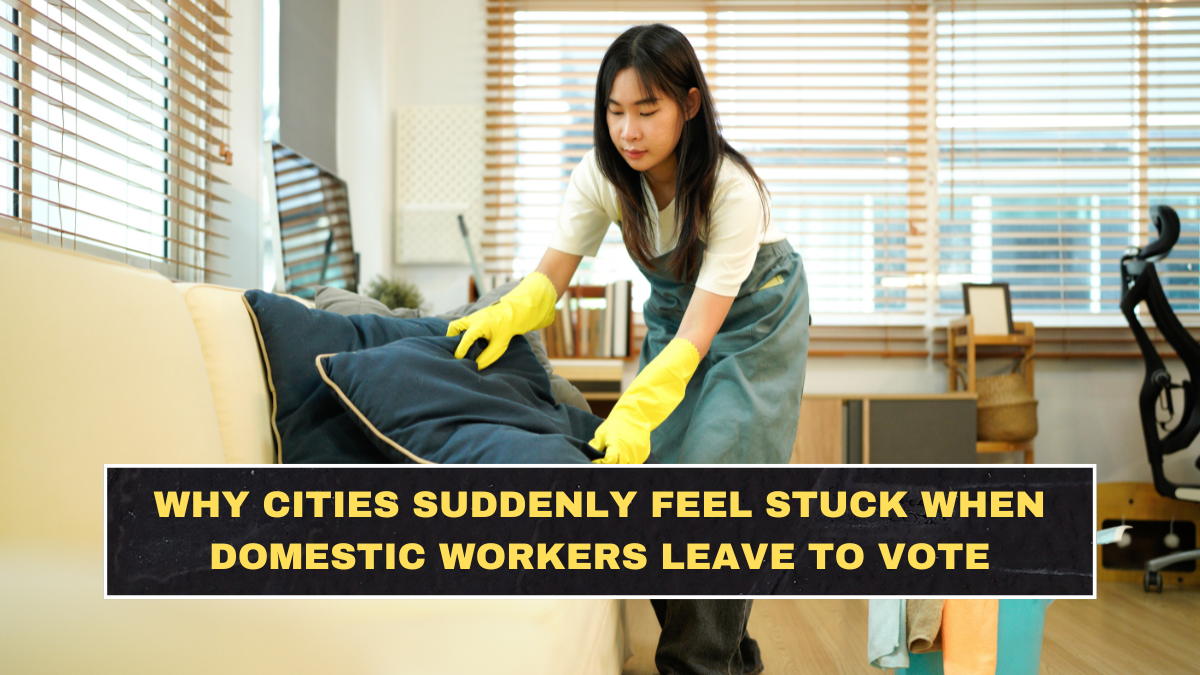
Domestic workers are leaving cities because many migrant workers from West Bengal have returned home to vote during the 2026 Assembly election period. This has created a sudden shortage of maids, cooks, nannies, caregivers, drivers and other household workers in metro cities. Reports from Delhi-NCR, Mumbai and Bengaluru said several households expected disruption as workers travelled back to their native places for polling.
The bigger reason is not only voting. Reports also said some Bengali migrant workers were worried about voter-roll issues and citizenship-related fears, especially around the special intensive revision process. That fear pushed many to travel home even without confirmed train tickets, risking wages and jobs. This is not a small inconvenience story; it shows how fragile urban life becomes when informal workers are missing.

Why Did Urban Homes Feel The Impact So Quickly?
Urban homes felt the impact quickly because many middle-class and upper-middle-class households depend on domestic workers for daily survival routines. Cooking, sweeping, mopping, child care, elderly care, dishwashing and laundry may look like “small tasks” only until the person doing them leaves. Then families suddenly realise how much unpaid and paid labour keeps their normal day running.
This is the uncomfortable truth many city residents avoid. They say “my maid is on leave” as if it is a minor scheduling issue, but the entire household system often depends on that worker. When thousands travel at the same time, the problem becomes visible across gated societies, apartments, hospitals and service platforms. The crisis is not created by workers leaving; it is created by cities depending on them without building backup systems.
| Area Affected | What Happens When Workers Leave? | Why It Matters? |
|---|---|---|
| Homes | Cooking, cleaning and laundry get delayed | Daily routines collapse quickly |
| Working parents | Childcare gaps appear | Office attendance and productivity suffer |
| Elderly care | Caregiver absence creates risk | Families struggle with medical and mobility support |
| Hospitals | Support staff shortages affect scheduling | OPDs and planned procedures may need adjustment |
| Apps | Demand rises for quick home services | Supply becomes weaker when workers are away |
| Workers | Wages and job security may be at risk | Voting can come with economic cost |
How Big Is India’s Domestic Work Dependence?
India’s dependence on domestic work is massive, but it is often undercounted because much of the sector is informal. A recent report on India’s home-help market estimated that the domestic help industry includes around 30 million workers, many of them women with limited formal employment options. The sector is now also being reshaped by platforms offering quick home services, but the work remains physically demanding and socially undervalued.
This is why the sudden shortage became so visible. A city can pretend domestic work is casual or replaceable, but the numbers say otherwise. If millions of homes depend on workers every day, then their absence is not a private inconvenience. It is a labour-market shock. The problem is that domestic work is treated as personal help, not as a serious part of urban infrastructure.
Why Are 10-Minute House Help Apps Seeing A Rush?
The rush toward 10-minute house help apps is happening because households want instant substitutes when regular workers leave. Platforms like Snabbit, Pronto and Urban Company have become the fallback option for many urban residents. But reports noted that when Delhi-NCR faced a house-help crunch due to the Bengal election rush, these apps also struggled to keep up with demand.
This exposes a blind spot in the “instant service” mindset. Apps can make booking easier, but they cannot magically create workers when the same labour pool has travelled home. Technology solves discovery and payment; it does not solve labour shortage. If the people doing the work are unavailable, the app becomes a cleaner-looking version of the same old dependency.
Why Is This Also A Migrant Worker Rights Issue?
This is a migrant worker rights issue because the workers are not taking a vacation; they are exercising their democratic right to vote. Many live in one city for work but vote in another place where their names remain on electoral rolls. That creates a painful choice: stay and earn wages, or travel home and protect voting rights. For low-income workers, that choice is not easy.
Reports from railway stations described Bengali migrant families, including domestic helps and labourers, rushing to board crowded trains for West Bengal polling. Some were travelling because they feared losing voting rights or being left out of official records. That means the so-called “house help shortage” is actually connected to deeper problems around migration, voter registration, documentation and economic insecurity.
What Does This Say About Urban Middle-Class Life?
It says urban middle-class life is less self-sufficient than it pretends to be. Many households run smoothly only because someone else absorbs the hard, repetitive and invisible labour. When that person leaves, residents suddenly face the full weight of their own home management. That is not a worker problem; that is a dependency problem.
There is also a class hypocrisy here. Domestic workers are expected to be available, flexible and affordable, but their own family needs, voting rights and travel pressures are often treated as inconvenience. If a corporate employee takes leave to vote, it is civic responsibility. If a domestic worker does the same, it becomes a “crisis.” That double standard needs to be called out.
How Are Hospitals And Services Also Being Affected?
The effect is not limited to homes. Reports from Kolkata said hospitals expected staff shortages as workers returned to district hometowns to vote, with some hospitals adjusting OPD appointments and planned surgeries. Hospitals such as Ruby General, Desun, BP Poddar and Woodlands reportedly prepared duty rosters or adjusted schedules to keep emergency and critical services running.
This shows that voting-related movement affects more than domestic chores. Cities depend on migrant workers across healthcare, security, transport, construction and service roles. When elections pull workers back to their registered homes, the impact appears in multiple systems. The honest lesson is that migration is not separate from governance. Voting access, labour planning and urban services are connected.
What Can Households Do Better Next Time?
Households need to stop treating domestic workers as endlessly available backup machines. They should plan around election periods, give leave without drama, avoid wage cuts for civic participation and create temporary household routines. If a family cannot function for three days without one worker, the family has a planning problem, not just a staffing problem.
Employers should also communicate early. Ask workers when they need to travel, whether they need advance wages, and when they expect to return. The respectful approach is simple: treat voting leave as legitimate. Urban residents demand rights for themselves; they should not become uncomfortable when workers use theirs.
Conclusion?
The domestic workers voting exodus is not just a house-help shortage story. It is a mirror showing how heavily Indian cities depend on informal migrant labour while rarely giving that labour dignity, security or planning space. When workers leave to vote, homes, apps and services suddenly struggle because the invisible workforce becomes visible through its absence.
The smarter takeaway is clear. Domestic workers are not disappearing from responsibility; they are participating in democracy. Cities need better labour planning, households need more respect, and policymakers need easier voting options for migrants. Until then, every election season will keep exposing the same truth: urban India runs on workers it barely acknowledges.
FAQs
Why Are Domestic Workers Leaving Cities During Elections?
Many domestic workers are migrant workers whose voter registration remains in their home state or district. During elections, they often travel back to vote, especially when they fear missing voter-roll checks or losing political rights.
Which Cities Are Facing House Help Shortage?
Reports have pointed to disruption in metro areas such as Delhi-NCR, Mumbai and Bengaluru, especially as workers from West Bengal returned home during the election period. The impact can vary by locality and worker concentration.
Why Are 10-Minute Home Service Apps Not Solving The Problem?
These apps can connect users with available workers, but they cannot create supply when many workers have travelled home. When demand rises and worker availability falls, instant booking also becomes unreliable.
What Should Employers Do When Domestic Workers Go To Vote?
Employers should plan early, allow leave respectfully, avoid unfair wage cuts and discuss return dates clearly. Voting is a democratic right, not an excuse for employers to treat workers as irresponsible.