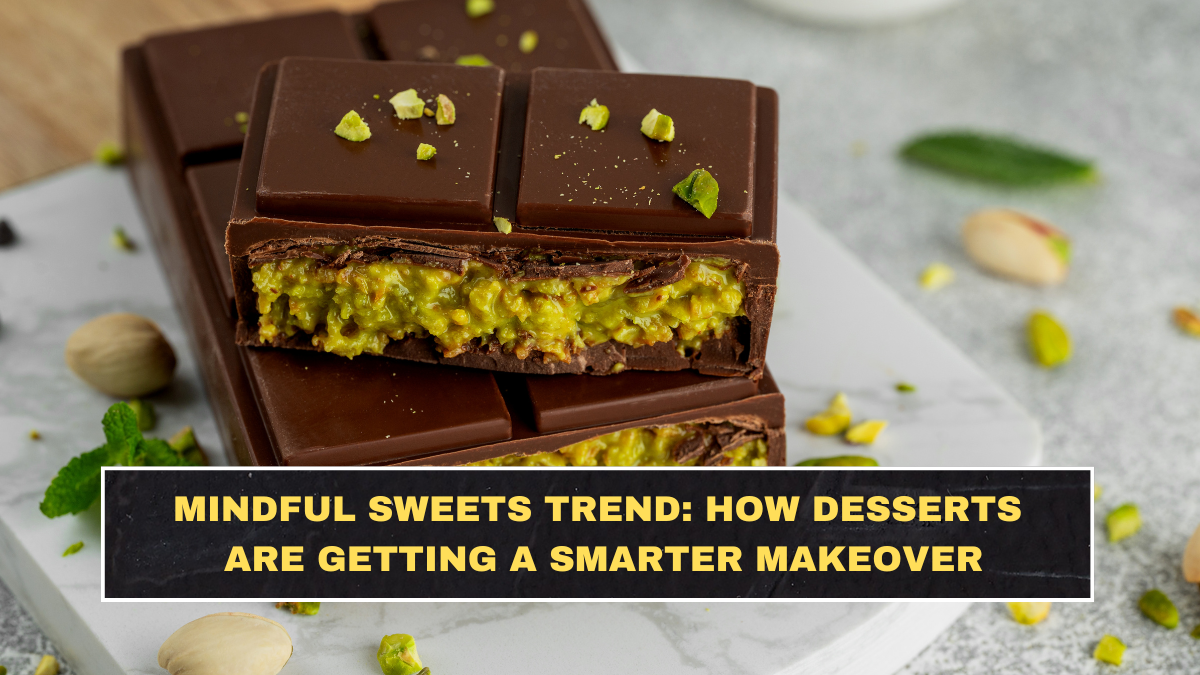
The mindful sweets trend is growing because people still want dessert, but they are getting less interested in sugar overload disguised as a reward. That is the real shift. Consumers are not abandoning treats. They are looking for treats that feel more controlled, more balanced, and easier to fit into everyday life. Whole Foods’ 2026 trend forecast explicitly called this movement “sweet, but make it mindful,” describing a dessert direction built around smaller portions, less sugar, and ingredients like dates and dried fruit for more intentional sweetness.
This trend makes sense because sugar fatigue is real. Shoppers have spent years moving through cycles of protein obsession, gut-health marketing, and “cleaner” snacking, and sweets are now getting pulled into that same logic. At the same time, the market still wants indulgence. FoodNavigator’s March 2026 product roundup said indulgence, clean label, and premiumization are all shaping new launches in bakery, snacks, and confectionery. That means brands are trying to sell treats that feel exciting without looking reckless.

Why are people still buying sweets if they say they want healthier food?
Because most people do not want discipline all the time. They want permission. Mindful sweets offer that permission in a more acceptable format. Instead of a giant slice of cake or a family-size chocolate pack, the market is shifting toward bite-size formats, portion-defined desserts, and lower-sugar positioning. That does not mean people suddenly became nutritionally pure. It means they want indulgence with less guilt and less regret.
There is also a broader pattern in snacking. FoodNavigator-USA reported in 2025 that portion control and indulgence are now appearing together in snack innovation rather than as opposites. That matters because dessert buying is no longer just about “treat yourself.” It is about buying a product that feels controlled enough to repeat without feeling stupid.
What counts as a mindful sweet now?
Usually, it means one of four things: smaller portion size, lower sugar, better ingredient perception, or a more balanced nutritional profile. Whole Foods’ 2026 forecast tied the trend to desserts sweetened partly with dates or dried fruit, while Food & Wine’s April 2026 explainer on dates made a useful point: date sugar may have a slight nutritional edge over refined sugar, but it does not magically turn dessert into health food. That is an important correction, because the category survives on people confusing “better” with “good for you.”
In practice, mindful sweets can include mini desserts, individually wrapped premium chocolates, lower-sugar frozen treats, snack bars positioned as indulgent-but-restrained, and fruit-based desserts with cleaner labels. The smarter products are not pretending to be salad. They are just designed to feel more manageable.
How are brands changing dessert without killing the fun?
By shrinking, reformulating, and reframing. Smaller packs are one obvious move because they help brands sell indulgence while signaling restraint. Reformulation is another, especially when brands reduce sugar, use fruit-based sweeteners, or lean into ingredients tied to gut health or cleaner labels. Innova Market Insights’ 2026 sugar confectionery trend coverage says gut health is influencing confectionery and notes that consumers increasingly connect digestive wellness with broader benefits such as energy and skin. That shows how dessert is being nudged toward functionality without fully leaving indulgence behind.
The third move is marketing language. “Mindful,” “balanced,” “real ingredients,” and “naturally sweetened” all help desserts sound less reckless. Some of that is useful. Some of it is pure manipulation. If a product is still packed with sugar and calories but uses dates or fancy packaging, the consumer is not being educated. They are being played.
Which mindful sweet formats are getting the most traction?
The strongest formats are the ones that match real behavior. People want portable treats, individually portioned options, and products they can justify as a smaller everyday indulgence rather than a full cheat meal. Reduced-sugar desserts are part of this, but so are premium small-format chocolates, snackable frozen treats, fruit-forward sweets, and portion-friendly bakery items.
Here is the simple breakdown:
| Format | Why it fits the trend | Best feature | Main weakness |
|---|---|---|---|
| Mini desserts | Feels indulgent without overcommitting | Portion control | Easy to eat multiple servings |
| Date- or fruit-sweetened treats | Sounds more natural and less processed | Better ingredient perception | Still can be very sugary |
| Individually wrapped chocolates | Built-in stopping point | Convenience and restraint | Premium branding can hide excess sugar |
| Lower-sugar frozen desserts | Familiar treat with a “lighter” angle | Easier swap for regular desserts | Taste and texture can disappoint |
| Snack bars with indulgent flavors | Blends treat and utility | Portable and easy to justify | Often marketed healthier than they are |
That table is where the trend gets real. A mindful sweet works only when it actually changes the eating experience in a useful way. If it is just a regular dessert with virtue words on the box, it is not a smarter choice. It is a more expensive lie.
Are lower-sugar desserts actually better, or just better marketed?
Sometimes better, often better marketed. Lower sugar can matter, especially for people trying to reduce spikes in overall intake or avoid very sweet foods. But sugar reduction alone does not tell the whole story. Food & Wine’s date-sugar explainer makes the point clearly: swapping sweeteners does not automatically make a dessert healthy, and portion size still matters.
That is the blind spot a lot of people ignore. They think the problem is only the ingredient list, when often the bigger issue is how much of the product they eat and how often. A reduced-sugar cookie eaten by the box is not a mindful dessert. It is just a slightly altered bad decision.
Why does this trend fit 2026 so well?
Because 2026 food culture is full of contradiction. People want indulgence, but they also want control. They want flavor, but they also want labels that sound less chaotic. They want dessert, but they want it framed as balance instead of excess. FoodNavigator’s 2026 trend coverage shows indulgence and clean-label expectations growing at the same time, and Whole Foods’ mindful-sweets framing captures that contradiction perfectly.
This is also happening alongside adjacent trends like fiber-forward products, gut-health positioning, and more restrained savory snacking. Better Homes & Gardens recently described 2026 as leaning toward more balanced, mature flavor choices overall, not just pure sugar chasing. That context helps explain why desserts are getting a smarter makeover instead of simply disappearing.
Conclusion
The mindful sweets trend is not about people giving up dessert. It is about people trying to keep dessert while reducing the chaos around it. Smaller portions, lower sugar, cleaner labels, and fruit-based sweetness all fit that goal, but none of them are magic on their own. The useful version of this trend helps people enjoy sweets with more control. The useless version just repackages indulgence in wellness language. The difference is not in the slogan. It is in the portion, the formulation, and whether the product actually changes behavior.
FAQs
What is the mindful sweets trend?
It is the 2026 shift toward desserts and sweet snacks that emphasize smaller portions, less sugar, and more intentional ingredients without giving up indulgence completely.
Are date-sweetened desserts automatically healthier?
No. Date sugar or dates may offer some nutritional advantages over refined sugar, but they do not automatically make a dessert healthy. Portion size and overall formulation still matter.
Why are brands pushing portion-friendly desserts?
Because many consumers want indulgence that feels controlled and repeatable, not all-or-nothing binge formats. Portion control now often sits alongside indulgence in product development.
What should shoppers check before buying mindful sweets?
Look at portion size, total sugar, overall ingredients, and whether the product is genuinely different or just using “mindful” language to sound better than it is.