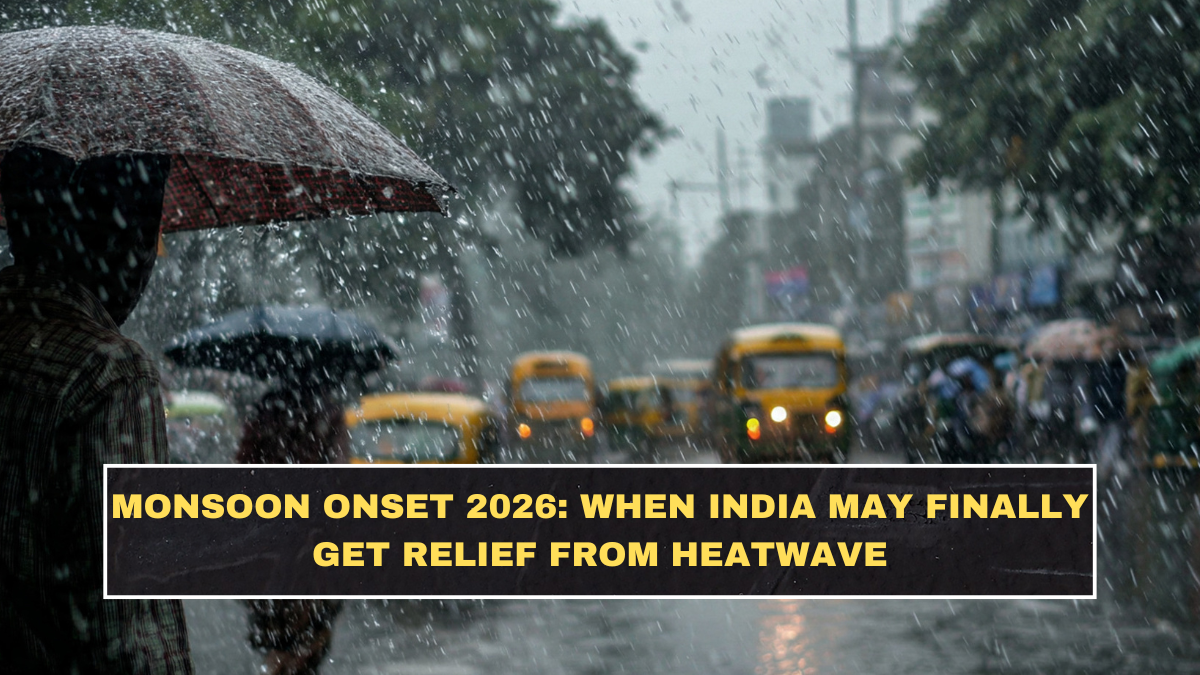
Monsoon onset searches are rising because large parts of India are facing intense late-April heat, while people are looking for signs of rain relief. The India Meteorological Department’s monsoon information page currently lists heatwave conditions over the plains of northwest and central India during the next few days, along with its 2026 Southwest Monsoon season forecast.
This matters because the southwest monsoon is not just a weather event in India. It affects farming, water storage, electricity demand, food prices and daily life. After weeks of rising temperatures, people naturally start asking the same question: when will the monsoon reach Kerala, and when will it move north?
When Can The 2026 Monsoon Reach Kerala?
The official IMD long-range forecast released on April 13 focuses mainly on seasonal rainfall, not a confirmed Kerala onset date. IMD said it will issue updated forecasts for monsoon season rainfall in the last week of May 2026, which is when more reliable onset signals usually become clearer.
Some weather model-based reports and private forecasts are pointing toward a possible late-May arrival window around Kerala, with dates such as May 25 to May 29 being discussed. But this should be treated carefully. A model signal is not the same as an official onset declaration, and calling it confirmed right now would be sloppy.
| Forecast Point | Current Signal | What Readers Should Understand |
|---|---|---|
| Official IMD seasonal forecast | Below-normal monsoon likely | Rainfall may be weaker than usual overall |
| IMD updated forecast | Expected in last week of May | Better clarity will come closer to onset |
| Kerala onset discussion | Late May window being tracked | Not officially confirmed yet |
| Seasonal rainfall estimate | 92% of LPA, ±5% model error | Below-normal category risk |
| LPA reference | 87 cm for 1971–2020 | Used to compare national monsoon rainfall |
| Main climate risk | El Niño may develop during season | Could weaken later monsoon phases |
What Has IMD Said About Monsoon Rainfall In 2026?
IMD’s April 13 long-range forecast says the 2026 southwest monsoon seasonal rainfall over India is most likely to be below normal, in the 90% to 95% range of the Long Period Average. Quantitatively, IMD projects rainfall at 92% of LPA with a model error of ±5%, and it defines the national seasonal LPA for 1971–2020 as 87 cm.
This is the most important number in the current forecast. It means the early question is not only “when will the monsoon arrive?” but also “how strong will it be after arrival?” A slightly early or timely onset does not automatically guarantee a strong rainfall season across India.
Why Does Below-Normal Rainfall Matter?
Below-normal rainfall matters because India’s monsoon is directly linked to agriculture, reservoirs and rural demand. Even a small national shortfall can create uneven pressure if rainfall becomes weak in key farming belts. Farmers may face delayed sowing, water stress or higher irrigation costs if rain distribution becomes poor.
The important detail is distribution. A national figure like 92% of LPA does not mean every district will receive exactly 92% rainfall. Some regions may get normal or above-normal rain, while others may face deficit conditions. That is why local forecasts become more important once the monsoon actually starts moving.
What Role Could El Niño Play This Year?
IMD has said weak La Niña-like conditions are transitioning toward ENSO-neutral conditions, while its Monsoon Mission Climate Forecast System suggests El Niño conditions may develop during the southwest monsoon season. El Niño often raises concern because it can weaken monsoon performance, especially if it develops strongly during the second half of the season.
This does not mean drought is guaranteed. That would be an exaggeration. But it does mean the forecast carries risk, especially for August and September rainfall. Skymet has also forecast a below-normal monsoon for 2026 and flagged weakness in the later part of the season, which broadly supports the idea that the second half needs close monitoring.
Which Areas May Get Better Or Weaker Rainfall?
IMD’s spatial forecast suggests below-normal seasonal rainfall is most likely over many parts of the country, except some areas over Northeast India, Northwest India and South Peninsular India where normal to above-normal rainfall is likely. This means the monsoon may not behave evenly across India.
That is why people should stop thinking of monsoon as one simple national switch. Kerala onset is only the starting signal. What really matters afterward is how quickly the monsoon advances, where low-pressure systems form, and whether rain reaches the farming belts at the right time.
Can Pre-Monsoon Rain Bring Relief Before The Actual Monsoon?
Yes, pre-monsoon rain can bring temporary relief before the official monsoon arrives. Skymet reported that pre-monsoon weather activity is likely to intensify across many parts of India in late April and continue into the first week of May, with thunderstorms and showers possible over northern, eastern, northeastern and southern states.
But people should not confuse pre-monsoon rain with monsoon onset. A thunderstorm can cool one city for a few hours, but it does not mean the southwest monsoon has arrived. Official monsoon onset depends on specific rainfall, wind and atmospheric conditions, not just one rainy evening.
What Should Farmers And Families Watch Next?
Farmers should watch the late-May IMD update, state agriculture advisories and district-level rainfall forecasts before making major sowing decisions. If rainfall looks delayed or weak in a specific region, water conservation and crop planning become more important. Acting only on viral weather posts is a bad decision because local rainfall can differ sharply from national headlines.
Families should watch heatwave warnings, thunderstorm alerts and local water supply updates. Until proper monsoon rainfall starts, heat stress can continue in many regions. The smarter approach is to prepare for both possibilities: short-term rain relief in some areas and continued heat in others.
Conclusion?
Monsoon onset 2026 is becoming a major search topic because India is dealing with intense heat and people are desperate for rain relief. The current signals suggest a possible late-May onset window around Kerala, but the official IMD confirmation is still awaited. The honest answer is simple: hope is building, but confirmation has not arrived yet.
The bigger story is that IMD’s seasonal forecast points to below-normal rainfall at around 92% of LPA, with El Niño risk during the season. So even if the monsoon arrives on time or slightly early, India still needs to watch rainfall distribution carefully. Arrival is only the first chapter; performance is the real story.
FAQs
When Will Monsoon 2026 Arrive In Kerala?
Current model-based reports suggest a possible late-May arrival window around Kerala, but IMD has not yet officially confirmed the onset date. The updated IMD forecast expected in the last week of May will give clearer guidance.
What Is IMD’s Monsoon Forecast For 2026?
IMD has forecast the 2026 southwest monsoon rainfall at around 92% of the Long Period Average with a model error of ±5%. This places the seasonal forecast in the below-normal category.
Does Early Monsoon Mean Good Rainfall?
No, early onset does not automatically mean good rainfall. A monsoon can arrive on time and still perform weakly later if rainfall distribution becomes poor or El Niño conditions strengthen.
Why Is El Niño Important For Monsoon 2026?
El Niño can influence Indian monsoon rainfall by changing ocean and atmospheric patterns. IMD has said El Niño conditions may develop during the southwest monsoon season, so the second half needs close monitoring.
Click here to know more