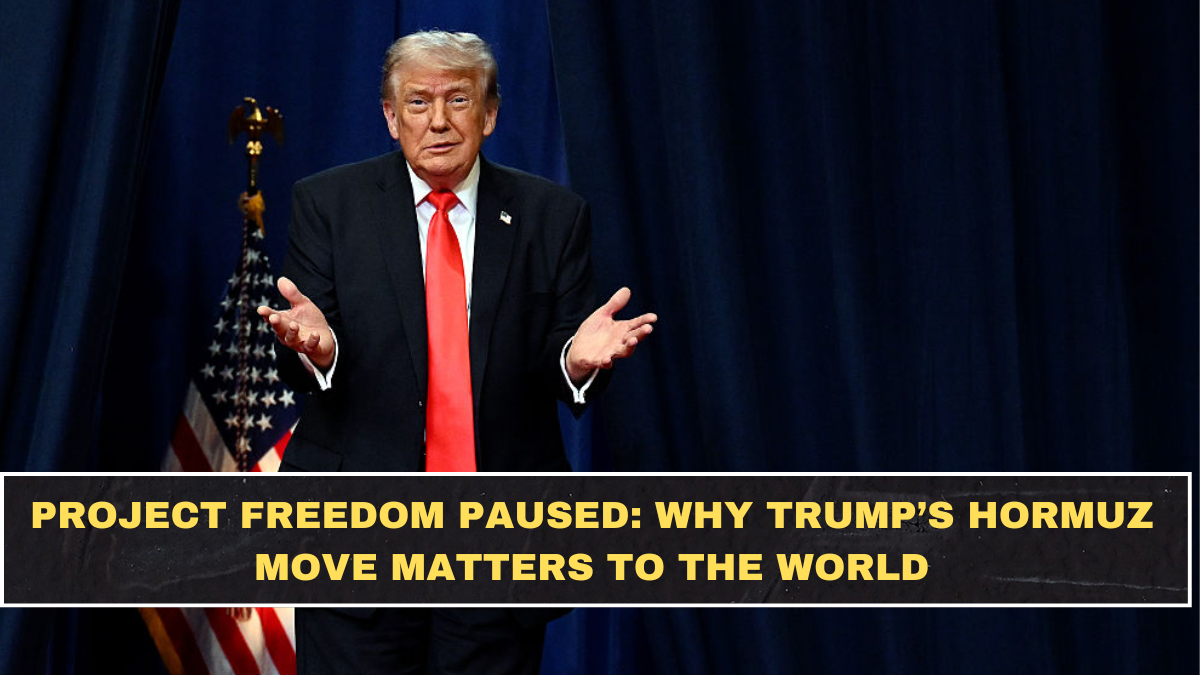
Donald Trump’s decision to pause “Project Freedom” has suddenly shifted the Strait of Hormuz crisis from military action back toward diplomacy. Reuters reported that Trump said the U.S. operation to reopen the Strait of Hormuz would be paused for a short period to allow talks with Iran to move forward, while the blockade would remain in force. That means this is not a full retreat; it is a tactical pause with pressure still active.
The move matters because the Strait of Hormuz is one of the world’s most important energy routes. Any disruption there can affect oil supply, shipping costs, fuel prices and global inflation. The pause may reduce immediate military escalation, but it also keeps uncertainty alive because ships, energy markets and governments still do not know whether diplomacy will actually hold.
What Is Project Freedom Really About?
Project Freedom is the U.S.-led military-backed effort to escort or help commercial ships move through the Strait of Hormuz during the Iran crisis. Times of India reported that the operation was launched to help stranded commercial ships exit the strait, but Trump later said it would be paused after requests from Pakistan and other countries, along with claimed progress toward a final agreement with Iran.
| Key Point | Current Status | Why It Matters |
|---|---|---|
| Operation Name | Project Freedom | U.S. naval effort linked to Hormuz shipping |
| Trump’s Move | Temporarily paused | Gives diplomacy a short window |
| Blockade | Still in force | Pressure on Iran continues |
| Main Route | Strait of Hormuz | Critical oil and shipping corridor |
| Global Reaction | Allies reassessing roles | South Korea suspended its review |
The important detail is that the pause does not mean the crisis is over. Economic Times also reported that Trump said the operation would be paused only to see whether an agreement could be finalised and signed. That wording is careful because it keeps the option of restarting the operation open if talks fail.
Why Is The Strait Of Hormuz So Important?
The Strait of Hormuz matters because it is a narrow maritime route connecting the Persian Gulf with global energy markets. When tension rises there, oil traders, shipping companies and governments immediately react because any blockage can create supply shock fears. This is why even a temporary military pause becomes a global headline, not just a U.S.-Iran story.
The Washington Post reported that more than 1,500 commercial vessels with over 22,500 crew members were stranded because of the closure, while U.S. warships had been expected to help create a secure route. That scale explains why countries outside the Middle East are watching closely. This is not only about diplomacy; it is also about sailors, cargo, insurance, oil and global trade.
Why Did Trump Pause The Operation Now?
Trump’s explanation is that diplomatic progress has been made and that other countries requested space for talks. The Guardian reported that Trump linked the pause to possible progress toward a settlement with Iran, while also saying the U.S. blockade on Iranian ports would remain. This combination shows he is trying to claim military strength while still leaving room for negotiation.
Possible reasons behind the pause include:
- Giving Iran talks a chance before wider escalation
- Responding to pressure from countries worried about trade disruption
- Avoiding direct military confrontation while keeping leverage
- Showing markets that Washington is not rushing blindly into conflict
- Buying time before allies commit deeper to the operation
The brutal truth is that this pause is politically risky. If talks succeed, Trump will call it smart pressure diplomacy. If talks collapse, critics will say the pause gave Iran breathing room while ships remained stuck and tensions stayed unresolved.
How Are Other Countries Reacting?
South Korea’s response shows how quickly Trump’s decision affected allies. Reuters reported that South Korea suspended its review of possible participation in Project Freedom after the U.S. put the operation on hold. Its national security adviser said there was no longer a need to continue reviewing involvement once Trump suspended the mission.
That matters because U.S.-led maritime operations often depend on allied support, especially when commercial shipping from multiple countries is affected. If allies hesitate, the burden stays heavier on Washington. If they join too quickly, they risk being pulled into a confrontation with Iran. This is why the pause has not ended the crisis; it has simply moved the pressure into diplomatic and alliance-management channels.
Conclusion: Is This A Pause Or A Warning?
Project Freedom being paused is not a clean sign of peace. It is a temporary hold on a military operation while talks with Iran are tested under pressure. The blockade remains active, ships remain affected and global markets are still watching the Strait of Hormuz closely. That means the world has not moved out of danger yet; it has only entered a more uncertain diplomatic phase.
The honest takeaway is simple: this pause could become the first step toward de-escalation, or it could become the short break before a bigger confrontation. Trump has kept military pressure alive while giving diplomacy a narrow window. If that window closes without a deal, Hormuz could return to the centre of global crisis within hours.
FAQs
What Is Project Freedom In The Strait Of Hormuz?
Project Freedom is a U.S.-led operation aimed at helping or escorting commercial ships through the Strait of Hormuz during the Iran-related shipping crisis. It was designed to reopen or secure movement through one of the world’s most important maritime routes.
Why Did Trump Pause Project Freedom?
Trump said the operation would be paused for a short period because progress had been made toward a possible agreement with Iran. He also cited requests from Pakistan and other countries, while saying the blockade would remain in force.
Is The Strait Of Hormuz Blockade Over?
No, the blockade is not over. Reports said Trump paused the ship-movement operation but kept the blockade in force, meaning pressure on Iran continues even during talks.
Why Does The Hormuz Crisis Matter Globally?
The Strait of Hormuz is a critical route for oil and commercial shipping. Disruption there can affect fuel prices, cargo movement, insurance costs and global market confidence, which is why even a temporary pause becomes major world news.