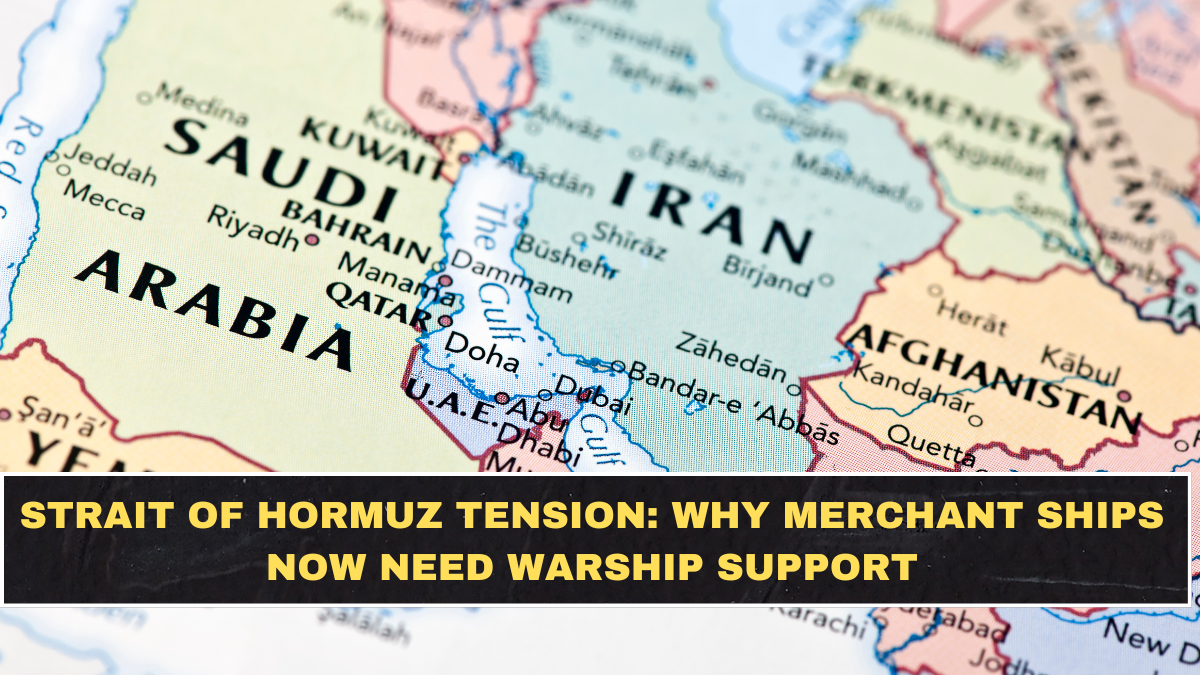
The Strait of Hormuz crisis has become one of the world’s most serious shipping flashpoints after U.S. warships moved to support commercial vessels in the Gulf. The issue is not just military drama; it is about global trade, oil supply and the safety of civilian sailors trapped near one of the world’s most important maritime chokepoints. AP reported that U.S. efforts to guide vessels through the strait were paused temporarily as Trump allowed space for Iran talks, while the blockade of Iranian ports continued.
The tension worsened after Iran reportedly introduced a new mechanism requiring commercial vessels to coordinate passage with Iranian military authorities. Reuters also reported that Iran warned the U.S. Navy to avoid the waterway and released a revised map showing expanded control claims. That is why merchant ships now face a brutal reality: crossing Hormuz is no longer only a navigation decision; it has become a security decision.
What Makes Hormuz So Dangerous Right Now?
The danger comes from a combination of military threats, blocked traffic, vessel attacks and uncertainty over who controls safe passage. Reuters reported that the CMA CGM San Antonio was hit while transiting the Strait of Hormuz, injuring crew members and damaging the vessel. The report also said turmoil in the area has disrupted maritime traffic and affected roughly 20% of global oil trade.
| Crisis Point | Current Situation | Why It Matters |
|---|---|---|
| Merchant ships | Facing security risks | Civilian crews are exposed |
| U.S. warships | Assisting safe passage | Shows normal transit is broken |
| Iran | Demanding coordination for passage | Raises sovereignty and control concerns |
| Oil trade | Major disruption reported | Can hit global fuel prices |
| Shipping firms | Facing higher risk and delays | Insurance and logistics costs may rise |
This table explains why the situation is bigger than one ship or one military announcement. A narrow waterway becomes dangerous when commercial vessels cannot move without armed support. Once ships need destroyers nearby, the market reads it as a sign that the risk is no longer theoretical.
Why Is The Strait Of Hormuz So Important?
The Strait of Hormuz connects the Persian Gulf with the Gulf of Oman and the wider global shipping network. It is one of the most important oil transit routes in the world, so disruption there can quickly affect energy markets, freight movement and inflation expectations. When traffic slows in Hormuz, the pressure is felt far beyond the Middle East.
This is why the attack on a container ship matters even to countries not directly involved in the Iran crisis. Reuters reported that the damaged CMA CGM San Antonio was heading to Mundra, India, showing how the crisis can touch Indian trade routes as well. In plain terms, Hormuz is not a remote conflict zone; it is connected to ports, prices and supply chains across Asia and Europe.
What Is The U.S. Trying To Do?
The U.S. launched Project Freedom to restore movement for commercial shipping through the blocked waterway. Reports said U.S. Navy guided-missile destroyers entered the Gulf and assisted initial merchant traffic, with two U.S.-flagged vessels successfully transiting the strait under the new protection plan. That was meant to show that shipping could restart despite Iranian pressure.
But the strategy is risky because escorting merchant ships is not the same as solving the crisis. Warships can reduce immediate danger for selected vessels, but they can also raise the chance of direct confrontation if Iran challenges the operation. This is the hard truth: military escorts can protect trade, but they can also turn commercial shipping into a trigger point for escalation.
Why Should India And Global Markets Care?
India should care because the crisis directly affects energy security and shipping routes. If oil movement through Hormuz stays disrupted, crude prices, shipping insurance and import costs can rise. That can hit inflation, fuel pricing, corporate margins and the rupee. A crisis in Hormuz does not stay in Hormuz; it travels through oil bills and currency markets.
Global markets should also care because shipping confidence is fragile. Once shipowners, insurers and crews see real attacks or military warnings, they start pricing higher risk into every movement. That can delay cargo, raise freight costs and make supply chains more expensive even before a full blockade happens.
Key risks now include:
- Higher war-risk insurance for Gulf shipping
- Delays in oil, gas and container cargo movement
- Greater pressure on crude-importing countries
- Possible escalation between U.S. and Iranian forces
- More uncertainty for Indian ports and importers
Conclusion: Is Warship Support A Warning Sign?
Yes, merchant ships needing warship support is a major warning sign. It means normal commercial passage through the Strait of Hormuz is no longer being treated as safe enough on its own. With vessel attacks, Iranian transit controls, U.S. naval escorts and paused diplomatic operations all happening together, the crisis has entered a dangerous grey zone.
The honest takeaway is simple: Hormuz is now a test of whether diplomacy can reopen trade without a wider military clash. If talks work, warship escorts may become a temporary emergency measure. If talks fail, the world could face higher oil prices, more shipping disruption and a much sharper confrontation in one of the planet’s most sensitive sea lanes.
FAQs
Why Do Merchant Ships Need Warship Support In Hormuz?
Merchant ships need warship support because the Strait of Hormuz has become a high-risk passage amid Iran-related tensions, vessel attacks and disrupted traffic. U.S. Navy destroyers have assisted efforts to restore safe commercial transit through the waterway.
Was A Commercial Ship Attacked In The Strait Of Hormuz?
Yes, Reuters reported that the CMA CGM San Antonio was hit while transiting the Strait of Hormuz, injuring crew members and damaging the vessel. The ship was reportedly heading toward Mundra, India.
Why Is The Strait Of Hormuz Important For Oil?
The Strait of Hormuz is a critical route for global oil movement. Reuters reported that the current turmoil has disrupted maritime traffic and affected around 20% of global oil trade, which is why markets react strongly to tensions there.
Is Project Freedom Still Active?
The situation is shifting. AP reported that Trump temporarily paused the effort to guide vessels through the Strait of Hormuz to allow talks with Iran, while the U.S. blockade of Iranian ports continued. That means the crisis is not over, even if the operation is paused.