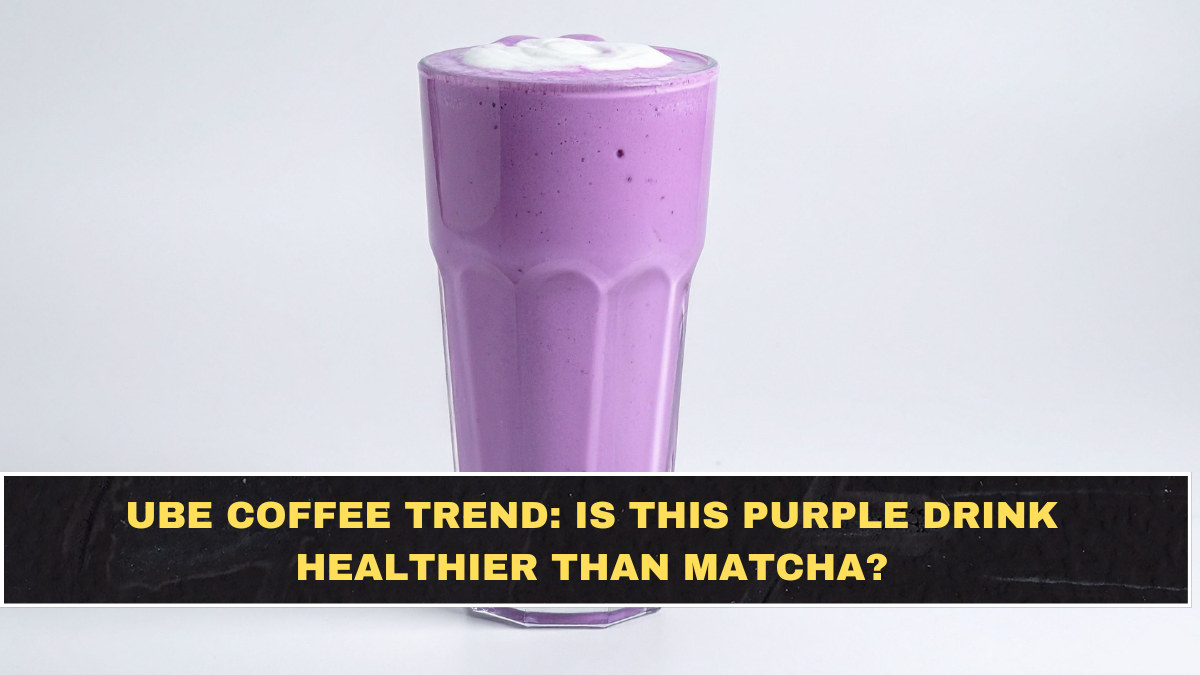
Ube coffee and ube lattes are suddenly everywhere because the drink looks made for Instagram: creamy, purple, sweet and different from the usual matcha-green café trend. Ube is a purple yam widely used in Filipino desserts, known for its nutty, vanilla-like flavour and bright violet colour. The trend has grown through cafés, social media videos and global chains experimenting with purple drinks and desserts.
But the health claim needs a reality check. Ube is not automatically healthier just because it looks natural and colourful. Indian Express reported that nutrition experts still see matcha as having stronger scientifically proven benefits, especially because it is rich in antioxidants and may support metabolism. Ube has fibre and some antioxidants, but its advantage depends heavily on how the drink is made.
What Is Ube Coffee Really?
Ube coffee usually combines ube powder, ube halaya or ube syrup with milk and espresso or cold brew. Some versions are true coffee drinks, while others are basically caffeine-free ube lattes without actual coffee. That distinction matters because people online are mixing terms loosely, which creates confusion around caffeine and health benefits.
| Drink | Main Ingredient | Caffeine Level | Health Reality |
|---|---|---|---|
| Ube latte | Ube + milk | Usually caffeine-free | Depends on sugar and milk |
| Ube coffee | Ube + espresso/cold brew | Has caffeine | Can be high-calorie |
| Matcha latte | Matcha powder + milk | Moderate caffeine | Strong antioxidant profile |
| Sweet café versions | Syrups + cream | Varies | Often more dessert than health drink |
The main trap is sugar. A homemade ube drink made with real ube powder, milk and minimal sweetener can be a reasonable treat. A café version loaded with syrup, condensed milk, whipped cream or flavoured toppings is not a wellness drink. It is dessert in a cup, no matter how pretty it looks.
Is Ube Healthier Than Matcha?
Ube has real nutritional value. Purple yam contains fibre, vitamin C and antioxidant pigments called anthocyanins, which are also found in purple and blue plant foods. Verywell Health notes that ube is a low-fat, cholesterol-free root vegetable that provides carbohydrates, dietary fibre and antioxidant vitamins.
Matcha, however, has stronger research behind its health image. Harvard Health says matcha contains antioxidants, including catechins and other phytochemicals, while Harvard’s nutrition guidance also notes that matcha contains caffeine and tea polyphenols such as theanine and catechins. That gives matcha a clearer advantage for focus and antioxidant research, though caffeine-sensitive people still need caution.
Why Is Ube Winning Online?
Ube is winning online because it looks new, photographs beautifully and feels less bitter than matcha. The Week reported that ube products are spreading through major UK chains and cafés, with younger consumers drawn to the colour, novelty and flavour. The Guardian also reported that ube coffees and cocktails are gaining attention as “the new matcha” trend.
Reasons ube is trending:
- Bright purple colour makes it highly shareable
- Sweet, nutty flavour is easier than bitter matcha
- Filipino food culture is getting wider global attention
- Cafés want new viral drinks after matcha and turmeric lattes
- Caffeine-free versions attract people avoiding stimulants
The blunt truth is that many food trends become popular because they look good first and taste good second. Health comes third. Ube has benefits, but its viral rise is being driven mainly by aesthetics, café menus and social media curiosity.
Should You Replace Matcha With Ube?
You do not need to replace matcha with ube. If you want focus, gentle caffeine and a drink with stronger research backing, matcha is still the better choice. If you want a caffeine-free, sweeter and more dessert-like drink, ube can be a good option when made without too much sugar.
The smartest approach is simple: choose based on your goal. For morning productivity, matcha may make more sense. For an evening café-style drink, ube may be better because plain ube is naturally caffeine-free. But if your ube coffee includes espresso, that caffeine-free advantage disappears.
Conclusion: Is Ube Coffee Worth The Hype?
Ube coffee is worth trying, but calling it healthier than matcha is weak thinking. Ube brings fibre, colour, flavour and some antioxidant value, while matcha has stronger evidence around catechins, caffeine-supported focus and antioxidant compounds. The winner depends on the recipe, sugar level and your personal needs.
The honest verdict is this: ube is a trend with real cultural and nutritional roots, not just a fake gimmick. But cafés can easily turn it into a sugar-heavy purple dessert. If you want the best version, choose real ube, less syrup, lighter milk and don’t pretend every viral drink is automatically healthy.
FAQs
What Is Ube Coffee?
Ube coffee is a purple drink made by combining ube, milk and coffee such as espresso or cold brew. Some versions called ube lattes may not contain coffee at all, so caffeine depends on the recipe.
Is Ube Healthier Than Matcha?
Not overall. Ube has fibre and antioxidants, but matcha has stronger research-backed benefits because it contains catechins, theanine and caffeine. Nutrition experts generally still place matcha ahead for proven wellness benefits.
Does Ube Coffee Have Caffeine?
Plain ube does not naturally contain caffeine, but ube coffee has caffeine if espresso or cold brew is added. An ube latte without coffee is usually caffeine-free unless another stimulant is mixed in.
Why Is Ube Trending Now?
Ube is trending because its purple colour looks striking online, its flavour is sweet and approachable, and cafés are looking for the next viral drink after matcha. Its Filipino dessert roots also give the trend cultural depth.