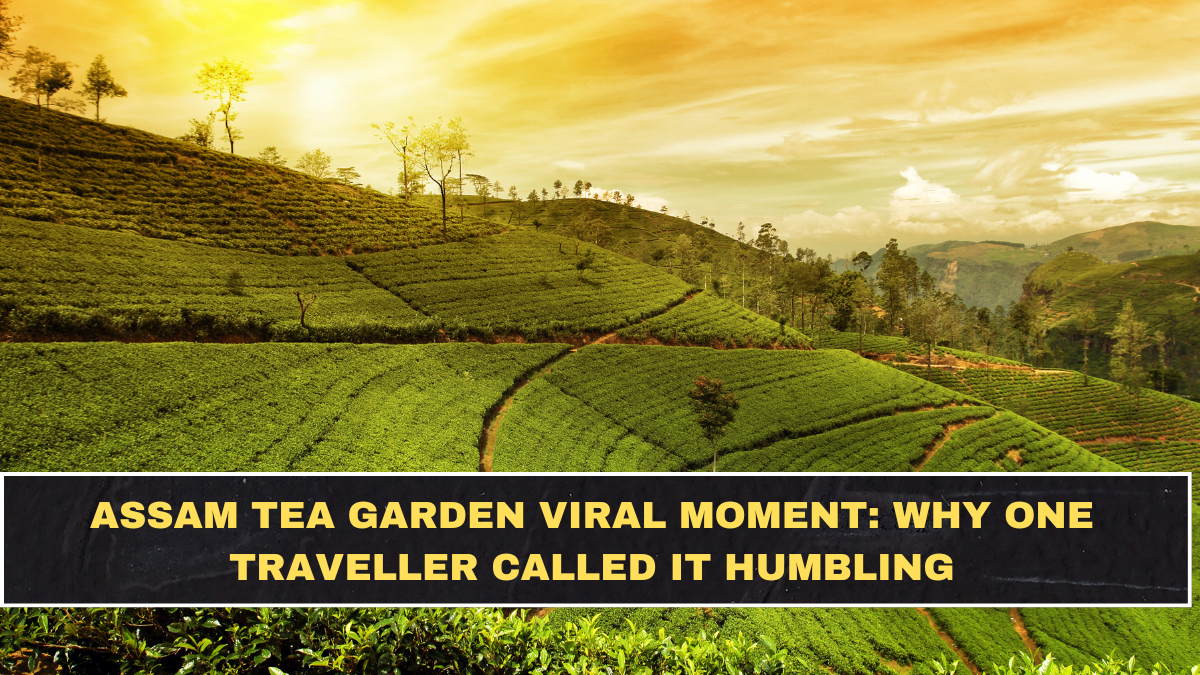
Assam’s tea gardens are trending after Welsh-Indian travel influencer Nia Patel shared an emotional video from a bus journey through the state’s tea belt. NDTV reported that Patel called the view a “part of India no one shows you,” after seeing vast green plantations and meeting women who hand-pluck tea leaves. The clip struck a chord because it showed Assam not as a checklist destination, but as a living landscape shaped by beauty, labour and history.
Times of India reported that Patel described the experience as the “most humbling day” of her life, saying the tea estates felt like a “green heaven” and made her reflect on the people behind every cup of tea. That emotional reaction is exactly why the video travelled fast online. It was not a luxury travel reel screaming for attention; it was a quiet reminder that India’s most powerful travel moments often come from ordinary roads, real workers and places we overlook.
Why Did This Viral Moment Feel Different?
The video worked because it did not reduce Assam to scenery alone. Many travel reels show mountains, cafés and resorts, but this one connected beauty with the human effort behind tea production. Viewers were not only seeing green plantations; they were being reminded that tea is hand-plucked, processed and supported by thousands of workers whose labour rarely becomes part of casual travel conversations.
| Viral Element | Why It Connected |
|---|---|
| Bus journey setting | Felt natural and unscripted |
| Tea garden visuals | Offered a striking green landscape |
| Women tea workers | Added human depth to the story |
| Emotional reaction | Made the reel feel honest |
| “Unseen India” angle | Created curiosity for Assam travel |
The blunt truth is that many Indians know Assam tea as a product but not Assam tea gardens as a travel experience. That is the blind spot this viral moment exposed. People drink the tea daily, but rarely think about the land, workers and culture behind it.
Why Are Assam Tea Gardens So Important?
Assam is not a side player in India’s tea story; it is central to it. Assam Tourism says the state has the world’s largest concentration of tea plantations, with more than 800 major estates and 60,000 small estates spread across around 300,000 hectares. It also says Assam tea accounts for 55% of India’s total tea production and 80% of the country’s tea exports.
The Tea Board-backed India Tea portal also lists Assam’s tea-growing area at 312,210 hectares and production at 507 million kg, showing how large the region’s tea economy is. Assam tea is known globally for its strong, full-bodied and malty flavour, which is why it remains one of India’s most recognised tea identities.
Why Could This Boost Assam Tourism?
This viral video could help Assam tourism because it presents the state through emotion, not advertising. Assam already has tea tourism potential, and the state’s tourism department says tea gardens have been part of Assam’s landscape since the discovery of tea in 1823. The department also notes that Assam’s tea tourism potential remains underexplored despite more than 800 tea estates in the state.
For travellers, tea gardens offer more than pretty photos. They can experience estate stays, plantation walks, tea tasting, heritage bungalows, local food, worker stories and nearby cultural routes. The opportunity is massive, but Assam needs responsible tourism, not crowd-driven chaos that turns working tea estates into careless selfie zones.
Travel ideas this trend can push:
- Tea estate stays in Dibrugarh, Jorhat or Tinsukia
- Plantation walks with local guides
- Tea tasting sessions and factory visits
- Responsible photography with worker consent
- Combining tea gardens with Kaziranga or Majuli trips
What Is The Bigger Lesson From This Story?
The bigger lesson is that authentic travel content still wins when it feels grounded. People are tired of over-edited reels that make every destination look like the same luxury postcard. Assam’s tea garden moment became viral because it felt sincere, peaceful and culturally rooted. It gave viewers a reason to pause, not just scroll.
But there is a responsibility here. Viral travel attention can help local tourism, but it can also create shallow curiosity. If people visit only for photos and ignore local communities, the trend becomes exploitative. The right way to travel through Assam’s tea belt is to respect workers, support local businesses and understand that these are active workplaces, not just aesthetic backgrounds.
Conclusion: Why Did This Assam Moment Matter?
The Assam tea garden viral moment mattered because it made people look again at a region they often take for granted. Nia Patel’s reaction turned a simple bus journey into a larger conversation about India’s unseen beauty, tea workers and the emotional power of slow travel. That is why the clip felt more meaningful than a normal destination reel.
The honest takeaway is simple: Assam does not need fake glamour to attract travellers. Its tea gardens already have scale, history, labour, flavour and natural beauty. What it needs is better visibility and more responsible tourism. This viral moment may be small, but it reminded the internet that some of India’s most powerful travel stories are hidden in plain sight.
FAQs
Who Is Nia Patel In The Assam Tea Garden Viral Video?
Nia Patel is a Welsh-Indian travel influencer whose video from Assam’s tea gardens went viral. Reports said she shared scenes from a bus journey, met women tea workers and described the experience as deeply humbling.
Why Are Assam Tea Gardens Trending?
Assam tea gardens are trending because a viral travel video presented them as a lesser-seen side of India. The emotional reaction, lush green visuals and focus on tea workers made the clip stand out online.
Why Is Assam Important For Tea?
Assam is one of the world’s most important tea regions. Assam Tourism says the state has the world’s largest concentration of tea plantations and accounts for 55% of India’s tea production and 80% of the country’s tea exports.
Can Tourists Visit Assam Tea Gardens?
Yes, tourists can visit many tea-garden regions in Assam through estate stays, plantation walks and tea tourism experiences. Travellers should choose responsible operators, respect worker privacy and remember that tea gardens are active workplaces.