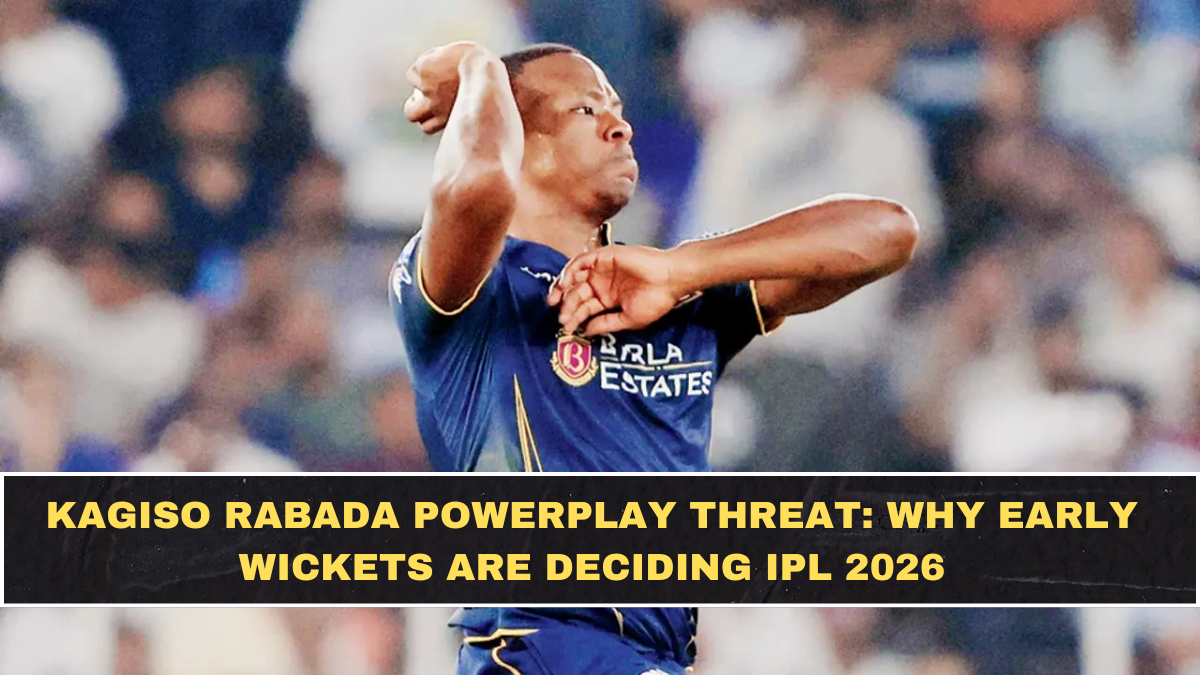
Kagiso Rabada has quietly become one of the biggest reasons Gujarat Titans look dangerous in IPL 2026. The official IPL preview for RR vs GT noted that Rabada had emerged as the season’s best powerplay wicket-taker, with 11 wickets in 25 powerplay overs and a strike rate of 13.6. That is not just a good stat; that is match-control in its purest form.
In T20 cricket, early wickets do more damage than fans usually admit. A six in the powerplay excites the crowd, but a wicket changes the entire batting plan. Rabada’s strength is that he does not only bowl fast; he attacks the stumps, uses bounce, and forces batters to make decisions before they are fully settled.

Why Are Powerplay Wickets So Valuable?
| Powerplay Factor | Why It Changes The Match |
|---|---|
| Early wicket | Breaks batting momentum immediately |
| New ball movement | Makes timing harder for openers |
| Fielding restrictions | Forces bowlers to be extra accurate |
| Pressure on No. 3 and No. 4 | Middle order enters earlier than planned |
| Net run rate impact | Strong starts or collapses can change margins |
| Rabada’s role | Gives GT control before spin comes in |
The first six overs are usually seen as the batting team’s chance to attack, but that is exactly why a wicket-taking fast bowler becomes so valuable. If Rabada removes an opener early, the batting side cannot freely chase 55 or 60 in the powerplay. Suddenly, they are rebuilding while the field is still up.
This is where Gujarat Titans have gained real tactical value. Reports from their win over Punjab Kings highlighted how Mohammed Siraj, Kagiso Rabada, and Jason Holder helped restrict Punjab during the powerplay, setting up a tense but important GT victory. That shows Gujarat’s new-ball plan is not built on vibes; it is built on pressure.
What Makes Rabada So Hard To Attack?
Rabada’s danger comes from the way he mixes pace with uncomfortable length. He is not the type of bowler who needs wild swing every ball to look threatening. Even when the pitch is not doing much, his hit-the-deck style and steep bounce can force mistimed shots from batters trying to dominate too early.
His powerplay value comes from three simple weapons:
- Hard length that cramps batters for room.
- Pace that makes pull shots risky early.
- Stump-to-stump attack that brings bowled and lbw into play.
- Short-ball threat that stops batters from moving forward freely.
- Experience of handling pressure overs in major tournaments.
This is why batters cannot treat him like a normal new-ball bowler. If they attack recklessly, he has wicket-taking options. If they defend too much, Gujarat can control the scoring rate. That two-way pressure is what makes Rabada such a useful weapon.
Why Is Gujarat’s Pace Attack Working?
Gujarat’s pace attack is not only about Rabada. Siraj offers new-ball aggression, Holder brings discipline and awkward bounce, and Rabada adds the strike-bowling threat. Times of India reported that Holder had taken seven wickets in four matches while maintaining an economy of 6.94, with his good-length bowling becoming especially important in a season where teams attack powerplays aggressively.
That balance matters because one fast bowler alone cannot carry a full powerplay plan. If Rabada takes wickets but the other end leaks runs, the advantage disappears quickly. Gujarat’s strength is that their pacers are giving them multiple ways to slow teams down, which allows Rashid Khan and the middle-over bowlers to enter with pressure already created.
Is This Why Early Wickets Are Deciding IPL 2026?
Yes, and anyone ignoring this is watching only highlights, not matches. IPL 2026 has shown that teams can recover from slow starts, but early wickets still change the rhythm brutally. When a side loses two wickets inside six overs, even a strong batting line-up starts thinking about survival before acceleration.
That is why bowlers like Rabada and Jofra Archer remain so valuable. ESPN’s recent Purple Cap watch placed Archer close to the leading wicket-takers, showing that high-impact fast bowling is still central to the tournament despite all the batting hype. Batting depth is useful, but wicket-taking pace still scares teams when the playoff race gets tight.
Can Rabada Push GT Into The Playoffs?
Rabada can be a major reason Gujarat qualify, but he cannot do it alone. GT have climbed back into playoff contention after three straight wins, but reports also noted that their negative net run rate remains a concern. That means Gujarat do not just need wins; they need cleaner, stronger wins where bowlers create enough control early.
For GT, Rabada’s job is simple but brutal: strike early, reduce opposition momentum, and make every chase or defence easier. If he keeps removing top-order batters in the powerplay, Gujarat will continue to look like a side nobody wants to face. If he goes wicketless, GT’s middle overs may come under much heavier pressure.
Conclusion: Is Rabada GT’s Biggest Playoff Weapon?
Kagiso Rabada’s powerplay wickets are becoming one of Gujarat Titans’ biggest weapons in IPL 2026. His 11 powerplay wickets and strike rate of 13.6 show exactly why early breakthroughs are still gold in T20 cricket. In a season full of big hitters, Rabada is proving that fast bowlers can still control the match before the batting fireworks even begin.
The truth is simple: Gujarat’s playoff hopes may depend heavily on how often Rabada strikes with the new ball. If he keeps damaging top orders early, GT can control games, protect net run rate, and put pressure on rivals. If teams survive his first spell, Gujarat will have to work much harder later.
FAQs?
How many powerplay wickets has Kagiso Rabada taken in IPL 2026?
Kagiso Rabada had taken 11 powerplay wickets in 25 overs, according to the official IPL preview before RR vs GT. His powerplay strike rate was listed at 13.6, making him the best powerplay wicket-taker of the season at that point. This shows how important he has been for Gujarat Titans with the new ball.
Why are powerplay wickets important in IPL?
Powerplay wickets are important because they damage a team’s batting plan early. The first six overs are usually used for quick scoring, but losing wickets forces batters to slow down. That gives the bowling side control over both run rate and pressure.
Which team does Kagiso Rabada play for in IPL 2026?
Kagiso Rabada is playing for Gujarat Titans in IPL 2026. He has become one of their major bowling weapons, especially with the new ball. His powerplay impact has helped Gujarat stay competitive in the playoff race.
Why is Rabada dangerous in the first six overs?
Rabada is dangerous because he combines pace, bounce, hard length, and wicket-taking intent. He does not allow batters to settle easily and can punish loose attacking shots early. That makes him especially useful in powerplay overs when batters are trying to score quickly.