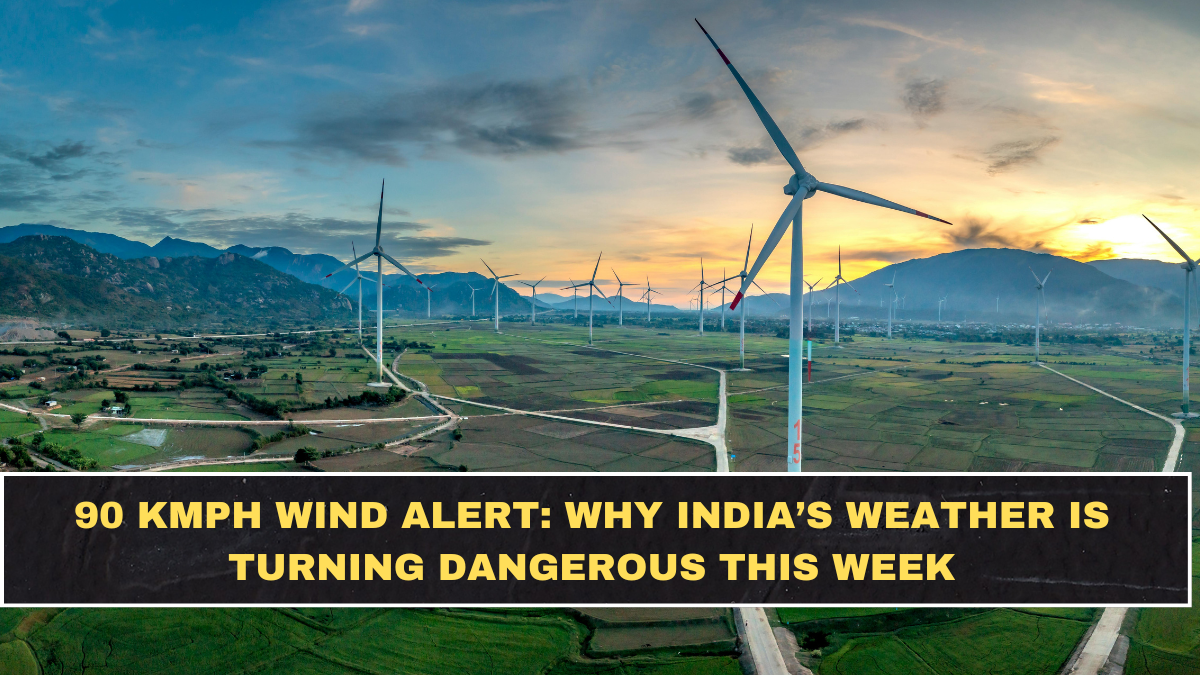
India’s weather has turned unstable again, with the India Meteorological Department reporting thunderstorms accompanied by squally or gusty winds reaching 50–90 kmph at isolated places over Vidarbha, Uttar Pradesh, Andaman & Nicobar Islands, Odisha, Jharkhand, Bihar, Gujarat Region, Tamil Nadu, Puducherry and Karaikal. This is not the kind of weather people should treat casually because sudden gusts can damage weak structures, trees, hoardings, temporary stalls and power lines within minutes.
The bigger concern is that the weather is not behaving the same across the country. Some states are dealing with rain, thunderstorm and lightning risk, while West Rajasthan is facing heatwave conditions and Gujarat-Konkan areas may see hot and humid weather. That split makes planning harder because one region may need storm protection while another needs heat safety at the same time.
Which States Are On Alert Now?
For May 7, IMD forecast heavy rainfall at isolated places over Kerala, South Interior Karnataka and Tamil Nadu-Puducherry-Karaikal. It also forecast thunderstorms with lightning and gusty winds of 40–50 kmph at isolated places over several regions including Bihar, Chhattisgarh, Madhya Pradesh, Uttar Pradesh, Andhra Pradesh, Kerala and Tamil Nadu-Puducherry-Karaikal. Delhi, Haryana, Punjab, Jharkhand, Odisha, Telangana, East Rajasthan and Uttarakhand were among areas under 30–40 kmph thunderstorm wind warnings.
| Weather Risk | States/Regions Mentioned | What People Should Watch |
|---|---|---|
| 50–90 kmph gusts observed | UP, Bihar, Odisha, Jharkhand, Vidarbha, Gujarat Region, Tamil Nadu | Falling trees, power lines, weak roofs |
| Heavy rainfall likely | Kerala, South Interior Karnataka, Tamil Nadu-Puducherry-Karaikal | Waterlogging and traffic delays |
| 40–50 kmph gusts likely | Bihar, MP, UP, Andhra Pradesh, Kerala, Tamil Nadu and others | Sudden storm bursts |
| 30–40 kmph gusts likely | Delhi, Haryana, Punjab, Jharkhand, Odisha, Telangana, Uttarakhand | Dust, tree branches, travel disruption |
| Heatwave likely | West Rajasthan | Heat illness and dehydration |
Why Are Sudden Storms So Risky?
The danger is not only heavy rain. Strong winds can arrive before people have time to react, especially during evening travel, school return hours or market movement. A 50–90 kmph gust can turn loose metal sheets, banners, signboards and construction material into real hazards. That is why people should stop behaving as if a storm warning only means “nice weather after rain.”
Lightning is another serious risk. PIB quoted NDMA experts saying thunderstorms with lightning are among India’s deadliest natural hazards and cause more than 2,000 deaths every year. That means standing under trees, using open fields, ignoring dark clouds or waiting outside during lightning is not bravery; it is stupidity dressed as confidence.
What Should You Do Before The Weather Gets Worse?
The most useful safety action is preparation before the storm begins. NDMA’s thunderstorm and lightning guidance asks people to watch for darkening skies, rising winds and thunder, while also monitoring local updates and warning instructions. Once thunder is audible, people may already be close enough to be at lightning risk, so delaying shelter is a bad decision.
Practical steps to follow today:
- Keep phones charged and avoid unnecessary travel during alerts.
- Stay away from trees, poles, hoardings and weak boundary walls.
- Secure loose items on balconies, terraces and shop fronts.
- Do not park vehicles under old trees or near electric wires.
- Follow IMD, local police and district administration updates.
What Should Travellers And Office-Goers Watch?
Travellers should plan around delays because thunderstorms can disrupt flights, road traffic, metro access, rail movement and local commuting. Even if rain is brief, fallen branches or waterlogging can slow roads badly. The smart move is to leave early, avoid underpasses during heavy rain and not force two-wheeler travel during strong winds.
Office-goers should also take the warning seriously during late evening return hours. Many accidents happen because people try to “just reach home quickly” during a storm. If winds become intense, it is better to wait inside a safe building for 20–30 minutes than risk riding through flying dust, loose wires or falling branches.
Conclusion: Should Indians Treat This As A Serious Weather Warning?
Yes, this week’s storm and wind alerts should be taken seriously because IMD has already reported 50–90 kmph gusty winds in several regions and forecast more thunderstorm activity across multiple states. The mix of lightning, heavy rain, gusty winds and heatwave conditions means India is facing a messy weather phase, not a simple pre-monsoon shower.
The blunt truth is that most weather injuries happen because people underestimate warnings until something falls, floods or strikes. A storm alert is not meant to create panic; it is meant to change behaviour before danger arrives. Stay indoors when conditions worsen, avoid exposed places and treat lightning and strong wind as real threats, not background weather noise.
FAQs
Which States Have A 90 Kmph Wind Alert?
IMD reported thunderstorms with squally or gusty winds reaching 50–90 kmph at isolated places over Vidarbha, Uttar Pradesh, Andaman & Nicobar Islands, Odisha, Jharkhand, Bihar, Gujarat Region, Tamil Nadu, Puducherry and Karaikal. These were observed conditions, while forecast warnings for coming days vary by region. People should check local district-level alerts before travelling.
Is Delhi Included In The Storm Warning?
Delhi, along with Haryana and Chandigarh, was listed under thunderstorm activity with lightning and gusty winds of 30–40 kmph for May 7. That does not mean every part of Delhi will face a severe storm, but isolated weather events can still disrupt travel. Residents should stay alert during evening and night changes.
What Should People Avoid During Thunderstorms?
People should avoid standing under trees, touching electric poles, staying in open fields, travelling on two-wheelers during strong gusts and sheltering near weak structures. Loose wires, hoardings and old trees can become dangerous during sudden wind bursts. The safest choice is to move indoors and wait until the storm passes.
Why Are Thunderstorms Dangerous In India?
Thunderstorms are dangerous because they often bring lightning, strong winds, hail, dust and sudden rain together. PIB has reported NDMA’s warning that thunderstorm with lightning causes more than 2,000 deaths every year in India. This is why weather warnings should be treated as safety instructions, not casual updates.