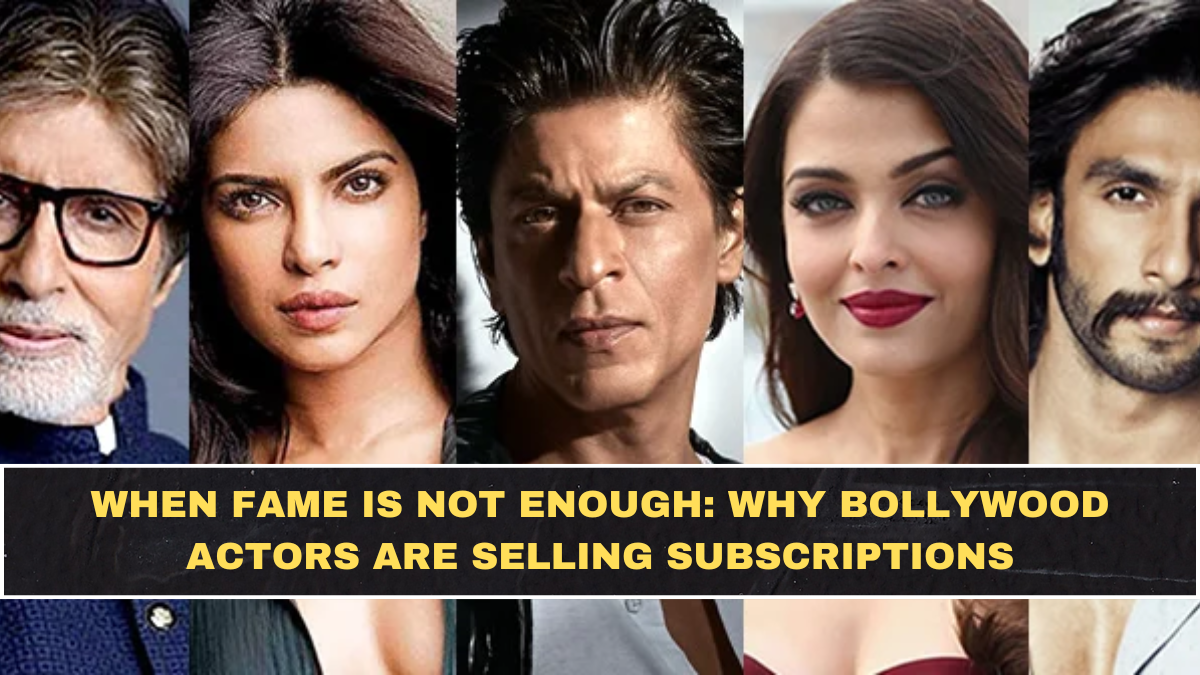
Bollywood actors are turning followers into paying subscribers because fame alone does not guarantee steady income anymore. The old model was simple: films, ads, events and public appearances. But today, many actors have millions of followers while film offers remain irregular, brand deals are selective and audience attention moves quickly from one celebrity to another.
The latest debate became louder after Neha Sharma was trolled for reportedly charging around ₹290 to ₹299 per month for Instagram subscription content. Times of India reported that around 10,000 followers had subscribed, creating an estimated gross monthly value of nearly ₹29 lakh. That number made people realise that fan attention can now become direct recurring revenue.
What Is The Bollywood Creator Economy Really About?
The Bollywood creator economy is about celebrities behaving more like digital creators than traditional film stars. Instead of waiting for a movie release or magazine cover, actors can now earn from paid posts, subscriptions, brand collaborations, live interactions, exclusive content, merchandise and community access. Instagram itself describes subscriptions as a feature that lets creators monetise by offering exclusive content and benefits to engaged followers for a monthly fee.
This changes the power structure. Earlier, studios, casting directors and brands controlled much of a celebrity’s earning cycle. Now, an actor with a loyal online following can build a direct income stream. That does not mean every actor will succeed, but it explains why paid subscriptions are becoming more attractive.
| Monetisation Route | How It Works? | Why Actors Use It? |
|---|---|---|
| Paid subscriptions | Fans pay monthly for exclusive content | Builds recurring income |
| Brand collaborations | Actors promote products or campaigns | Uses celebrity trust and reach |
| Exclusive live sessions | Fans pay for closer access | Creates personal connection |
| Behind-the-scenes content | Paid users get private updates | Turns curiosity into value |
| Merchandise or products | Celebrities sell their own goods | Converts fame into business |
| Social commerce | Content drives product sales | Blends influence with ecommerce |
Why Is This Happening Now?
This is happening now because the entertainment economy has become unstable for anyone below superstar level. Not every actor gets regular theatrical releases. OTT platforms have created more opportunities, but they have also created more competition. Meanwhile, social media rewards constant visibility, not just occasional film appearances.
A celebrity may be famous enough to trend, but not active enough to earn consistently from films. That gap is where subscriptions enter. Paid content gives actors a way to monetise loyal followers without waiting for producers, casting calls or brand managers. Brutally speaking, this is not glamour; this is income diversification.
Why Are Fans Angry When Celebrities Charge Money?
Fans are angry because they still think celebrity access should be free. They are used to seeing actors post photos, reels, workout videos, travel shots and personal updates without paying anything. So when part of that access moves behind a paywall, people feel cheated, even though nobody is forcing them to subscribe.
There is also hypocrisy here. People accept YouTube memberships, Patreon-style creator communities, paid newsletters and podcast subscriptions. But when a Bollywood actor does the same thing, it suddenly becomes embarrassing or desperate. The issue is not only money; it is the public’s discomfort with celebrities openly monetising attention.
Is Paid Celebrity Content A Smart Business Move?
Paid celebrity content can be a smart business move if the actor offers real value. Arjun Bijlani recently called Instagram subscriptions a natural evolution in the creator economy and said authenticity and value are key. His point is practical: people will pay only when the content feels genuine, useful or entertaining enough.
But this model can fail quickly if celebrities treat subscribers like easy cash. Fans may tolerate average content for free, but paid users expect consistency. If the exclusive content is just slightly different photos, recycled reels or vague “personal updates,” subscribers will lose interest. Paid attention is much harder to maintain than free attention.
Why Does Neha Sharma’s Case Matter Beyond Trolling?
Neha Sharma’s case matters because it exposed the real numbers behind fan monetisation. Bollywood Hungama reported that her ₹290 monthly subscription had around 10,300 subscribers, translating to nearly ₹29.87 lakh in gross monthly subscription value before platform deductions and taxes. That is why the story became a business debate, not just a trolling episode.
The uncomfortable truth is that many mid-level actors may look glamorous publicly but still need alternate revenue streams. Films are irregular, endorsements are competitive and public attention is expensive to maintain. If an actor has a large audience, not monetising it may actually be poor business thinking.
Is Bollywood Becoming Like The Creator Industry?
Yes, Bollywood is clearly moving closer to the creator industry. Actors are no longer only performers; they are brands, influencers, sellers and community owners. Their Instagram pages are not just fan windows anymore. They are business assets.
Social Samosa reported that Indian entertainment monetisation is evolving through subscriptions, brand collaborations, merchandise and social commerce. That broader trend explains why actors, influencers and digital creators are starting to use similar income models. The lines between celebrity and creator are becoming thinner every year.
What Could Go Wrong With Celebrity Subscriptions?
The biggest risk is overpricing weak content. If celebrities charge fans without offering something meaningful, the model will become another PR gimmick. Fans are not stupid forever. They may subscribe once out of curiosity, but they will cancel if the content feels lazy.
The second risk is image damage. Some actors may look desperate if the subscription is marketed badly or if the public feels the content is built only around glamour and curiosity. Paid access can strengthen a celebrity brand, but it can also cheapen it if there is no clear value proposition.
Conclusion
Bollywood actors selling subscriptions is not shocking; it is predictable. The entertainment economy has changed, and actors are trying to build direct revenue from the audience they already have. Neha Sharma’s subscription row became viral because it revealed how much money even a modest monthly fee can generate when thousands of fans pay.
The real question is not whether actors should charge. They can. The better question is whether they can deliver content worth paying for. Fame can attract subscribers once, but value keeps them paying. Bollywood is not just becoming more digital; it is becoming more transactional, and fans need to understand that the free-access era is slowly shrinking.
FAQs
Why are Bollywood actors selling paid subscriptions?
Bollywood actors are selling paid subscriptions because social media allows them to earn directly from loyal followers. Film work, endorsements and public appearances can be irregular, especially for non-superstar actors. Subscriptions create recurring income and give celebrities more control over their audience relationship.
Is Instagram subscription officially allowed for creators?
Yes, Instagram has a subscription feature that allows creators to offer exclusive content and benefits to followers for a monthly fee. Meta describes it as a way for creators to monetise their most engaged audience. This means celebrity subscriptions are not unusual from a platform point of view.
Why did Neha Sharma’s subscription become controversial?
Neha Sharma’s subscription became controversial because reports said she was charging around ₹290 to ₹299 per month and had thousands of paying subscribers. Social media users mocked the move, while others defended it as normal creator monetisation. The estimated monthly revenue made the debate even louder.
Is this trend good or bad for Bollywood?
It is good if actors provide real value and build honest fan communities. It is bad if subscriptions become lazy paywalls with weak content. The model itself is not the problem. The problem starts when celebrities expect fans to pay only because they are famous, not because the content is actually worth it.