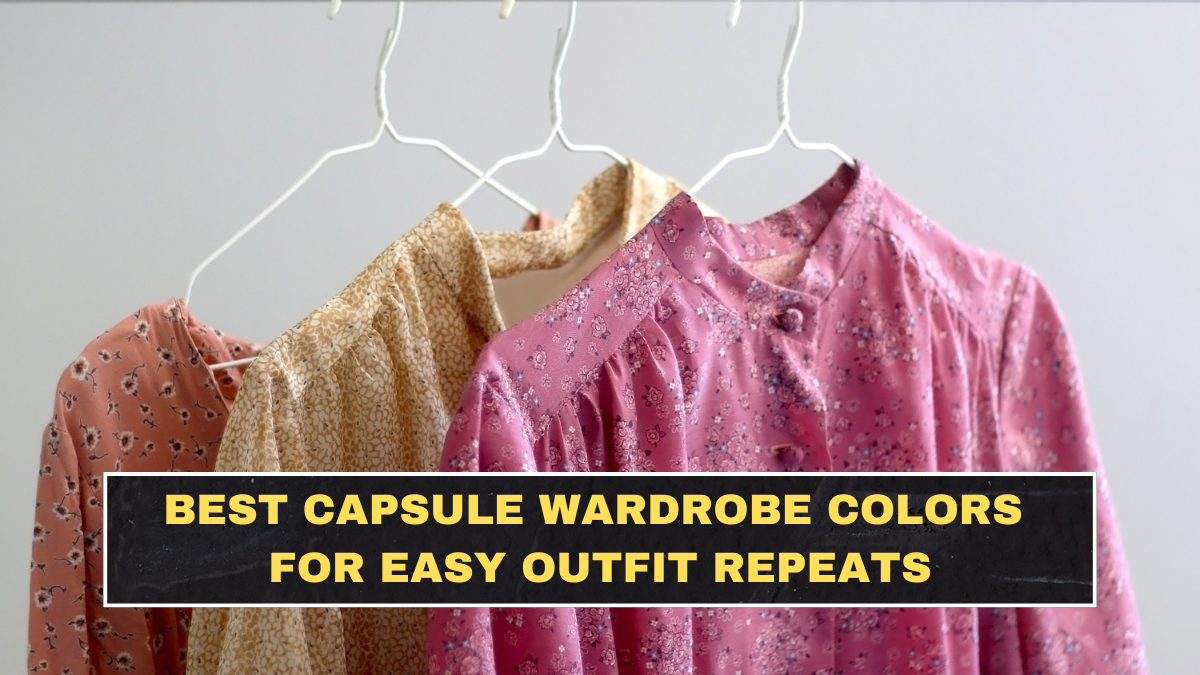
A capsule wardrobe does not fail because you need more clothes. It usually fails because your colors are all over the place. People buy “basics,” but the basics do not actually work together, so getting dressed still feels annoying. That is why color choice matters more than people admit. Recent capsule and minimalist fashion coverage in 2026 still leans heavily toward neutral, repeatable pieces, while editors and stylists keep framing the smartest wardrobes around versatility, not trend chaos. InStyle’s April 2026 capsule coverage described a “buy less, wear more” approach built on neutral-toned pieces, and Who What Wear’s March 2026 anti-trend capsule piece made the same broader point: timeless dressing depends on reliable basics, not constant novelty.
Why do capsule wardrobe colors matter so much?
Because color is what decides whether your clothes can actually be repeated without looking random. A good palette makes dressing easier, shopping cheaper, and outfit repeating less obvious. Vogue’s minimalist fashion guidance explains that neutrals are usually favored because they are more timeless and easier to mix, while a defined palette makes matching simpler. That is the real value of a capsule wardrobe. It is not aesthetic purity. It is lower decision fatigue.
Which colors work best as a capsule wardrobe foundation?
The strongest foundation colors are usually black, navy, white, cream, grey, camel, chocolate brown, and muted olive. These shades keep showing up in minimalist and capsule advice because they are flexible and look clean across different seasons. Vogue’s minimalist dressing guidance specifically names black, navy, grey, browns, ivory, oatmeal, and French blue as dependable neutrals, while Vogue’s 2026 resort styling also highlighted layered neutrals like cream, white, black, and beige as grounding and wearable.
| Color group | Why it works | Best use in a capsule wardrobe |
|---|---|---|
| Black | Sharp, grounding, easy to repeat | Trousers, blazers, shoes, bags |
| Navy | Softer than black but still classic | Knitwear, trousers, coats |
| White and cream | Brightens outfits and balances darker tones | Shirts, tees, knitwear |
| Grey | Quiet and versatile | Sweaters, outerwear, tailoring |
| Camel and beige | Adds warmth and polish | Coats, trousers, bags |
| Chocolate brown | Rich neutral with depth | Shoes, jackets, knitwear |
| Olive | Easy muted accent | Utility pieces, trousers, outerwear |
Why are neutrals still the safest choice?
Because they do the boring work well. That matters. Neutrals are easier to pair, easier to repeat, and easier to build around when you want fewer clothes doing more jobs. InStyle’s capsule coverage around celebrity-stylist-led collections emphasized neutral-toned staples designed for long-term wear, and Who What Wear’s timeless capsule feature highlighted classic pieces like black blazers, white shirts, cashmere sweaters, and tailored trousers that naturally live inside a neutral palette.
The point is not that color is bad. The point is that chaos is bad. A neutral base gives you room to repeat outfits without feeling visually messy.
Should a capsule wardrobe only use neutral colors?
No. That is where people become too rigid. A capsule wardrobe works better with one or two accent colors that still fit your life and skin tone. Who What Wear’s 2026 style coverage shows that trend colors like cobalt blue, powder pink, butter yellow, and charcoal grey are showing up strongly this year, and even Vogue editors have talked about using color more intentionally in 2026. The smarter move is not banning color. It is controlling it.
A good formula is simple: use mostly neutrals, then add one accent color that appears in small but useful places like knitwear, shoes, scarves, or tops. That keeps the wardrobe alive without making everything harder to style.
Which accent colors are easiest to add?
The easiest accent colors are muted or softened shades that still behave like semi-neutrals. French blue, soft burgundy, forest green, butter yellow, powder pink, and even silver accessories can work well depending on the season and your style. Who What Wear’s rich-looking style coverage for 2026 recommended touches like silver and monochrome styling, while Vogue’s minimalist advice allowed an occasional red alongside a neutral base. That tells you something important: accent colors work best when they are controlled, not when they take over the wardrobe.
How should someone choose their capsule colors?
Start with your real life, not Pinterest fantasy. If you work in offices or like polished outfits, navy, black, white, grey, and camel may make more sense. If you dress casually, denim blue, cream, olive, and brown may work better. If you wear gold jewelry and warmer tones suit you, camel, cream, olive, and chocolate may outperform icy grey and stark white. If silver and cooler tones suit you, black, navy, charcoal, and crisp white may be stronger.
The best palette is the one you will actually wear, not the one that looks sophisticated in theory.
What color mistakes ruin a capsule wardrobe?
The first mistake is buying “basics” in slightly different shades that do not actually work together. The second is using too many competing accent colors. The third is choosing colors you admire on other people but never reach for yourself. Who What Wear’s basics and anti-trend coverage makes the broader point clearly: the best wardrobes are built with consistency. When your palette is inconsistent, your wardrobe looks bigger than it is but works worse than it should.
Another mistake is relying only on black. Black is useful, but an all-black capsule can feel flat unless it is balanced with texture, cream, grey, navy, or warmer neutrals.
What is a simple color formula that works for most people?
A practical formula is this: choose three base neutrals, two support neutrals, and one accent color.
For example:
- Base neutrals: black, white, navy
- Support neutrals: grey, camel
- Accent color: soft blue
Or:
- Base neutrals: cream, chocolate, olive
- Support neutrals: beige, black
- Accent color: burgundy
This works because most items stay easy to combine, while one accent keeps the wardrobe from becoming dull.
Conclusion?
The best capsule wardrobe colors are the ones that make repeating outfits easier, not the ones that look the most stylish in isolation. Black, navy, white, cream, grey, camel, brown, and olive keep working because they are stable, flexible, and easy to mix. Accent colors can help, but only when they are chosen with restraint. If your wardrobe still feels hard to wear, the problem is probably not that you need more clothes. The problem is that your colors are fighting each other.
FAQs
What are the best colors for a capsule wardrobe?
Black, navy, white, cream, grey, camel, brown, and olive are some of the strongest capsule wardrobe colors because they are easy to mix and repeat.
Should a capsule wardrobe only have neutrals?
No. Neutrals should usually form the base, but one or two controlled accent colors can make the wardrobe feel more personal and less dull.
How many colors should a capsule wardrobe have?
A practical range is about five to six total shades, usually built from three main neutrals, one or two support neutrals, and one accent color.
Is black enough for a full capsule wardrobe?
Not usually by itself. Black is useful, but it works better when balanced with white, grey, navy, cream, or warmer neutrals for contrast and variety.
What is the biggest capsule wardrobe color mistake?
Using too many colors that do not naturally pair well. That makes a wardrobe feel bigger but less usable.