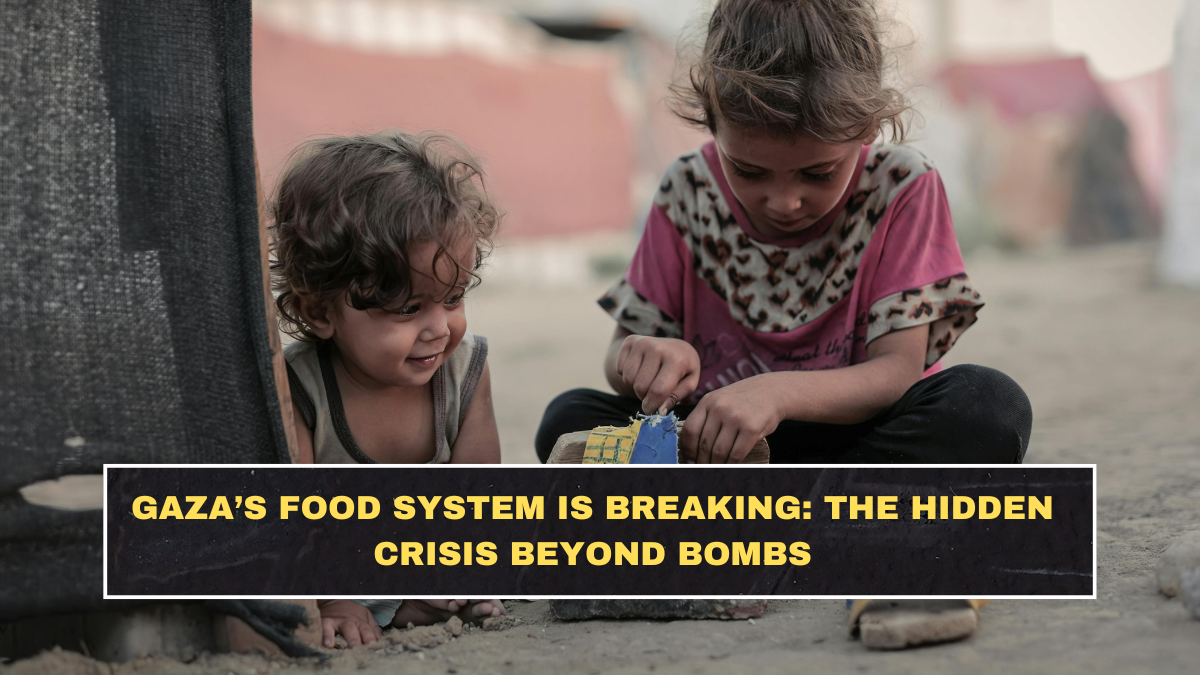
Gaza’s food crisis is not only about whether aid trucks enter today. The deeper crisis is that the systems needed to grow food locally have been destroyed or made unusable. Farmland, wells, greenhouses, irrigation networks, roads, storage sites, livestock systems, and fishing infrastructure are all part of Gaza’s food chain. When these systems collapse together, hunger becomes harder to reverse.
The Food and Agriculture Organization reported that Gaza’s agricultural infrastructure continued to deteriorate at an alarming rate in 2025, with 71.2% of greenhouses damaged and 82.8% of agricultural wells damaged by April 2025. Before the war, agriculture represented roughly 10% of Gaza’s economy, and more than 560,000 people depended fully or partly on crop production, herding, or fishing for their livelihoods.
What Parts Of Gaza’s Food System Have Been Damaged?
The damage is spread across the entire food system, not just one sector. Greenhouses have been destroyed, wells have been damaged, fields have become inaccessible, and roads needed to move food have been broken. This matters because farming depends on connected systems. A field without water is useless. A greenhouse without plastic, fuel, seed, and safe access cannot produce food. A farm road that cannot be used means crops cannot reach markets.
By October 2025, FAO reported even worse figures: nearly 80% of all greenhouses had been damaged, equal to more than 1,000 hectares lost across Gaza’s governorates. It also reported that almost 87% of agricultural wells had been damaged, disrupting vital irrigation systems. In Gaza governorate, 100% of greenhouses were destroyed, while North Gaza recorded 99.8% greenhouse damage.
| Damaged System | Reported Scale | Why It Matters |
|---|---|---|
| Greenhouses | Nearly 80% damaged by Oct 2025 | Reduces vegetable and high-value crop production |
| Agricultural wells | Almost 87% damaged | Blocks irrigation and makes farming restart harder |
| Cropland | About 98% damaged or inaccessible in later assessments | Leaves very little land usable for cultivation |
| Farming livelihoods | 560,000+ people relied on agriculture, herding, or fishing | Turns food damage into income collapse |
| Water systems | Severe shortages and infrastructure damage | Raises hunger, disease, and sanitation risks |
Why Are Wells And Water Systems So Important?
Water is the backbone of Gaza’s agriculture. Without wells, pumps, fuel, pipes, irrigation systems, and safe water access, farmland cannot return to production even if the fighting slows down. This is why damaged wells are one of the most serious parts of the crisis. A farmer may still have land, but without water, that land cannot reliably grow crops.
The water crisis also affects public health. The Guardian reported in April 2026 that deadly attacks had worsened Gaza’s clean-water shortage, with humanitarian agencies warning about disease, poor sanitation, and families surviving on far below the UN-recommended minimum of 50–100 litres of water per person per day. Some families were reportedly receiving only around 6 litres. That is not enough for safe drinking, washing, cooking, and sanitation, let alone farming.
Why Does Greenhouse Damage Matter So Much?
Greenhouses are especially important in Gaza because they allow farmers to grow vegetables more efficiently in limited space. They help protect crops, extend growing seasons, and support local food markets. When greenhouses are destroyed, Gaza loses one of its most productive food systems. This directly affects fresh food availability, prices, nutrition, and farmer income.
The damage is not easy to fix. Rebuilding greenhouses needs plastic sheeting, frames, irrigation parts, tools, seeds, fertiliser, transport, and safe working conditions. If borders are restricted and fuel or spare parts cannot enter at scale, farmers cannot simply rebuild by willpower. The problem is practical, not emotional. Food systems need material supply chains.
How Does This Deepen Hunger Risks?
Gaza’s hunger risk deepens because people are losing both food access and food production. Aid shortages create immediate hunger, while agricultural destruction creates long-term dependency. When local farming collapses, Gaza must rely more heavily on imported food and humanitarian aid. If those supplies are delayed, blocked, or too expensive, people have almost no backup.
FAO warned in August 2025 that 98.5% of Gaza’s cropland was unavailable for cultivation, leaving only 1.5% both undamaged and accessible. That level of damage means even large food-aid efforts cannot solve the structural problem alone. Gaza needs emergency food, but it also needs the ability to produce food again.
Why Is This A Livelihood Crisis Too?
The agricultural collapse is also an income crisis. Before the conflict, more than half a million people in Gaza depended at least partly on farming, herding, or fishing. When farms, wells, greenhouses, animals, boats, and markets are destroyed, families lose the income they used to buy food, medicine, school supplies, and basic goods.
This makes recovery much harder. If people lose their jobs and their local food sources at the same time, they become fully dependent on aid or debt. Even if markets reopen, families may not have money to buy what is available. That is why food security is not only about calories. It is also about livelihoods, dignity, and the ability to survive without permanent emergency assistance.
What Would It Take To Rebuild Gaza’s Agriculture?
Rebuilding Gaza’s agriculture would require safe access to land, repaired wells, restored irrigation, cleared roads, seeds, tools, fertiliser, livestock support, greenhouse materials, fuel, and functioning markets. It would also require security guarantees so farmers do not rebuild systems that are destroyed again months later. Without safety and predictability, serious agricultural recovery is impossible.
The reconstruction will not be quick. Wells need technical repair. Greenhouses need materials. Orchards take years to regrow. Soil may need testing and rehabilitation. Livestock herds cannot be instantly replaced. The honest assessment is brutal: Gaza’s food system may need years of focused reconstruction, not a few weeks of emergency support.
Conclusion
Gaza’s agricultural infrastructure crisis is one of the clearest signs that the food emergency is long-term. Damaged wells, destroyed greenhouses, inaccessible cropland, broken roads, and collapsing water systems mean Gaza has lost much of its ability to feed itself locally. This is why the crisis goes beyond aid deliveries and daily ceasefire headlines.
The uncomfortable truth is that hunger will not end just because food trucks arrive. Gaza needs emergency aid and agricultural reconstruction at the same time. Without rebuilt wells, greenhouses, farmland access, livestock systems, and local markets, the territory will remain trapped in dependency, poverty, and recurring hunger.
FAQs
Why is Gaza’s agricultural infrastructure so important?
Gaza’s agricultural infrastructure is important because it supports local food production and livelihoods. Wells, greenhouses, irrigation systems, roads, and markets allow farmers to grow and distribute food. When these systems collapse, hunger becomes harder to solve.
How many greenhouses have been damaged in Gaza?
FAO reported that nearly 80% of Gaza’s greenhouses had been damaged by October 2025, with 100% of greenhouses destroyed in Gaza governorate and 99.8% damaged in North Gaza.
Why are damaged wells such a major problem?
Damaged wells are a major problem because farming depends on irrigation. FAO reported that almost 87% of agricultural wells had been damaged by October 2025, severely disrupting Gaza’s ability to restart food production.
Can food aid alone fix Gaza’s hunger crisis?
No. Food aid is essential for immediate survival, but it cannot rebuild Gaza’s food system. Long-term recovery requires repaired wells, safe farmland access, restored greenhouses, livestock support, seeds, tools, fuel, and functioning local markets.