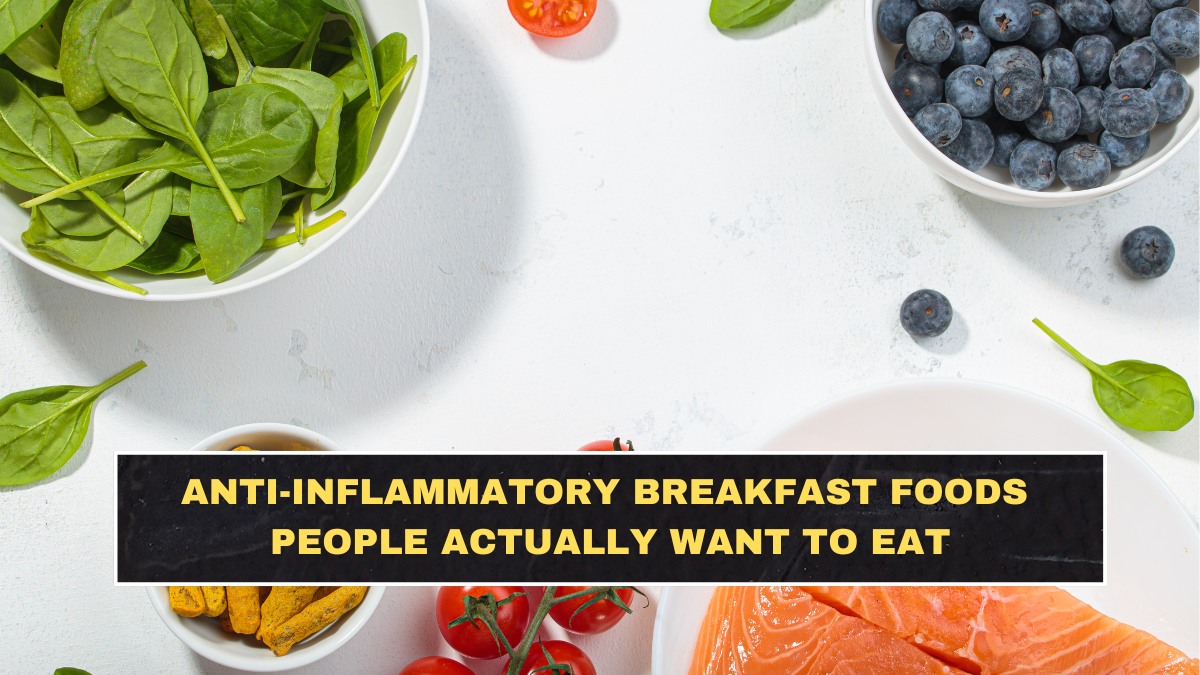
Most anti-inflammatory breakfast advice is either too vague or too annoying to repeat. That is the real problem. People do not need a perfect “wellness breakfast.” They need foods they will actually eat on a normal Tuesday. The strongest evidence still points toward an eating pattern built around whole, minimally processed foods such as fruits, vegetables, whole grains, legumes, nuts, seeds, fish, and healthy oils rather than miracle ingredients. Harvard Health’s March 2026 guide says an anti-inflammatory diet centers on whole, unprocessed foods with no added sugar, including fruits, vegetables, whole grains, legumes, nuts, seeds, fish, poultry, and oils like olive or avocado oil. The American Heart Association’s Mediterranean-style guidance points in the same direction.
What makes a breakfast more anti-inflammatory?
A breakfast becomes more anti-inflammatory when it is built mostly from fiber-rich plant foods, healthier fats, and less heavily processed sugar-and-refined-carb junk. That is the part people keep overcomplicating. You do not need rare powders or expensive superfoods. You need a better structure. Mediterranean-style patterns are repeatedly associated with lower inflammation, and a 2025 review found olive-oil-supplemented Mediterranean diets showed significant anti-inflammatory benefits. Another 2025 review reported fruits and vegetables reduced circulating inflammatory markers in most included studies.
Which breakfast foods make the most sense first?
The easiest anti-inflammatory breakfast foods to start with are oats, berries, yogurt, nuts, seeds, eggs, legumes, and olive oil-based savory foods. Oats and other whole grains fit because whole grains are a core part of anti-inflammatory and Mediterranean-style eating patterns. Berries fit because Harvard Health highlights them for their antioxidant and anti-inflammatory activity, especially due to compounds such as anthocyanins. Yogurt can fit when it is lower in added sugar and used as part of a balanced meal rather than dessert pretending to be breakfast. Nuts and seeds help because they add healthy fats, fiber, and some protein in a small portion.
| Breakfast food | Why it fits an anti-inflammatory pattern | Easy way to use it |
|---|---|---|
| Oats | Whole grain, fiber-rich | Oatmeal or overnight oats |
| Berries | Rich in antioxidant compounds | Add to oats or yogurt |
| Greek yogurt | Can add protein and pair well with fruit | Use plain, not sugar-loaded |
| Nuts and seeds | Healthy fats, fiber, texture | Add walnuts, chia, flax, almonds |
| Eggs | Useful protein option in a balanced meal | Pair with vegetables |
| Beans or lentils | Legumes are a core anti-inflammatory food group | Savory toast or breakfast bowl |
| Olive oil | Mediterranean-style fat source | Use in savory breakfasts |
Is oatmeal actually a good anti-inflammatory breakfast?
Yes, if you stop ruining it. Plain oats are a solid base because they are a whole grain, and whole grains are consistently included in anti-inflammatory eating patterns. The problem is not oatmeal. The problem is turning it into dessert with syrups, flavored creamers, and too much added sugar. A smarter bowl is oats plus berries plus walnuts or chia. Even better, make overnight oats with plain yogurt and fruit so the meal has more staying power and less sugar nonsense. Harvard and the AHA both support whole grains as part of an anti-inflammatory pattern, and recent dietitian guidance has even highlighted muesli-style oat breakfasts as practical anti-inflammatory options.
Are eggs anti-inflammatory or not?
Eggs are not the villain people keep trying to make them. They can fit well in an anti-inflammatory breakfast, especially when paired with vegetables, beans, or whole-grain toast instead of processed meat and refined bread. The bigger dietary pattern matters more than obsessing over one food in isolation. If breakfast is eggs cooked with vegetables in olive oil, that is very different from eggs served with sausage, white toast, and sugary coffee. Anti-inflammatory eating is about the overall pattern, not internet food tribalism.
What should people avoid at breakfast?
Mostly the obvious stuff people pretend not to notice: pastries, sugary cereals, heavily sweetened yogurt, processed meats, and breakfasts overloaded with refined carbs and added sugar. Harvard’s anti-inflammatory guide specifically says to prioritize whole, unprocessed foods with no added sugar, while the AHA recommends limiting added sugars, sodium, and saturated fat. That does not mean you need a joyless breakfast. It means you should stop calling a muffin and sweet coffee a “healthy breakfast” just because you ate it quickly.
What does a realistic anti-inflammatory breakfast look like?
It looks normal. That is the point. A bowl of oats with berries and walnuts. Plain Greek yogurt with fruit, seeds, and a little cinnamon. Eggs with spinach and whole-grain toast. A savory bowl with lentils, avocado, and vegetables. A slice of whole-grain toast with nut butter and berries. These work because they are easy, repeatable, and built from foods that match the broader anti-inflammatory pattern supported by Harvard, the AHA, Cleveland Clinic, and Mediterranean-diet research.
Why do simple breakfasts usually work better than trendy ones?
Because consistency beats novelty. Anti-inflammatory eating works as a pattern repeated over time, not as one dramatic breakfast bowl with expensive toppings. People quit when breakfast becomes too complicated or too expensive. The better move is to build a repeatable formula: one whole-grain or legume base, one fruit or vegetable, one protein source if useful, and one healthy fat. That is boring advice, but boring advice is often what people can actually follow.
Conclusion?
The best anti-inflammatory breakfast foods are the ones that fit real life: oats, berries, yogurt, nuts, seeds, eggs, legumes, vegetables, and olive oil-based savory meals. The pattern matters more than any single ingredient. If your breakfast is mostly whole, minimally processed, and not loaded with added sugar, you are already moving in the right direction. Most people do not need a special anti-inflammatory breakfast. They need to stop eating like every morning is a vending machine emergency.
FAQs
Are berries good for inflammation?
Yes. Harvard Health highlights berries for their antioxidant and anti-inflammatory activity, especially because of plant compounds such as anthocyanins.
Is yogurt anti-inflammatory?
Plain yogurt can fit an anti-inflammatory breakfast, especially when paired with fruit, nuts, or seeds and kept low in added sugar. It fits better as part of a balanced overall eating pattern.
What is the easiest anti-inflammatory breakfast?
Oatmeal with berries and nuts is one of the easiest because it combines a whole grain with fruit and healthy fats in a simple format.
Should anti-inflammatory breakfasts avoid sugar completely?
The main goal is to reduce added sugar and rely more on whole, minimally processed foods. Natural sweetness from fruit is not the same thing as building breakfast around refined sugar.