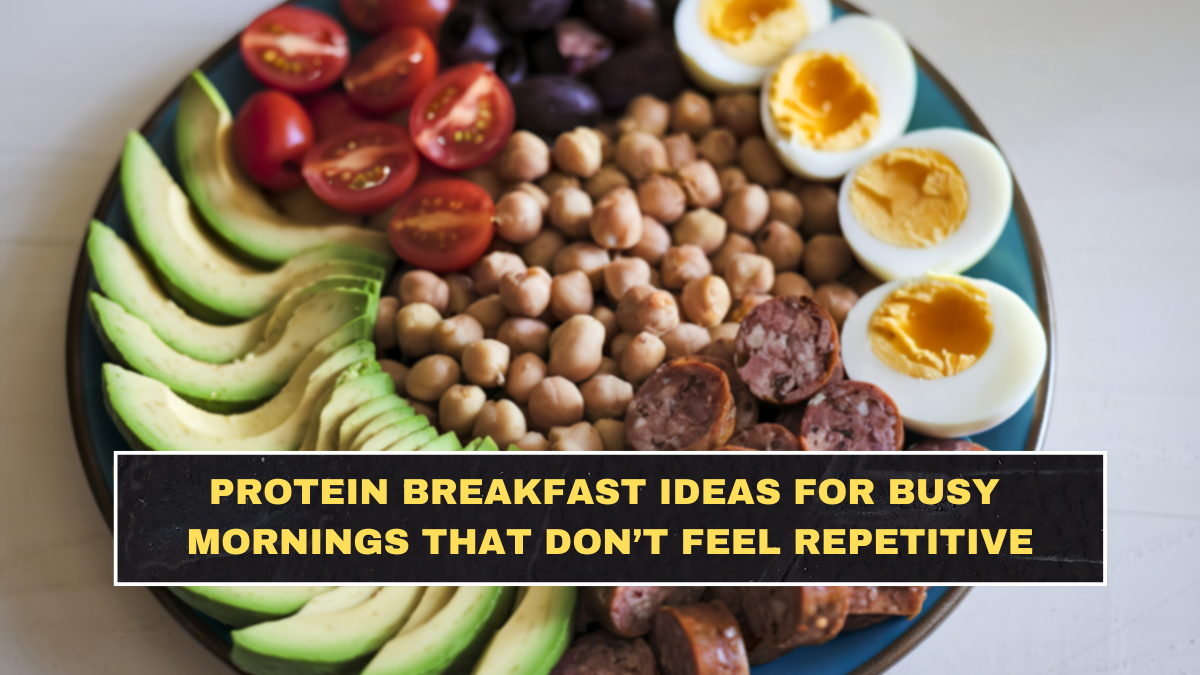
Protein breakfasts stay popular for a reason: they solve a real problem. Most people are not looking for a perfect breakfast. They want something that keeps them full, travels well, and does not collapse into another sugary meal that leaves them hungry by 10 a.m. Cleveland Clinic notes that a higher-protein breakfast can help people feel full longer and may help stabilize blood sugar, while general intake guidance commonly lands around 0.8 to 1.0 grams of protein per kilogram of body weight for healthy adults, depending on needs and activity.
Why does a protein breakfast work better for busy mornings?
Because hunger management matters more than breakfast aesthetics. Research published in 2025 continues to support the role of protein in satiety, and Cleveland Clinic’s guidance points in the same direction: protein tends to keep you fuller longer than a low-protein breakfast built mostly around refined carbs. Fiber matters too, since a 2025 systematic review found cereal fiber intake was generally associated with more favorable satiety outcomes. That is why the smarter breakfast formula is not “just add protein.” It is protein plus some fiber and enough convenience that you will actually repeat it.
What should a practical protein breakfast include?
A useful breakfast usually has one main protein anchor, one easy carb source, and optional fruit or fiber. Cleveland Clinic’s food guidance highlights eggs, dairy, lentils, edamame, and lean proteins as solid protein sources, while USDA FoodData Central shows how quickly common foods add up: plain whole-milk Greek yogurt at a 170 g serving provides about 18 grams of protein, and cottage cheese is also a strong protein option depending on type and serving size. In plain English, you do not need exotic powders and influencer recipes. You need dependable staples.
| Breakfast idea | Approximate protein focus | Why it works on busy mornings |
|---|---|---|
| Greek yogurt bowl with fruit and oats | ~18–25 g | No cooking, easy to repeat |
| Egg wrap with cheese | ~18–22 g | Portable and fast |
| Cottage cheese toast bowl | ~15–25 g | High protein with minimal prep |
| Overnight oats with Greek yogurt | ~20–30 g | Prep once, eat for 2–3 days |
| Protein smoothie with yogurt or milk | ~20–30 g | Best for rushed mornings |
| Edamame or lentil breakfast bowl | ~15–20 g | Good non-egg option |
Which protein breakfast ideas are easiest to repeat?
Greek yogurt bowls are one of the easiest wins because they require almost no prep and can be changed with fruit, seeds, oats, or nut butter. USDA data shows Greek yogurt already starts from a useful protein base, so you are not building from scratch. Egg wraps are another obvious option because eggs are fast, cheap, and versatile. If you want even less friction, overnight oats mixed with Greek yogurt work better than plain oats because they give you both protein and a more filling texture. The point is repetition. A breakfast that takes 20 minutes every morning is not realistic for most people.
What if you are tired of eggs every day?
Then stop forcing eggs into every breakfast. That is one of the dumbest nutrition habits people cling to. Cleveland Clinic’s protein list includes dairy, legumes, and soy foods like edamame, which means you have options. Cottage cheese with fruit and seeds, Greek yogurt with oats, or a smoothie built around yogurt or milk can all give you a solid breakfast without making you hate your own routine. Even a lentil-based savory breakfast can work if you prefer something warm and filling over sweet foods. The best breakfast is the one you can eat consistently without getting bored by Wednesday.
How can you make breakfast feel less repetitive?
Use a rotating structure instead of random recipes. Keep the same base, then switch the flavor. One week your yogurt bowl can use berries and oats, the next week banana and peanut butter, and the week after that chopped apple and cinnamon. The same rule applies to egg wraps, smoothies, and overnight oats. This works because the effort stays low while the experience changes enough to keep you from quitting. Most people do not fail at breakfast because they lack ideas. They fail because they create too much decision-making too early in the day.
Are protein powders necessary for breakfast?
No. They are useful, not necessary. If you are genuinely rushed, a smoothie with protein powder can be practical. But USDA and Cleveland Clinic food data make the bigger point clear: many ordinary foods already provide solid protein. Greek yogurt, milk, cottage cheese, eggs, lentils, and edamame can cover a lot without turning breakfast into a supplement routine. Protein powder helps when convenience is the top priority, but people often use it as a shortcut to avoid fixing a weak food routine.
What is the smartest breakfast formula for busy people?
The smartest formula is simple: aim for a protein anchor, add a fiber source, and keep prep friction low. That could mean Greek yogurt plus oats and fruit, eggs plus whole-grain toast, or cottage cheese plus fruit and seeds. Cleveland Clinic specifically describes pairing protein with a whole grain or fruit as a practical breakfast structure, and satiety evidence supports combining protein with fiber rather than leaning on refined carbs alone. That is what makes breakfast feel steady instead of like a sugar crash waiting to happen.
Conclusion?
Protein breakfast ideas work best when they are boring in the right way: easy, repeatable, filling, and flexible. You do not need a new breakfast every day, and you do not need a kitchen full of powders and gadgets. You need a few protein-forward meals you can rotate without thinking too hard. If your current breakfast leaves you hungry fast, the fix is usually not motivation. It is structure.
FAQs
How much protein should breakfast have?
There is no one perfect number for everyone, but a breakfast in the roughly 20- to 30-gram range is a practical target for many adults trying to stay fuller longer, especially within broader daily protein needs. Cleveland Clinic notes general adult needs often start around 0.8 to 1.0 g/kg per day.
Is Greek yogurt a good protein breakfast?
Yes. USDA FoodData Central shows plain Greek yogurt can provide a strong amount of protein per serving, making it one of the easiest high-protein breakfast bases.
Do protein breakfasts help with hunger?
They often do. Cleveland Clinic says protein can help you feel full longer, and recent research continues to support protein’s role in satiety.
What is the easiest high-protein breakfast for a rushed morning?
A Greek yogurt bowl, overnight oats with yogurt, or a protein smoothie are usually the easiest options because they need little or no cooking and can be prepped ahead.
Click here to know more