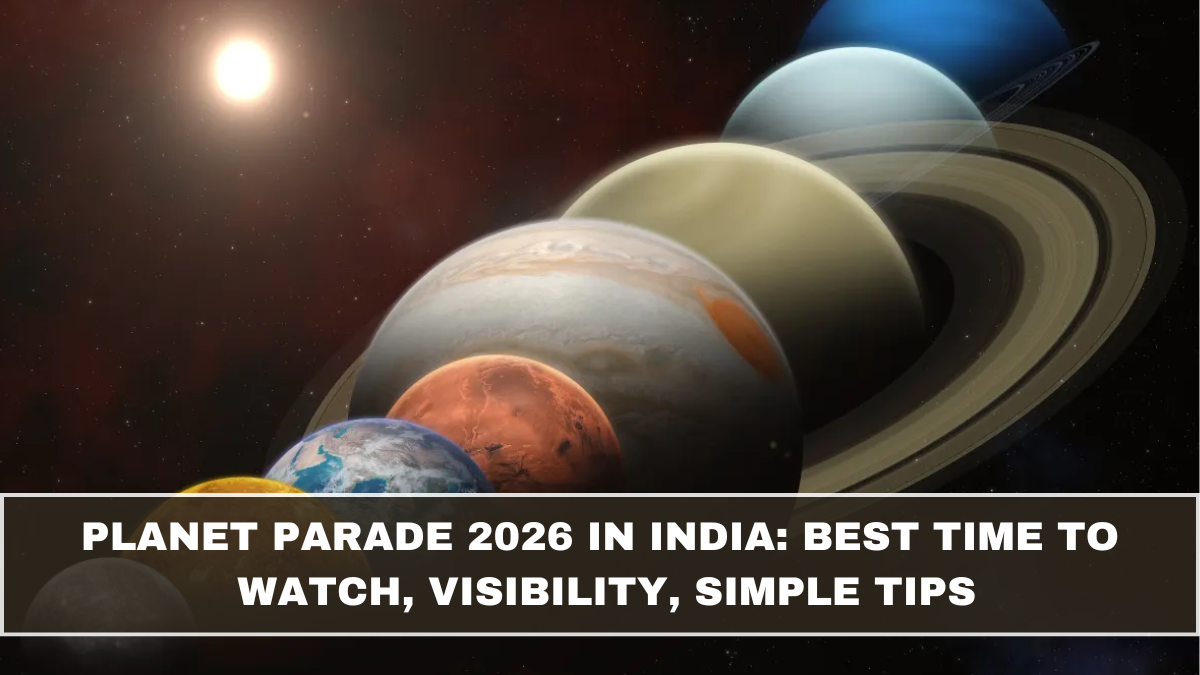
The Planet Parade 2026 is one of the most searched astronomical events, where multiple planets appear aligned in the night sky from Earth’s perspective. During this rare celestial event, several visible planets line up along the same region of the sky, making them easier to spot without advanced equipment. Skywatchers in India can observe the alignment under clear conditions during specific early morning or evening viewing windows.
This guide explains the best viewing time across major Indian cities, which planets will be visible, how long the event lasts, and practical tips for observing the alignment without telescopes. The focus remains realistic about what the human eye can actually see.
What Is a Planet Parade?
A planet parade occurs when four or more planets appear in a visible line along the ecliptic path. The alignment is not a straight physical line in space but a visual alignment caused by the planets’ orbital positions relative to Earth. These events happen because all planets orbit the Sun roughly within the same flat plane.
During the 2026 event, observers can expect multiple bright planets to appear within a 120–160 degree sky span. The visibility depends on brightness, atmospheric clarity, and light pollution levels.
| Planet Parade Basics | Details |
|---|---|
| Minimum planets required | 4 planets |
| Visibility method | Naked eye or binoculars |
| Alignment range | 120°–160° sky arc |
| Best viewing condition | Clear, low light pollution |
| Average viewing window | 45–90 minutes |
Planetary alignment visibility is strongest when planets appear brighter than surrounding stars.
Planets Visible During Planet Parade 2026
The 2026 alignment includes several of the brightest planets visible from Earth. Some planets appear as bright points of light, while others may require binoculars due to lower brightness.
The visibility of each planet depends on magnitude, which measures brightness. Lower magnitude numbers indicate brighter objects.
| Planet | Visibility Level | Appearance |
|---|---|---|
| Venus | Very bright | White shining object |
| Jupiter | Very bright | Large steady light |
| Mars | Bright | Slight reddish color |
| Saturn | Moderate | Pale yellow light |
| Mercury | Low visibility | Near horizon |
Venus and Jupiter are typically the easiest to identify because they outshine most stars.
Best Viewing Time in India (City-Wise Guide)
The viewing window depends on sunrise timing and atmospheric clarity. The best time is usually 60–90 minutes before sunrise or shortly after sunset, when the sky is dark but planets remain visible.
| City | Best Viewing Time | Direction to Look | Visibility Quality |
|---|---|---|---|
| Delhi | 5:30 AM – 6:30 AM | Eastern horizon | Moderate |
| Mumbai | 5:45 AM – 6:45 AM | East–Southeast | Good |
| Kolkata | 5:10 AM – 6:10 AM | Eastern sky | Very good |
| Chennai | 5:30 AM – 6:20 AM | East | Good |
| Bengaluru | 5:40 AM – 6:30 AM | East | Good |
| Hyderabad | 5:35 AM – 6:30 AM | East | Moderate |
Clear skies and minimal urban light improve viewing quality significantly.
How to Identify Planets in the Sky
Planets differ from stars in several noticeable ways. They shine with steady light and do not twinkle as strongly as stars because they are closer to Earth. Their brightness also remains relatively constant across nights.
The easiest method is to locate Venus first due to its strong brightness. From there, observers can trace nearby bright objects along the same sky path to identify other planets. Mobile astronomy apps can help confirm positions within seconds.
Equipment Needed for Viewing
Planet Parade 2026 can be observed without special equipment, but simple tools improve visibility. The human eye can detect bright planets, while binoculars provide clearer detail for dimmer ones like Saturn or Mercury.
| Equipment | Purpose | Cost Range |
|---|---|---|
| Naked eye | Basic observation | Free |
| 7×50 binoculars | Enhanced brightness | ₹2,000–₹6,000 |
| Small telescope | Detailed viewing | ₹8,000+ |
A telescope is not required but improves clarity and detail.
Best Conditions for Clear Viewing
Sky visibility depends heavily on weather and environmental factors. Even minor haze or light pollution can reduce visibility by 30–50 percent. Observers should choose open spaces away from city lights.
Ideal viewing conditions include low humidity, clear skies, and an unobstructed horizon. Elevated locations or rural areas generally provide better viewing experiences.
| Condition | Ideal Level |
|---|---|
| Cloud cover | Below 20% |
| Light pollution | Low |
| Viewing duration | 45–90 minutes |
| Horizon visibility | Clear and open |
Checking local weather forecasts before planning observation increases success rate.
How Rare Is the Planet Parade Event?
Planetary alignments involving multiple bright planets occur every few years, but highly visible events involving four or more bright planets are less frequent. Some major alignments occur once in 5–10 years depending on orbital positions.
The 2026 event is notable because multiple bright planets are visible simultaneously without advanced equipment, making it accessible to amateur observers and students.
Practical Skywatching Tips for Beginners
Observers should begin viewing at least 15 minutes before the peak window to allow eyes to adjust to darkness. Avoid looking at mobile screens frequently because bright light reduces night vision.
Using a compass or smartphone direction tool helps identify the eastern horizon quickly. Observers should also choose locations with minimal building obstruction for better sky visibility.
Conclusion
Planet Parade 2026 offers a rare opportunity for skywatchers in India to observe multiple bright planets aligned in the night sky without specialized equipment. The best viewing window occurs 60–90 minutes before sunrise with clear skies and minimal light pollution. Venus and Jupiter will be the easiest to spot, while other planets may require binoculars for better visibility. With proper timing and location selection, the event provides an accessible and educational astronomy experience for students and enthusiasts alike.
Frequently Asked Questions
What is the best time to watch Planet Parade 2026 in India?
The best viewing time is typically 60–90 minutes before sunrise, usually between 5:10 AM and 6:45 AM depending on the city.
Can Planet Parade 2026 be seen without a telescope?
Yes, bright planets such as Venus and Jupiter are visible to the naked eye, while binoculars help improve clarity for dimmer planets.
How many planets will be visible during the alignment?
At least four to five planets are expected to be visible depending on weather conditions and location.
Where should I look in the sky to see the planet parade?
Observers should look toward the eastern horizon during early morning hours where the planets appear aligned along the same sky path.
How often does a planet parade occur?
Major planetary alignments involving multiple bright planets typically occur every 5–10 years depending on orbital positions.