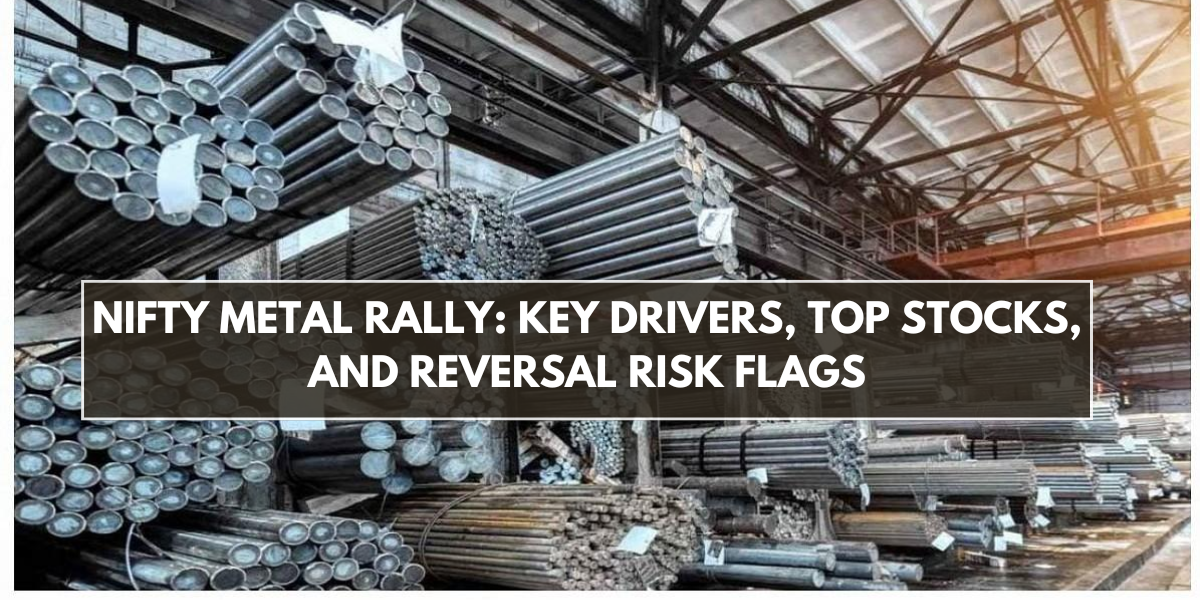
The Nifty Metal index has recently attracted strong market attention as metal stocks witnessed a sharp rally. The index tracks major metal and mining companies listed on Indian stock exchanges, including producers of steel, aluminium, zinc, and other industrial metals. When commodity prices rise or global industrial demand improves, metal sector stocks often experience strong momentum.
Metal companies tend to move in cycles because their earnings are closely tied to global commodity prices. When industrial activity accelerates or supply constraints appear, prices of metals like steel, aluminium, and copper increase. This typically improves profitability for mining and metal producers, which can lead to strong stock performance.
What the Nifty Metal Index Includes
The Nifty Metal index represents major companies involved in mining and metal production in India. These companies supply raw materials used in infrastructure, manufacturing, and construction.
| Company | Key Metal Exposure |
|---|---|
| Tata Steel | Steel production |
| JSW Steel | Infrastructure steel |
| Hindalco | Aluminium and copper |
| Vedanta | Aluminium, zinc, metals |
| NALCO | Aluminium |
| Hindustan Zinc | Zinc and silver |
Because these companies operate in commodity-driven industries, their stock prices often move together in response to global metal price trends.
Global Drivers Behind the Metal Rally
The rally in metal stocks is usually influenced by global commodity markets. Metal demand is closely linked to construction activity, industrial production, and infrastructure investment.
| Global Driver | Impact on Metal Stocks |
|---|---|
| Infrastructure spending | Increased metal demand |
| Supply disruptions | Higher commodity prices |
| Industrial growth | Stronger manufacturing demand |
| Energy transition | Demand for copper and aluminium |
For example, infrastructure development and renewable energy projects often require large quantities of metals, supporting demand for producers.
Recent Performance Snapshot
The metal sector sometimes becomes one of the best-performing segments of the stock market during commodity upcycles. Investors track sector indices like Nifty Metal to gauge the broader momentum.
| Indicator | Typical Observation |
|---|---|
| Sector momentum | Strong when commodities rally |
| Investor participation | Increased institutional buying |
| Commodity linkage | Highly sensitive to global prices |
| Volatility | Higher than defensive sectors |
Because of these characteristics, metal stocks can deliver strong returns during rallies but also experience sharp corrections.
Top Stocks Driving the Rally
Within the Nifty Metal index, some companies often lead the rally due to strong balance sheets, production capacity, or global exposure.
| Stock | Strength |
|---|---|
| Tata Steel | Global steel operations |
| JSW Steel | Strong domestic demand |
| Hindalco | Aluminium and copper diversification |
| Vedanta | Multiple metal segments |
| Hindustan Zinc | Dominant zinc producer |
These companies often see higher trading volumes when investors become bullish on the metals sector.
Risks That Could Reverse the Rally
Commodity-driven sectors can change direction quickly if global demand slows or supply increases significantly. Investors usually track several warning signals that could indicate a reversal.
| Risk Factor | Possible Impact |
|---|---|
| Global recession fears | Lower metal demand |
| Falling commodity prices | Reduced profitability |
| Chinese demand slowdown | Major market impact |
| Rising energy costs | Production margin pressure |
Because metal companies operate in a cyclical industry, stock prices often fluctuate depending on macroeconomic conditions.
Why Investors Monitor Commodity Cycles
Commodity cycles can last for several years, but they are rarely stable. When supply becomes limited or demand rises sharply, prices increase and boost earnings for producers. Eventually, higher prices encourage increased production, which can lead to oversupply and falling prices.
Investors tracking metal stocks therefore monitor both macroeconomic indicators and company-level performance metrics. Understanding these cycles helps investors avoid entering the sector purely based on short-term price momentum.
Key Indicators Investors Should Track
Market participants often monitor certain indicators to evaluate whether the Nifty Metal rally can continue.
| Indicator | Why It Matters |
|---|---|
| Global steel prices | Major earnings driver |
| Aluminium and copper prices | Reflect industrial demand |
| Chinese manufacturing data | Largest metals consumer |
| Infrastructure spending | Key demand source |
These indicators provide early signals about changes in demand and supply dynamics across global metal markets.
Conclusion
The recent Nifty Metal rally reflects strong momentum in commodity markets driven by global demand and supply dynamics. Metal producers benefit when industrial activity rises and commodity prices increase, which can lead to strong stock performance across the sector.
However, because metal stocks are cyclical, investors should remain cautious and monitor indicators such as global demand trends, commodity prices, and macroeconomic conditions. Understanding these factors can help investors better navigate the volatility that often accompanies commodity-driven sectors.
FAQs
What is the Nifty Metal index?
The Nifty Metal index tracks major Indian companies involved in mining, steel production, aluminium, and other metal industries.
Why are metal stocks rising?
Metal stocks often rally when global commodity prices increase or when demand from infrastructure and manufacturing sectors grows.
Which companies dominate the Nifty Metal index?
Companies such as Tata Steel, JSW Steel, Hindalco, Vedanta, and Hindustan Zinc are major contributors.
Are metal stocks risky investments?
Metal stocks can be volatile because their earnings depend heavily on global commodity price cycles.
What indicators affect metal sector performance?
Global steel and aluminium prices, Chinese industrial demand, and infrastructure spending trends strongly influence the sector.